Pink Flamingos
Pink Flamingos Is a Coronation Ritual Where Filth Is the Crown
Directed by John Waters
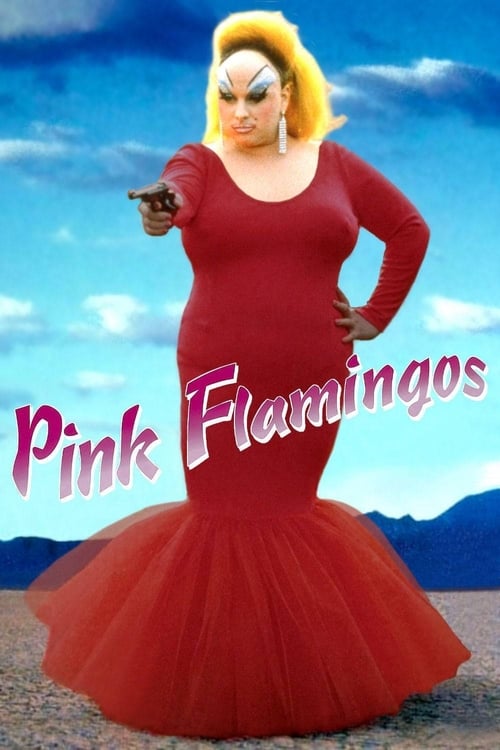
Divine competes for the title "the filthiest person alive" and wins by eating dog excrement on camera. Waters staged a religious rite and dared you to look away.
The instinct is to file Pink Flamingos under provocation, a film that exists to disgust and nothing else. That reading takes the film's word for its surface and misses its structure entirely. This is a contest for a title, and a title is a sacred thing. Divine and the Marbles are not fighting over notoriety for its own sake. They are fighting over who gets to embody a principle, to be crowned as the incarnation of a value the ordinary world refuses to touch. Waters built the whole film as an inverted saint's life: the trials, the rivals who covet the crown, the persecutions, and finally the public act of ultimate abasement that seals the sainthood. The famous closing shot, Divine consuming what a poodle leaves on the sidewalk, is not the punchline. It is the sacrament. It is the moment the candidate proves she will hold nothing back from her own consecration.
Alchemical Reading: The Nigredo Refusing to Be Cleaned Up
Alchemy begins in the nigredo, the blackening, the confrontation with putrefaction and rot that every later transformation depends on. Most spiritual traditions rush past it toward the white and gold. Pink Flamingos plants its flag in the nigredo and refuses to leave.
Divine is the prima materia that will not be sanitized, the base matter insisting on its own dignity before any refinement. The Marbles, by contrast, are the false alchemists. They live in a tidy suburban house, they kidnap and impregnate women in a basement, they traffic and profit, and they present themselves as respectable while their actual work is rot dressed in cleanliness. Divine's filth is honest and total; the Marbles' filth is hidden and hypocritical. When Divine executes them in a mock public trial and tars them, she is the substance rejecting the counterfeit process that tried to skip the blackening. The film's argument is alchemical and severe: the one who owns her own rot completely is more transformed than the ones who hide theirs behind a picket fence.
Jungian Reading: Divine Is the Shadow Enthroned Instead of Repressed
Every value a society elevates casts an equal and opposite shadow, and the more respectable the surface, the darker and more disowned the underside. 1970s middle-American propriety produced Divine as its exact photographic negative, the total shadow given a body, a wig, and a home.
Waters does not let the shadow lurk. He crowns it. Divine is not a monster stalking the edges of a normal world; she is the protagonist, the mother, the queen, held up for admiration by a film that adores her without irony. This is Jungian integration performed as pure aggression. The audience's revulsion is the measure of how much they have repressed, and the film keeps escalating precisely to locate the exact place where each viewer's disgust becomes unbearable, which is the place their own shadow lives. To watch to the end without flinching is to have met something in yourself you were raised to pretend was not there.
Questions this film answers
What is the deeper meaning of Pink Flamingos?
The instinct is to file Pink Flamingos under provocation, a film that exists to disgust and nothing else. That reading takes the film's word for its surface and misses its structure entirely. This is a contest for a title, and a title is a sacred thing. Divine and the Marbles are not fighting over notoriety for its own sake. They are fighting over who gets to embody a principle, to be crowned as the incarnation of a value the ordinary world refuses to touch. Waters built the whole film as an inverted saint's life: the trials, the rivals who covet the crown, the persecutions, and finally the public act of ultimate abasement that seals the sainthood. The famous closing shot, Divine consuming what a poodle leaves on the sidewalk, is not the punchline. It is the sacrament. It is the moment the candidate proves she will hold nothing back from her own consecration.
What is the hidden symbolism in Pink Flamingos?
Alchemy begins in the nigredo, the blackening, the confrontation with putrefaction and rot that every later transformation depends on. Most spiritual traditions rush past it toward the white and gold. Pink Flamingos plants its flag in the nigredo and refuses to leave.
What esoteric traditions appear in Pink Flamingos?
Pink Flamingos draws from Alchemy, Jungian traditions. Divine competes for the title "the filthiest person alive" and wins by eating dog excrement on camera. Waters staged a religious rite and dared you to look away.
Is Pink Flamingos worth watching for spiritual seekers?
Pink Flamingos (1976) directed by John Waters is essential viewing for those interested in Alchemy, Jungian. Pink Flamingos Is a Coronation Ritual Where Filth Is the Crown. It rewards multiple viewings and contemplation.
Rewatch With New Eyes
Now that you've seen the architecture, experience it again. The same film becomes a different film when you know what to watch for.
This time, watch for:
- Track the stages: blackening, whitening, reddening — death before rebirth
- Meet the shadow: what is rejected, projected, and finally integrated
Links may include affiliate partnerships that support Media Revelations
The Descent Continues
Where this thread leads next.
The Rocky Horror Picture Show 1975
Rocky Horror Is an Alchemical Wedding Staged by a Fallen God Who Wanted to Skip the Suffering
Read the revelation →