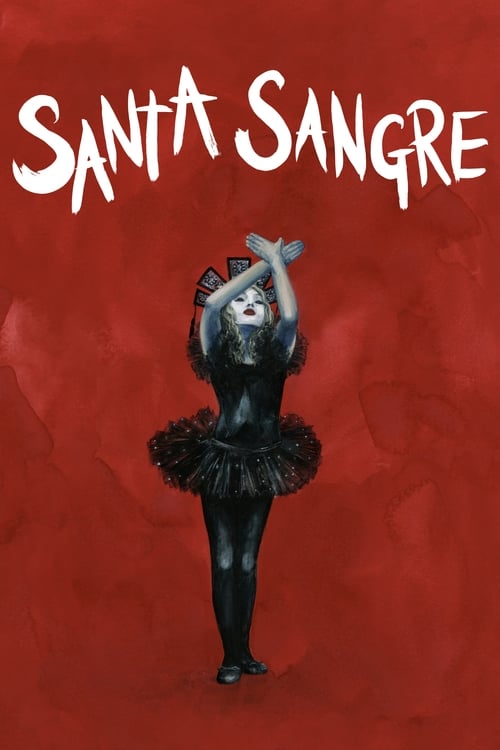
Santa Sangre
The Mother's Arms Used Through the Son's Body
Directed by Alejandro Jodorowsky
Jodorowsky filmed the most precise depiction of inherited possession in cinema. Fenix has watched his mother lose her arms. He has watched his father slit his own throat. He grows up as the literal extension of the mother — his arms perform her actions while she stands behind him. The film is not surrealist excess. The film is the structure of the Oedipal apparatus made visibly mechanical so the viewer cannot pretend not to see it.
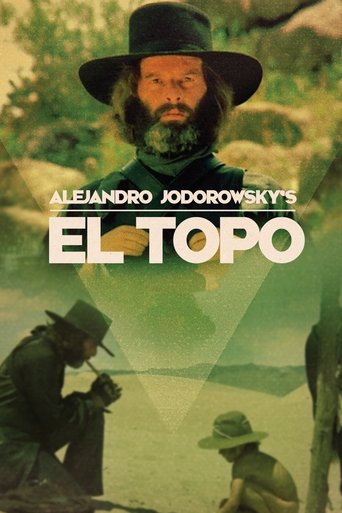
Santa Sangre is the most accessible film Jodorowsky ever made and remains, paradoxically, one of his most underseen. After the demanding philosophical mountains of El Topo and The Holy Mountain, he made a horror-thriller in Mexico City whose surfaces could be parsed by an audience that would never sit through his earlier work, and underneath those surfaces he conducted the most precise depiction of maternal possession ever filmed. Fenix is the child whose father — a circus knife-thrower — cuts off his mother's arms in front of him after she catches him with another woman. The father slits his own throat. Fenix is institutionalized. He escapes years later to rejoin his armless mother, whose cult worshipped a girl whose arms were severed by rapists. Fenix becomes literally his mother's arms: she stands behind him, slipping her stumps into his sleeves, while his hands perform the actions she commands. They begin murdering. He cannot resist. The arms are doing what the voice demands. The film's terminal scene — Fenix recognizing what he has become, releasing the arms, watching the mother revealed as a mannequin he has been carrying in his head — is the most precise depiction in cinema of what individuation actually requires. The mother in the head is not the actual mother. The mother in the head is the apparatus the actual mother installed. The apparatus must be physically dismantled. Only after it has been dismantled can the son's arms become his own.
The Surface
A young man, Fenix, is institutionalized in a Mexico City psychiatric hospital. We see him in flashback as a child performing in his parents' circus. His father, Orgo, is a knife-thrower and tattooed strongman. His mother, Concha, is a trapeze artist and the leader of a heretical Catholic cult that venerates 'Santa Sangre,' a saintly girl who was raped and had her arms cut off by attackers and is now memorialized in a temple built around a pool of her blood. The cult is destroyed by the Church. Orgo is unfaithful to Concha. Concha throws acid on Orgo's genitals. Orgo retaliates by cutting off Concha's arms with knives. He then slits his own throat. The boy Fenix witnesses everything. Years later, the now-adult Fenix escapes the hospital. He finds Concha. They reconstitute their stage act: she stands behind him in elaborate matching costumes, slipping her stumps inside his sleeves, controlling his arms. They perform together. She uses him to kill women she perceives as threats — including his beloved Alma, a deaf-mute he has not seen since childhood, who arrives to reclaim him. He finally resists the mother's voice, attacks her, and discovers in the film's last shot that she is a mannequin he has been carrying in his head. He had killed her years ago and built her in his mind to continue commanding him. He is arrested. He raises his hands.
On release the film was praised internationally and ignored in the U.S. due to its distribution arrangements. Critics noted Jodorowsky's commercial restraint compared to his earlier work. Roger Ebert championed the film. It remains less seen than it deserves to be.
Underneath the surreal surface, the film is conducting the most direct cinematic depiction of Jungian individuation ever attempted. Jodorowsky has read his Jung — he wrote books on psychomagic and the tarot, has been in dialogue with depth psychology his entire career — and the film is the application of Jungian theory to the specific clinical condition of mother possession with structural and visual precision.
The Arms as Mechanism of Possession
Jung described maternal possession as the condition in which the son has not differentiated from the mother sufficiently to act as an independent agent. The mother's voice continues to dictate the son's actions long after the mother is physically absent or even dead. The son's hands perform the mother's instructions. The son experiences his own actions as not entirely his own because they are not. The mother's apparatus is operating his body.
Jodorowsky has staged this with literal physical mechanism. Fenix is not metaphorically his mother's arms. He is, on stage and in the murders, literally her arms. She stands behind him in costumes designed to make her invisible. Her stumps go into his sleeves. His hands move. She commands. The audience sees a single figure performing the actions. The figure is two beings: the body that does, the voice that decides.
This is the maternal possession apparatus made theatrical. Most sons in this condition cannot see the apparatus because it is internal. They cannot point at the mother behind them because she is inside them. Jodorowsky's gift to the viewer is to externalize the structure long enough for the structure to be perceived. Once perceived, the structure can begin to be addressed. The film is, in this sense, therapeutic intervention disguised as horror.
The murders that result are not Fenix's desires being expressed. The murders are the mother's jealousies being executed by the son's hands. He does not want to kill the strong woman wrestler. He does not want to kill Alma. He kills because the apparatus has commanded the killing and he has not yet recognized that he has a separate hand from the one moving. The horror of the film is not the violence. The horror is the precision with which Jodorowsky has depicted what most analysts spend years trying to make patients see.
The Father's Tattoo and the Phallic Wound
Orgo, the father, has a large eagle tattooed across his chest. The tattoo is the symbol of his masculine self-display. He is the strongman, the knife-thrower, the womanizer. He is the father in his most cartoonish form — physically dominant, sexually excessive, emotionally absent except in the form of violence.
Concha's response to his infidelity is to throw acid on his genitals. The choice is precise. She is castrating him for his transgression. He has used his masculine instrument against her dignity; she destroys the instrument. His retaliation — cutting off her arms — is symmetric. She has used her hands to wound his masculinity; he removes the hands. The reciprocity is operational. Each parent attacks the other at the point of the other's offending capacity.
The young Fenix watches all of this. He has, in the space of one night, witnessed his father's symbolic and literal castration, his mother's symbolic and literal disarming, and his father's suicide. The trauma is total. The boy has no available developmental path through it. He cannot fully identify with the father (the father is dead and was monstrous in life). He cannot fully separate from the mother (the mother needs him in a more concrete way than most mothers need their children, because she has no arms). The Oedipal triangle has collapsed in a way that leaves the son with no exit.
This is the structural diagnosis the film delivers. The son's possession by the mother is not a failure of will. It is the only available adaptation to the catastrophic loss of all other developmental positions. He cannot grow up because growing up requires a triangulation that the trauma has eliminated. He remains the boy. The mother takes the boy's body as her arms because the body is available and the boy cannot refuse.
Alma and the Possibility of Exit
Alma — whose name means 'soul' in Spanish — is the deaf-mute girl from Fenix's childhood. She and Fenix were friends at the circus. Her absence during his institutionalization is the gap in his development that the mother has filled. Her return is the catalyst that breaks the cycle.
Alma cannot speak. This is the film's most precise structural choice. The mother's apparatus operates through voice — commands, accusations, manipulations. Alma cannot enter this register. She can only communicate through presence, gesture, and touch. The mother's voice cannot drown her out because she does not compete for the auditory channel. She occupies a different channel entirely.
Her return triggers the mother's most extreme command: kill Alma. The command is the apparatus's last move. The apparatus correctly recognizes that Alma is the figure that can free Fenix and must therefore be eliminated. Fenix raises the knife. He stops. He cannot kill her. The hands he has been operating belong to him after all. The recognition is the film's pivot.
What follows is the actual exorcism. He attacks the figure of the mother. He realizes that the figure is a mannequin. He has been carrying the mother in his head for years, the mother he had actually killed long ago in childhood was a phantom assembled from his trauma. The actual confrontation is between him and the apparatus, not between him and a person. The mannequin breaks. The voice silences. Alma stands beside him. The hands are his. The transformation, painful and incomplete, has occurred. He surrenders to the police. He raises his arms. The arms are his. The image is the film's final assertion. He has become his own.
The Transmission
Santa Sangre transmits the most precise depiction in cinema of what individuation from the maternal apparatus actually requires. Most films about overbearing mothers stop at the recognition of the dynamic. The protagonist sees the mother is too present, decides to assert independence, and either succeeds or fails dramatically. Jodorowsky's film goes further. It shows that the actual operation is not a confrontation with the actual mother. The actual operation is a dismantling of the internal mother — the apparatus the original mother installed that continues to operate after she is gone.
What the film leaves the viewer with is a permanent suspicion of the voice in one's head. Whose voice is it, exactly? When did it begin? On what authority does it continue to give instructions? What hands are currently moving on its orders? The questions are uncomfortable. The film makes them difficult to evade.
Jodorowsky's later work — Endless Poetry, Psychomagic — has continued the project of using cinema as therapeutic intervention. Santa Sangre is the cleanest example. It is not too much. It is not self-indulgent. It is a focused, structurally precise depiction of an extremely common psychological condition presented with sufficient theatricality that the viewer cannot file it as merely realistic. The theatricality is what allows the structure to be seen. After the film, the structure is visible. What the viewer does with the visibility is the viewer's life. The film cannot do that work. The film makes the work possible.
Questions this film answers
What is the deeper meaning of Santa Sangre?
Santa Sangre is the most accessible film Jodorowsky ever made and remains, paradoxically, one of his most underseen. After the demanding philosophical mountains of El Topo and The Holy Mountain, he made a horror-thriller in Mexico City whose surfaces could be parsed by an audience that would never sit through his earlier work, and underneath those surfaces he conducted the most precise depiction of maternal possession ever filmed. Fenix is the child whose father — a circus knife-thrower — cuts off his mother's arms in front of him after she catches him with another woman. The father slits his own throat. Fenix is institutionalized. He escapes years later to rejoin his armless mother, whose cult worshipped a girl whose arms were severed by rapists. Fenix becomes literally his mother's arms: she stands behind him, slipping her stumps into his sleeves, while his hands perform the actions she commands. They begin murdering. He cannot resist. The arms are doing what the voice demands. The film's terminal scene — Fenix recognizing what he has become, releasing the arms, watching the mother revealed as a mannequin he has been carrying in his head — is the most precise depiction in cinema of what individuation actually requires. The mother in the head is not the actual mother. The mother in the head is the apparatus the actual mother installed. The apparatus must be physically dismantled. Only after it has been dismantled can the son's arms become his own.
What is the hidden symbolism in Santa Sangre?
A young man, Fenix, is institutionalized in a Mexico City psychiatric hospital. We see him in flashback as a child performing in his parents' circus. His father, Orgo, is a knife-thrower and tattooed strongman. His mother, Concha, is a trapeze artist and the leader of a heretical Catholic cult that venerates 'Santa Sangre,' a saintly girl who was raped and had her arms cut off by attackers and is now memorialized in a temple built around a pool of her blood. The cult is destroyed by the Church. Orgo is unfaithful to Concha. Concha throws acid on Orgo's genitals. Orgo retaliates by cutting off Concha's arms with knives. He then slits his own throat. The boy Fenix witnesses everything. Years later, the now-adult Fenix escapes the hospital. He finds Concha. They reconstitute their stage act: she stands behind him in elaborate matching costumes, slipping her stumps inside his sleeves, controlling his arms. They perform together. She uses him to kill women she perceives as threats — including his beloved Alma, a deaf-mute he has not seen since childhood, who arrives to reclaim him. He finally resists the mother's voice, attacks her, and discovers in the film's last shot that she is a mannequin he has been carrying in his head. He had killed her years ago and built her in his mind to continue commanding him. He is arrested. He raises his hands.
What esoteric traditions appear in Santa Sangre?
Santa Sangre draws from Jungian, Shamanism, Initiation traditions. Jodorowsky filmed the most precise depiction of inherited possession in cinema. Fenix has watched his mother lose her arms. He has watched his father slit his own throat. He grows up as the literal extension of the mother — his arms perform her actions while she stands behind him. The film is not surrealist excess. The film is the structure of the Oedipal apparatus made visibly mechanical so the viewer cannot pretend not to see it.
Is Santa Sangre worth watching for spiritual seekers?
Santa Sangre (1989) directed by Alejandro Jodorowsky is essential viewing for those interested in Jungian, Shamanism, Jodorowsky. The Mother's Arms Used Through the Son's Body. It rewards multiple viewings and contemplation.
Rewatch With New Eyes
Now that you've seen the architecture, experience it again. The same film becomes a different film when you know what to watch for.
This time, watch for:
- Meet the shadow: what is rejected, projected, and finally integrated
- Follow the descent: what dies, what guides, what returns transformed
- Mark the threshold: the old self dies, the ordeal transforms, the new self returns
Links may include affiliate partnerships that support Media Revelations
The Descent Continues
Where this thread leads next.
The Holy Mountain 1973
The Tarot as Initiatory Cinema
Read the revelation →