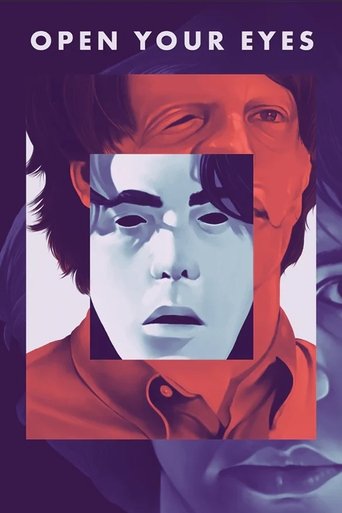
Bliss
Bliss Refuses to Tell You Which World Is Real, Because the Refusal Is the Teaching
Directed by Mike Cahill
Greg is either a divorced, fired man losing his mind on the street, or a scientist experiencing a simulation of hardship inside a paradise. Mike Cahill builds the film so you cannot decide, and that indecision is exactly where the spiritual weight lives.
Greg, freshly divorced and just fired, meets Isabel, a woman living rough who insists the broken, polluted world around them is a simulation, and that they are two of the few "real" people inside it. She teaches him to bend reality with his mind, to knock people over with a thought, and eventually leads him to the beautiful "real" world outside, a sunlit utopia where they are brilliant scientists studying the ugly simulation for contrast. Then the pull back begins. His daughter Emily keeps appearing at the edges of the paradise, weeping, telling him none of this is real and begging him to come home. The film never resolves which world is true. It is built as a genuine two-door trap, and the trap is the point: attachment to bliss and attachment to suffering are the same mechanism wearing different faces.
Gnostic Reading: The Beautiful World Is Also a Trap, Because Any World You Cannot Leave Is a Prison
The Gnostic reflex is to say: the ugly world is the false one, the sunlit paradise is home, wake up and ascend. Bliss offers that reading and then poisons it. Isabel's utopia has all the markings of the Pleroma, the world of light above the flawed creation. But Cahill keeps showing that the paradise is chemically induced, held together by a crystal that must be dosed, and that clinging to it means abandoning the daughter who is real to Greg in a way no theory can argue away.
This is the deeper Gnostic point most versions of the myth miss. The prison is not a specific world. The prison is captivity itself, the state of being unable to leave whatever you are in. Greg is offered a higher world and it functions as a drug. A beautiful reality you must keep taking a hit to sustain is not liberation. It is a nicer cell, and the film is merciless about naming it as one.
Buddhist Reading: Both Worlds Are Craving, and Emily Is the Bell
In Buddhist terms, Greg swings between aversion, the ugly world he wants to escape, and grasping, the beautiful world he wants to keep. These are not opposites. They are the two arms of the same wheel, and the wheel is what keeps him spinning. Isabel is the voice of the pleasant realm, always promising the next dose of bliss. Neither of them is awake. Both are chasing a state.
Emily is the interruption. Every time Greg is deepest in the paradise, his daughter appears at its edges, crying, real, unwilling to be dissolved by any explanation. She is the bell that cuts through the trance, the ordinary human bond that neither pleasure nor theory can absorb. The film's final image gives Greg the only move the wheel permits: he chooses to sit with Emily in the plain, un-enhanced world, and stops chasing states long enough to be present to a person. Whether that world is the true one is a question the film leaves open on purpose, because presence to a real bond is worth more than the answer.
Questions this film answers
What is the deeper meaning of Bliss?
Greg, freshly divorced and just fired, meets Isabel, a woman living rough who insists the broken, polluted world around them is a simulation, and that they are two of the few "real" people inside it. She teaches him to bend reality with his mind, to knock people over with a thought, and eventually leads him to the beautiful "real" world outside, a sunlit utopia where they are brilliant scientists studying the ugly simulation for contrast. Then the pull back begins. His daughter Emily keeps appearing at the edges of the paradise, weeping, telling him none of this is real and begging him to come home. The film never resolves which world is true. It is built as a genuine two-door trap, and the trap is the point: attachment to bliss and attachment to suffering are the same mechanism wearing different faces.
What is the hidden symbolism in Bliss?
The Gnostic reflex is to say: the ugly world is the false one, the sunlit paradise is home, wake up and ascend. Bliss offers that reading and then poisons it. Isabel's utopia has all the markings of the Pleroma, the world of light above the flawed creation. But Cahill keeps showing that the paradise is chemically induced, held together by a crystal that must be dosed, and that clinging to it means abandoning the daughter who is real to Greg in a way no theory can argue away.
What esoteric traditions appear in Bliss?
Bliss draws from Gnosticism, Buddhism traditions. Greg is either a divorced, fired man losing his mind on the street, or a scientist experiencing a simulation of hardship inside a paradise. Mike Cahill builds the film so you cannot decide, and that indecision is exactly where the spiritual weight lives.
Is Bliss worth watching for spiritual seekers?
Bliss (2021) directed by Mike Cahill is essential viewing for those interested in Gnosticism, Buddhism. Bliss Refuses to Tell You Which World Is Real, Because the Refusal Is the Teaching. It rewards multiple viewings and contemplation.
Rewatch With New Eyes
Now that you've seen the architecture, experience it again. The same film becomes a different film when you know what to watch for.
This time, watch for:
- Watch for the false world vs. the real — who is asleep, who awakens
- See impermanence: what clings, what releases, what remains
Links may include affiliate partnerships that support Media Revelations
The Descent Continues
Where this thread leads next.

Vanilla Sky 2001
Vanilla Sky Is a Dream the Dreamer Is Afraid to Wake From (That's Why It Keeps Breaking)
Read the revelation →