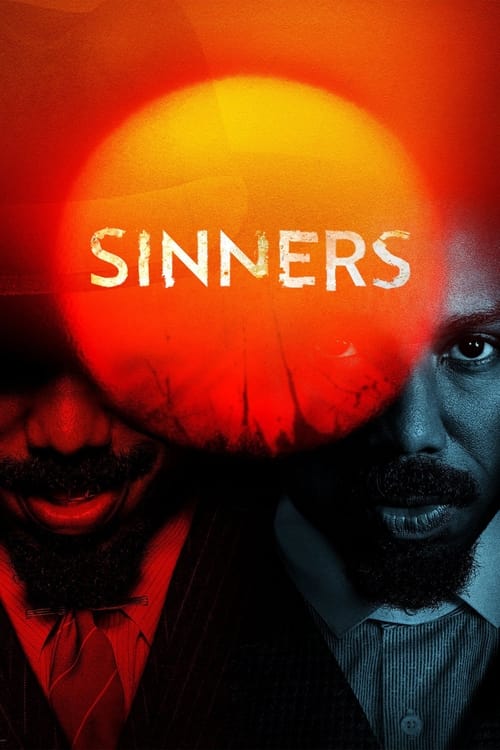
Sinners is not a vampire movie that happens to be about music. It is a movie about music so true it opens a door between the living and the dead. Sammie's gift is shamanic, the juke joint a temple, and Remmick the Demiurge who consumes what he cannot create.
Sinners is not a vampire movie that happens to be about music. It is a movie about music so true it opens a door between the living and the dead, and the vampire is what walks through when the door is left open. Sammie's gift is shamanic: a song that calls the ancestors and the unborn into one room at one time. Remmick is the oldest hunger in the world, the thing that cannot make beauty and so must consume the ones who can, offering them eternity in exchange for the one thing that made them holy. The juke joint is a temple. The siege is a desecration. And the boy who survives keeps the gift the demon spent the whole night trying to steal.
The Surface: A Vampire Western in the Mississippi Delta
Two brothers come home to the Delta in 1932 with Chicago money and a stolen truck full of liquor.
Smoke and Stack, twins played by Michael B. Jordan, buy an old mill from a white landowner and turn it into a juke joint in a single day. They recruit their cousin Sammie, a preacher's son with a guitar and a voice that stops conversation. They gather the old bluesman Delta Slim, the field hands, the women they love, the whole community of the Black Delta, into one building for one night of music and dancing and drink. Opening night is electric. Then a pale Irishman named Remmick arrives at the door with two companions, asking to come in, singing old songs, and the night becomes a slaughter.
Critics called it Coogler's most personal film, a genre fusion of period drama and horror, a love letter to the blues. Audiences felt the one-take centerpiece land like a religious experience without quite naming why. The standard reading treats the vampires as a metaphor for white extraction, the predator that follows Black brilliance wherever it flowers. That reading is correct. It is also the shallowest true thing the film says.
Here is the deeper architecture. The blues in this film is not entertainment and not even resistance. It is a technology of contact, a way of reaching through the membrane that separates this world from the realm of spirits. The film tells you this directly and most viewers heard it as a flourish.
The Juke Joint Is a Temple and Sammie's Song Is the Rite
The film opens with a narrator explaining that certain musicians are born with a gift so pure it can pierce the veil between worlds, summoning spirits of the past and the future, and that such a gift draws evil to it the way blood draws a shark.
Watch what happens when Sammie plays. In the centerpiece scene, the camera circles the dance floor in one unbroken shot and the room fills with figures who do not belong to 1932. A West African griot with a talking drum. A Chinese musician. A modern electric guitarist. A funk dancer, a DJ, a twerking woman, ballet, the whole future and the whole past of Black music collapsing into a single Mississippi room while Sammie sings. The building itself begins to catch fire in the frame, not as destruction but as transfiguration. This is the literal content of the scene. The film is not being subtle.
This is shamanic practice rendered exactly. The shaman is the one who travels between worlds and brings the tribe its medicine, and the instrument of travel is sound. The drum, the rattle, the song. Among the peoples who carried the blues across the Atlantic, the musician was a spirit-worker, and the crossroads where you learned to play was the threshold where you met what taught you. Sammie is a true shaman who does not know the word for what he is. His father the preacher knows there is power in the boy and names it sin, because the church needs a monopoly on the doorway and cannot abide a teenager who opens it with a guitar.
The reason the vampires come is stated by the film's own cosmology. A song that opens the veil does not get to choose who hears the call. Sammie sings the ancestors and the unborn into the room, and the same frequency that reaches them reaches Remmick, who has been waiting centuries for a door exactly this wide. The horror is not that evil interrupts the sacred. The horror is that the sacred, fully expressed, is what summons the test.
Remmick Is the Demiurge of Assimilation, the Hunger That Copies the Soul
Remmick cannot sing his own song. This is the key to him and almost nobody catches it on first watch.
When he and his converts surround the juke joint, they do not merely threaten. They perform. They sing and dance their own counterfeit communion outside the walls, a hideous mirror of the celebration inside, and they keep inviting the living to come out and join, to become one body with them. Remmick speaks of brotherhood, of an end to loneliness, of a family that never dies. He even claims he wants to use Sammie's gift to reach his own ancestors, the people taken from him long ago. He is sincere. That is what makes him a perfect Gnostic demon.
In Gnostic cosmology the Demiurge is the false god who rules the material world, a being who cannot create true life and so fashions counterfeits, imprisoning sparks of real divinity inside hollow copies. Remmick is this exactly. He produces nothing. Every song he sings is stolen, every body he commands was somebody else's, every promise of eternal family is the offer to become a copy with no original. He is the archon who cannot reach the Pleroma on his own and so must devour a pneumatic, one of the rare souls with a genuine spark, in the hope of borrowing the light he can never generate.
Notice that vampirism in this film is conversion, not just killing. The bitten do not simply die. They rise, they sing in unison, they lose their individual faces and gain a shared appetite, and they immediately begin recruiting the people they loved an hour ago. This is assimilation as a spiritual event. The Gnostics had a word for the condition Remmick offers: the sleep of the world, the state of the soul that has forgotten it is divine and now serves the machine that copies it. To be turned is to be downloaded into the Demiurge's choir, eternal and empty, singing forever and creating nothing.
The terrible irony Coogler builds is that Remmick offers the marginalized exactly what the surface world denied them. No more Jim Crow, no more lynching, no more hunger, a family across all races and all time. Several of the turned seem almost grateful. The vampire is the false utopia, the unity that costs you your soul, the integration that is really erasure. He is what assimilation looks like when you see its real face.
Smoke and Stack Are One Soul Split in Two and Only One Can Survive the Night
Coogler cast a single actor as both brothers, and that is a thesis, not a budget decision.
Smoke and Stack are the same psyche divided. Stack is appetite, charm, impulse, the part of the self that wants the woman and the win and the night to never end. Smoke is control, vigilance, the part that counts the money and watches the door and cannot let go of the dead wife and child he carries like a stone. Together they are a whole man at war with himself, which is why they are always finishing each other's plans and undercutting each other's choices. The juke joint is their shared dream of coming home and being kings in the place that exiled them.
In Jungian terms this is the ego and its shadow set walking side by side in matching suits. Stack carries the disowned hunger Smoke will not admit to. When Stack is turned by the vampire, the meaning is precise. The shadow, denied integration, gets colonized by something darker and turns to consume the self it came from. Stack as a vampire is not a stranger. He is Smoke's own unowned appetite come back wearing his brother's face, offering him the very thing he most wants, which is for the dead to come back and the family to be whole again forever.
Smoke survives the night because he refuses the offer his own shadow extends to him. He kills the converted, including people he loved, and walks out alone into a dawn he did not expect to see. He has integrated nothing comfortably. He has only survived by amputation. The film grants him one final reckoning with the daylight world, the Klansmen who come for the mill, and he meets them with the cold totality of a man who has already lost everything that made survival worth wanting. The whole self could not make it through the night. Only the half that could kill its own desire walks into morning.
The Crossroads Demands Payment and Sammie Pays With Everything but the Gift
Every genuine initiation has the same structure. The threshold, the ordeal, the death of who you were, the return carrying something you cannot put down.
Sammie begins the film as a preacher's son afraid of his own gift, told from the pulpit that the music is a doorway to hell. By the end of one night he has watched everyone be slaughtered, fought a demon for his soul, refused eternal life, and survived clutching the broken neck of his guitar. This is a complete initiatory arc compressed into a single evening. The juke joint is the underworld he must descend into. Remmick is the guardian of the threshold who tests him with the offer of immortality, the classic temptation that would let the initiate skip the death by becoming undead instead. Sammie says no, and in saying no he completes the passage that the vampires failed.
The crossroads is the oldest initiatory image in the Delta tradition. You go to the place where the roads meet at midnight and you meet what teaches you, and it gives you mastery in exchange for a price you spend your life paying. Sinners literalizes this. Sammie gets the gift and the price is the night, the dead, the safe life he could have had as his father's son in his father's church. The film's coda confirms the structure. Decades later an old Sammie, played by the real blues legend Buddy Guy, is still playing, still alive, still carrying the gift across a lifetime, because the one who passes the initiation does not get to lay the burden down. He gets to keep transmitting it.
The bittersweet revelation is that the church was half right. The doorway does draw evil. The preacher was wrong only about what to do with the power, which is not to seal the door but to walk through it and come back. Sammie becomes the thing his father feared, the shaman who survived the crossroads, and that is precisely why his music will outlive everyone who tried to use it, sell it, or steal it.
Vampire Communion Is the Counterfeit Eternity, the Eucharist Turned Inside Out
The siege at the juke joint is a black mass, and the film stages it as one.
Look at the ritual grammar Coogler uses. There is a body of believers gathered in a consecrated space. There is sacred music that summons presence. There is the demand to be let inside, since the vampire cannot cross the threshold uninvited, the oldest rule of demonology, that the demon requires consent. And there is the offer of communion through blood, eternal life through joining one body, the explicit dark inversion of the Eucharist. Drink and you will never die. Remmick is celebrating a sacrament. It is the sacrament run backwards.
In demonological tradition the demon is a parody of the divine, capable only of mockery and counterfeit because it has cut itself off from the source of real being. Remmick's communion gives you everything the true rite promises and rots it from inside. Eternal life becomes endless undeath. Unity in one body becomes the loss of your own face. Resurrection becomes a hunger that can never be filled because the thing it craves, the living soul, is the one thing the conversion destroys. The vampires sing together perfectly, in unison, and that perfection is the horror, because real communion holds difference and false communion erases it.
This is why the demand for invitation matters so much in the film and why the characters debate it. Evil of this order cannot simply take you. It needs your yes. Every person who steps outside the juke joint to join the choir consents to their own erasure, usually out of love, out of loneliness, out of the longing for the dead to come back. The film's deepest cruelty is that the offer is real. The family across all time, the end of suffering, the song that never stops. It is all genuinely available. You only have to stop being a separate soul to have it. That is the price the demon always names and the price the whole film is about refusing.
The Survivor Walks Into Dawn and the Song Outlives the Hunger
Sinners ends the way every true teaching story ends, with a survivor and a cost.
Smoke walks into morning having killed his own brother and lost the dream of home. Sammie walks out with a broken guitar and an unbroken gift. Everyone who wanted only to consume the music, Remmick and his choir and later the Klansmen with their daylight version of the same hunger, all of them reach for the song and none of them can hold it. The gift cannot be stolen because it is not a possession. It is a doorway, and only the one willing to walk through it and pay the crossing keeps the key.
This is the seeing the film transmits beneath the genre. Black spiritual genius, the blues as a technology of contact with the ancestral and the eternal, has always drawn the hunger that wants to own what it cannot make. The vampire and the slaver and the record executive are the same archon in different costumes, the Demiurge who consumes the spark because it has none of its own. They will keep coming as long as the door keeps opening, which is forever, because the gift will not stop being born. Sammie at the end of his life is still playing. The hunger that came for him is centuries dead in the Mississippi mud. The song is still in the room.
You will never hear the blues the same way again once you see what it actually is. Not a complaint set to rhythm. A rite. The last surviving art of calling the dead by name and surviving the answer.
Questions this film answers
What is the deeper meaning of Sinners?
Sinners is not a vampire movie that happens to be about music. It is a movie about music so true it opens a door between the living and the dead, and the vampire is what walks through when the door is left open. Sammie's gift is shamanic: a song that calls the ancestors and the unborn into one room at one time. Remmick is the oldest hunger in the world, the thing that cannot make beauty and so must consume the ones who can, offering them eternity in exchange for the one thing that made them holy. The juke joint is a temple. The siege is a desecration. And the boy who survives keeps the gift the demon spent the whole night trying to steal.
What is the hidden symbolism in Sinners?
Two brothers come home to the Delta in 1932 with Chicago money and a stolen truck full of liquor.
What esoteric traditions appear in Sinners?
Sinners draws from Shamanism, Gnosticism, Jungian, Initiation, Demonology traditions. Sinners is not a vampire movie that happens to be about music. It is a movie about music so true it opens a door between the living and the dead. Sammie's gift is shamanic, the juke joint a temple, and Remmick the Demiurge who consumes what he cannot create.
Is Sinners worth watching for spiritual seekers?
Sinners (2025) directed by Ryan Coogler is essential viewing for those interested in Shamanism, Gnosticism, The Blues. The Blues as a Door Between Worlds. It rewards multiple viewings and contemplation.
Rewatch With New Eyes
Now that you've seen the architecture, experience it again. The same film becomes a different film when you know what to watch for.
This time, watch for:
- Follow the descent: what dies, what guides, what returns transformed
- Watch for the false world vs. the real — who is asleep, who awakens
- Meet the shadow: what is rejected, projected, and finally integrated
Links may include affiliate partnerships that support Media Revelations
The Descent Continues
Where this thread leads next.
Angel Heart 1987
Harry Angel Is Already Damned When the Film Begins. The Investigation Is the Proof.
Read the revelation →