Weapons
The Witch as Parasite, the Children as Harvest
Directed by Zach Cregger
Weapons is not a mystery about missing children. It is a possession story about a parasite wearing a family. Gladys is a tick, not a crone, and the 2:17 run is soul-flight toward the thing calling them out of their beds.
Seventeen children leave their beds at 2:17 in the morning, run into the dark with their arms thrown back, and are never seen again by their parents. The town of Maybrook calls it a mystery, a crime, a mass disappearance. It is none of those. It is a feeding. Gladys, the sick old aunt who arrives to stay with the one boy who did not run, is a parasitic entity wearing borrowed flesh, and the children are livestock she has fattened, marked, and stored. Every tradition that ever named the thing that drinks human vitality and leaves the body walking would recognize her on sight. Weapons is a horror film about the oldest predator there is, and about the one organism that always notices it last: the family it has already entered.
The Surface
Zach Cregger built Weapons as a town-sized puzzle box. The opening narration, spoken by a child, tells you the only fact everyone in Maybrook agrees on. At 2:17 AM on a Wednesday, every kid in Justine Gandy's third-grade class but one got out of bed, ran out the front door, and disappeared. The structure then fractures into chapters, each named for a different adult: the teacher blamed by the town, the father drinking himself toward the edge, the cop, the junkie, the principal, and finally the boy who stayed.
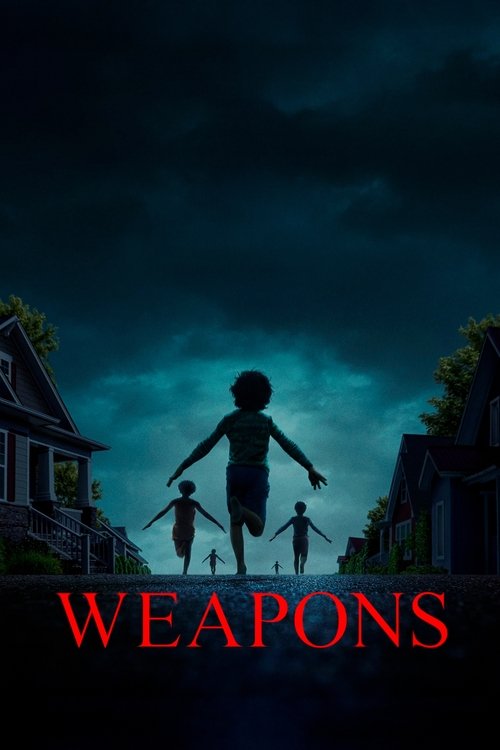
Critics praised the Rashomon architecture and the dread Cregger wrings from a suburban morning. Audiences left arguing about the witch in the basement. The film's marketing leaned on the image that sells it, those children sprinting through black yards with their arms streaming behind them like something is pulling them by the chest.
Read as genre, it works. A horror-mystery with a monster reveal and a crowd-pleasing kill. But the puzzle-box framing is doing more than withholding the answer. It is dramatizing the exact reason the predator survives. No single adult in Maybrook can see the whole shape of what took the children, because the thing that took them feeds on the gap between one person's view and the next. The film is built like the blind spot it is about.
The Witch Is a Tick, Not a Crone
Forget the pointed hat. Gladys belongs to the older bestiary, the one the witch-finders and the desert monks were actually afraid of.
In the demonological literature, the most dangerous entity is never the one that attacks. It is the one that attaches. The strix of Roman folklore, the upiór of the Slavs, the ling of certain Chinese traditions, the lamia who befriends a household before she empties it. These are not monsters that break down the door. They are invited in, fed at the table, given the spare room. They present as kin, as the frail relative who needs care, and the obligation to care for them is the lock they pick. Gladys arrives as Alex's great-aunt, dying, harmless, owed a bed. The family that takes her in has already lost.
Watch what she does to Alex's parents before she does anything to the children. She does not kill them. She hollows them. By the time Alex is living alone with two adults who stare and shuffle and obey, his mother and father are still technically alive, still in their bodies, and entirely gone. This is the signature of the parasite as the tradition understood it. The host keeps walking. The witch does not want corpses. Corpses stop producing.
The kill scene confirms the diagnosis. When Gladys finally dies, she is not slain like a dragon. She is dismantled. The enthralled crowd she fed on turns and tears her apart with their hands, the way a colony evicts the thing that was draining it. A villain gets a death scene. A parasite gets pulled out by the roots, and you see how small it was all along compared to the bodies it rode.
The 2:17 Run Is Soul-Flight, and Someone Is Calling Them
The single most disturbing image in the film is also its most precise piece of esoteric grammar. The children do not walk away. They run, at full sprint, in the dead of night, with their arms flung straight back behind them.
Every shamanic culture on earth has a word for what that posture means. The soul is being pulled out of the body and toward a caller. In the language of the Siberian and Mongolian shamans whose work the entire concept of soul-loss comes from, illness and disappearance are the same disease at different stages. A soul can wander, be frightened loose, or be stolen, and a hostile shaman, a black practitioner, can call a soul out of its sleeping body across a great distance. The cure is a retrieval. Someone has to go to the place the souls were taken and bring them back.
The arms tell you the direction of the pull. The children's bodies are running forward, but their arms stream backward toward the source, because the part of them that is actually moving is not the legs. It is the thing being reeled in. They run toward Gladys's house because that is where the line goes. 2:17 is the hour she casts, the dead-of-night threshold when the waking world's grip on the soul is loosest, the hour the traditions all reserve for the crossing.
And the mechanism is textbook black shamanism. Gladys does not enchant the children at a distance out of nothing. She needs a piece of each one. Alex, her captive instrument, is made to bring her something of theirs, the contact-link the soul-thief always requires, the hair or the personal object through which the line can be thrown. This is sympathetic magic exactly as the ethnographers recorded it. To pull a specific soul you must hold a token of that specific person. The witch did not take seventeen children. She took seventeen threads, and pulled.
Alex Stayed Because He Was Already Caught
The town's whole question is why one child did not run. The town has it backwards. Alex did not escape the spell. Alex was inside it before any of the others.
His house is the source. He lives with the parasite. He has been turned into her hands, the small uninfected-looking limb the colony uses to reach what it cannot reach itself. He is the boy who walks among his classmates carrying the threads back to the basement. The reason he is still in his bed at 2:17 is the same reason the spider does not get caught in its own web. He is part of the apparatus. The most enslaved child in Maybrook is the one everyone treats as the lucky survivor.
This is the cruelest inversion in the film, and it is true to the shamanic material. In soul-theft accounts the most damaged person is often the one closest to the practitioner, the apprentice or the captive who has been hollowed enough to serve and left intact enough to function. Alex's intactness is not mercy. It is utility. A tool has to keep its shape.
Maybrook Is a Town of Sleepers, and the Awake Ones Are Hunted
Pull back from the house to the whole town and a Gnostic map snaps into focus.
The Gnostics described a cosmos run by archons, parasitic powers that feed on human beings kept in a state of sleep. The mass of humanity, in this teaching, are not evil. They are asleep, dreaming the consensus dream, unable to see the powers that ride them. Only a few wake, and the moment they wake they become a problem to be managed, because an awake person stops feeding the system cleanly. Read Maybrook this way and every adult chapter is a study in induced sleep.
Justine the teacher sees something real and is immediately recast by the town as the cause. The waking one is converted into the scapegoat, the standard archonic move, because a town that blames the teacher does not have to look at the basement. Archer the father comes closest to the truth through sheer grief and is dismissed as a drunk losing his mind. The official world, the police, the school, the news, exists in the film mainly to produce explanations that let everyone stay asleep. Disappearance, runaway, kidnapping, breakdown. Anything but the entity actually eating the town.
Gladys is a perfect minor archon. She does not rule the cosmos. She runs one block of it, quietly, on a diet of vitality, protected not by power but by the sleep of everyone around her. Her camouflage is the consensus dream itself. As long as Maybrook keeps generating ordinary explanations, the parasite keeps eating, and the few who see clearly keep getting handled. Gnosis in this film is literal. To wake up is to see the witch. To see the witch is to become the next thing she or the town needs to silence.
The Devouring Mother Comes for the Children First
Underneath the demon and the archon sits the oldest figure in the depth-psychological deck, and Weapons puts her in the spare bedroom on purpose.
Jung's Terrible Mother is the maternal principle inverted into its consuming form, the womb that will not release, the matriarch who keeps her children by feeding on them. She does not present as a monster. She presents as care, as family, as the one who must be looked after. The horror of the figure is precisely that she wears the mask of nurture while she consumes. Gladys is this archetype rendered with surgical exactness. She enters as the aunt who needs a home, takes the parents first, then reaches for the children, and the entire time she is the picture of a fragile old woman being cared for by a loving family.
The children's posture at 2:17 reads in Jungian terms as regression dramatized. Arms back, sprinting in the dark toward the maternal house, they are being pulled out of waking selfhood and back into the undifferentiated dark, the swallowing unconscious that the Terrible Mother personifies. They are not running to a stranger. They are running to a grandmother-figure, and that is the nightmare. The face of safety is the mouth.
What breaks the spell is also archetypally exact. The captured child has to use the witch's own power against her. The only way out of the devouring mother is for the child to seize the very force that bound him and turn it, to stop being the instrument and become the agent. When the thralls tear Gladys apart, that is the swallowed contents of the unconscious erupting back, the harvested life reclaiming itself from the thing that hoarded it. The energy she stole is what destroys her. It always is.
What the Film Is Actually About
Strip the chapters away and Weapons is a single statement, and the statement is not subtle once you have the key.
A predator that feeds on life force does not look like a predator. It looks like family, frailty, obligation, the relative in the next room. It does not kill its hosts. It leaves them walking, lit, and empty, because a working body keeps producing what it eats. Its greatest defense is not strength but the sleep of everyone around it, the steady supply of ordinary explanations that keep anyone from naming what is in the house. And it goes for the children, the unguarded vitality, the soul still loose enough to be called across the dark.
This is why the image of the running children will not leave anyone who saw it. It is the picture of soul-theft, drawn from a vocabulary older than cinema, and the film trusts you to feel it before you can explain it. The arms thrown back are the line of the pull. The hour is the hour the crossing opens. The witch in the basement is the thing the desert monks and the steppe shamans and the Gnostic teachers were all, in their different tongues, trying to warn you about.
You let it in because it was kin and it was dying and you owed it a bed. That is how it always gets in.
Questions this film answers
What is the deeper meaning of Weapons?
Seventeen children leave their beds at 2:17 in the morning, run into the dark with their arms thrown back, and are never seen again by their parents. The town of Maybrook calls it a mystery, a crime, a mass disappearance. It is none of those. It is a feeding. Gladys, the sick old aunt who arrives to stay with the one boy who did not run, is a parasitic entity wearing borrowed flesh, and the children are livestock she has fattened, marked, and stored. Every tradition that ever named the thing that drinks human vitality and leaves the body walking would recognize her on sight. Weapons is a horror film about the oldest predator there is, and about the one organism that always notices it last: the family it has already entered.
What is the hidden symbolism in Weapons?
Zach Cregger built Weapons as a town-sized puzzle box. The opening narration, spoken by a child, tells you the only fact everyone in Maybrook agrees on. At 2:17 AM on a Wednesday, every kid in Justine Gandy's third-grade class but one got out of bed, ran out the front door, and disappeared. The structure then fractures into chapters, each named for a different adult: the teacher blamed by the town, the father drinking himself toward the edge, the cop, the junkie, the principal, and finally the boy who stayed.
What esoteric traditions appear in Weapons?
Weapons draws from Demonology, Shamanism, Jungian, Gnosticism traditions. Weapons is not a mystery about missing children. It is a possession story about a parasite wearing a family. Gladys is a tick, not a crone, and the 2:17 run is soul-flight toward the thing calling them out of their beds.
Is Weapons worth watching for spiritual seekers?
Weapons (2025) directed by Zach Cregger is essential viewing for those interested in Demonology, Shamanism, Possession. The Witch as Parasite, the Children as Harvest. It rewards multiple viewings and contemplation.
Rewatch With New Eyes
Now that you've seen the architecture, experience it again. The same film becomes a different film when you know what to watch for.
This time, watch for:
- Identify the hierarchy: which demon, which rank, which grimoire it comes from
- Follow the descent: what dies, what guides, what returns transformed
- Meet the shadow: what is rejected, projected, and finally integrated
Links may include affiliate partnerships that support Media Revelations
The Descent Continues
Where this thread leads next.
Hereditary 2018
The Demon Isn't Evil — He's Just Following Orders
Read the revelation →