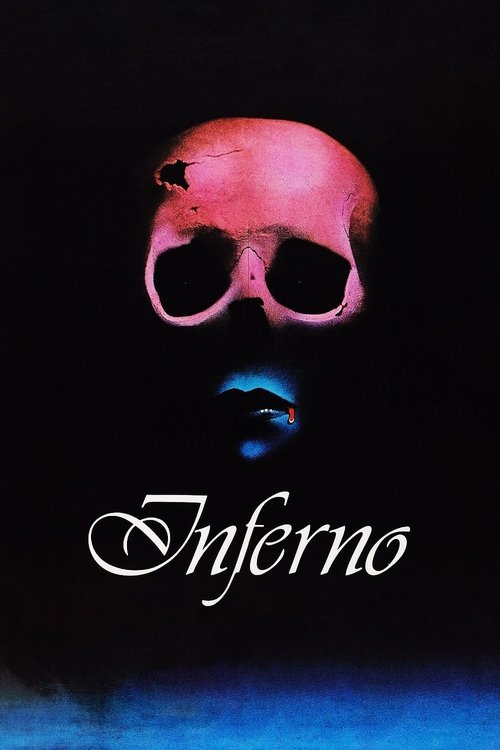
Inferno
Inferno Is a Building That Runs on Alchemy, and the Alchemist Is Death
Directed by Dario Argento
Argento abandons plot on purpose. What replaces it is architecture that thinks, water that remembers, and a house designed to dissolve everyone who reads the wrong book.
Inferno is Argento's least explained and most misunderstood film, and the confusion is the point. There is no detective. The characters who try to solve the mystery all die, usually within the same sequence in which they begin to understand it. The New York apartment house is the second dwelling of the Three Mothers, built by the architect Varelli for Mater Tenebrarum, Our Lady of Darkness. Rose reads Varelli's book, learns that her building is a machine for producing death, writes to her brother in Rome, and is killed before he can arrive. This is not sloppy storytelling. This is a film built on the logic of a sealed vessel, where knowing the secret and being consumed by it are the same act. The building does not hide its nature. It publishes it, in a book, and then destroys whoever reads far enough.
Alchemical Reading: The House as Inverted Athanor
The athanor is the alchemist's furnace, the sealed vessel where base matter is broken down and reborn as gold. Argento inverts every stage of the work. The film opens underwater: Rose descends through a hole in her cellar floor into a flooded ballroom, drifting past chandeliers and a floating corpse. This is the nigredo, the blackening, the dissolution in the prima materia, except nothing is reborn from it. The waters that should purify only preserve rot. Later the film burns: the final act consumes the entire building in fire, the calcinatio that should yield the purified stone. But the fire produces only Mater Tenebrarum in her true form, Death itself, standing in the flames. The house performs the complete alchemical sequence, water then fire, dissolution then combustion, and at the end there is no gold. There is only the Mother, who was the operator all along. Varelli, the architect who confesses he built the vessel, is a puppet in a wheelchair, his throat a mechanical voicebox. The alchemist has become an instrument of the substance he thought he was refining.
Demonology Reading: Mater Tenebrarum and the Address of Evil
Argento's Three Mothers are not metaphors. They are named, located, housed. Mater Suspiriorum lives in Freiburg, Mater Lachrymarum in Rome, and Mater Tenebrarum in New York, each in a building constructed as her body and her altar. This is the oldest demonological premise: that evil is not a mood but a presence, and a presence requires a place. The film insists on the physical infrastructure of the demonic. There are keyholes that leak yellow light, a room whose window opens onto nothing, corridors that lead to the operator's chamber. Kazanian the antiques dealer, drowning in his own bag of drowning cats, dies because he has spent his life trafficking in the objects that surround the Mother without ever reading what they mean. The film's cruelty toward its characters is theological: proximity to the sacred, even the inverted sacred, is fatal to those who treat it as commerce. Mark survives only because he understands the least. He stops reading. In Argento's cosmology, the ones who look directly at Our Lady of Darkness are the ones she has already claimed.
Questions this film answers
What is the deeper meaning of Inferno?
Inferno is Argento's least explained and most misunderstood film, and the confusion is the point. There is no detective. The characters who try to solve the mystery all die, usually within the same sequence in which they begin to understand it. The New York apartment house is the second dwelling of the Three Mothers, built by the architect Varelli for Mater Tenebrarum, Our Lady of Darkness. Rose reads Varelli's book, learns that her building is a machine for producing death, writes to her brother in Rome, and is killed before he can arrive. This is not sloppy storytelling. This is a film built on the logic of a sealed vessel, where knowing the secret and being consumed by it are the same act. The building does not hide its nature. It publishes it, in a book, and then destroys whoever reads far enough.
What is the hidden symbolism in Inferno?
The athanor is the alchemist's furnace, the sealed vessel where base matter is broken down and reborn as gold. Argento inverts every stage of the work. The film opens underwater: Rose descends through a hole in her cellar floor into a flooded ballroom, drifting past chandeliers and a floating corpse. This is the nigredo, the blackening, the dissolution in the prima materia, except nothing is reborn from it. The waters that should purify only preserve rot. Later the film burns: the final act consumes the entire building in fire, the calcinatio that should yield the purified stone. But the fire produces only Mater Tenebrarum in her true form, Death itself, standing in the flames. The house performs the complete alchemical sequence, water then fire, dissolution then combustion, and at the end there is no gold. There is only the Mother, who was the operator all along. Varelli, the architect who confesses he built the vessel, is a puppet in a wheelchair, his throat a mechanical voicebox. The alchemist has become an instrument of the substance he thought he was refining.
What esoteric traditions appear in Inferno?
Inferno draws from Alchemy, Demonology traditions. Argento abandons plot on purpose. What replaces it is architecture that thinks, water that remembers, and a house designed to dissolve everyone who reads the wrong book.
Is Inferno worth watching for spiritual seekers?
Inferno (1980) directed by Dario Argento is essential viewing for those interested in Alchemy, Demonology. Inferno Is a Building That Runs on Alchemy, and the Alchemist Is Death. It rewards multiple viewings and contemplation.
Rewatch With New Eyes
Now that you've seen the architecture, experience it again. The same film becomes a different film when you know what to watch for.
This time, watch for:
- Track the stages: blackening, whitening, reddening — death before rebirth
- Identify the hierarchy: which demon, which rank, which grimoire it comes from
Links may include affiliate partnerships that support Media Revelations