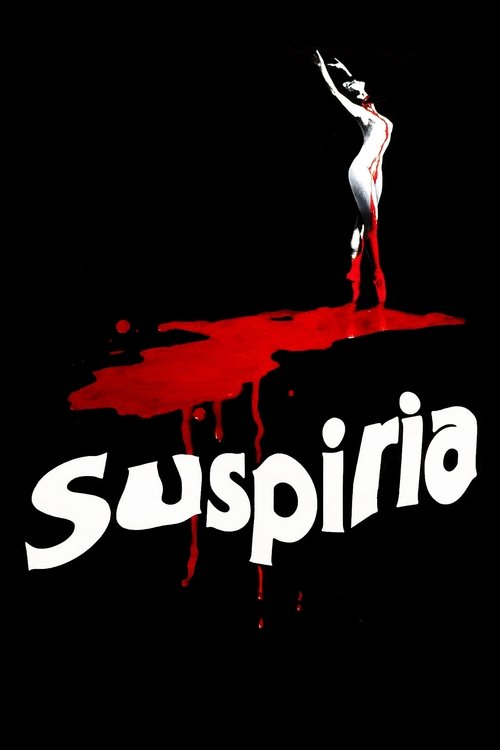
Suspiria is not a horror film that uses dance as setting. It is a film about what feminine power becomes when it is forced underground — the witch-mother who should have been honored now hiding in the basement, demanding blood from the daughters who serve her without knowing.
Suspiria is the most visually operatic horror film ever made — and beneath its drenched colors and Goblin's hypnotic score lies a parable about the feminine divine forced into monstrosity. The Tanz Dance Academy is run by witches. But what are witches? Women whose power was never honored, never integrated, pushed underground until it curdled into something that feeds on the daughters who should have inherited it. Argento's color palette — primary reds and blues, lighting that ignores physics, spaces that feel like dreams — creates a world where the normal rules do not apply. This is feminine space, but wounded feminine space. The mothers who rule here have been distorted by centuries of persecution into something that consumes rather than nurtures. The dance academy is the feminine mystery tradition, and it has gone terribly wrong. Suzy Bannion, the American innocent who stumbles into this world, represents the daughter who has not yet been devoured. Her survival depends on recognizing what rules here and choosing not to serve it. Suspiria is an initiation narrative, but the initiation is into refusal — the discovery that some mysteries are traps.
The Surface
Suzy Bannion arrives at a prestigious German ballet academy during a thunderstorm. That same night, a student who fled the academy is brutally murdered. Over the following days, strange events accumulate: maggots rain from the ceiling, a blind pianist is killed by his own guide dog, students sicken and disappear. Suzy discovers that the academy is run by a coven of witches serving an ancient entity called the Black Queen.
Argento's film was part of his 'Three Mothers' trilogy, establishing a mythology of three ancient witches — Mater Suspiriorum (Mother of Sighs), Mater Tenebrarum (Mother of Darkness), and Mater Lachrymarum (Mother of Tears) — who control the world from their hidden bases in Europe.
The plot matters less than the atmosphere. Suspiria is experienced more than understood, its imagery operating directly on the nervous system. The saturated colors, the geometric sets, the music that sounds like children's lullabies played by demons — all create a state of heightened unreality where anything terrible becomes possible.
The Colors as Language
Argento and cinematographer Luciano Tovoli used the last Technicolor imbibition printing process, allowing colors to achieve an intensity impossible in standard film. The result is a world bathed in unnatural hues: blood-red corridors, deep blue shadows, sickly yellows and greens.
These colors are not decorative. They are the film's language — signaling danger, emotion, and otherworldly presence without dialogue. The red is menstrual, sacrificial, warning. The blue is the cold of death and the depth of ocean-dreams. The palette tells you you are not in the normal world.
The lighting ignores physical logic. Sources appear from nowhere. Characters are lit from impossible angles. This violation of realism creates the experience of being inside a nightmare, where space does not follow daylight rules.
The visual style makes Suspiria almost impossible to assimilate rationally. You cannot analyze your way through it. You can only experience it as it washes over you, affecting you through paths that bypass the thinking mind. This is the film's method: create a state rather than tell a story.
The Witch-Mothers
The witches who run the academy represent the feminine divine in its distorted, underground form. The burning times — the centuries of witch persecution — forced women's power into hiding. What should have been honored became hunted. What should have been taught became secret. The result is not healthy feminine wisdom but something that has rotted in the basement.
The Mother of Sighs is ancient, parasitic, sustained by the life force of the young women who come to study at her school. The dance training is a sorting mechanism — identifying who has enough vitality to be worth consuming. The students are not educated; they are fattened.
This is the dark side of the mother archetype: the one who devours rather than nurtures, who keeps her daughters dependent rather than helping them mature, who feeds on their potential rather than cultivating it. Every woman who has experienced a toxic female authority recognizes this figure.
The academy's instructors — Madame Blanc, Miss Tanner — are servants of this mother, themselves consumed long ago, now functioning as hands of the central appetite. They are not individually evil. They have simply been assimilated into the organism.
Suzy as Initiate-Who-Refuses
Suzy Bannion begins the film as pure innocence — American, naive, arriving with the expectation that a dance school is simply a dance school. Her gradual awakening to the reality behind the facade is the film's narrative spine.
Unlike most horror protagonists, Suzy does not investigate out of curiosity. She is forced into knowledge by the accumulation of impossibilities. She does not want to know what is happening. She simply cannot ignore it anymore. The initiation is thrust upon her.
When Suzy finally confronts the Mother of Sighs, she does not negotiate, join, or bargain. She kills the creature and escapes as the academy burns. This is the initiation narrative inverted: instead of joining the mystery, she destroys it and walks away.
This refusal is the film's hidden teaching. Some initiations are traps. Some mysteries are not worth knowing. Some female power structures are so damaged that the only healthy response is to reject them entirely. Suzy survives by refusing what is offered.
The Music as Spell
Goblin's score is one of the most distinctive in horror — hypnotic, repetitive, combining music-box melodies with industrial percussion and whispered voices. The main theme is almost childlike, a lullaby that becomes increasingly sinister with each repetition.
Argento played the music on set at high volume, putting actors into trance states. The score is not accompaniment — it is the film's pulse, the magical operation that holds the experience together. Remove the music and the images would lose half their power.
The whispered vocals — 'Witch!' repeated as chant, strange syllables that might be Latin or might be nonsense — function as incantation. The viewer is not just watching a film about witchcraft; the viewer is being subjected to something that operates like witchcraft, using sound to alter consciousness.
This is Argento's genius: he understood that horror could work directly on the nervous system, bypassing intellectual defenses. Suspiria does not argue its case. It casts a spell. You emerge from it altered, whether you wanted to be or not.
The Transmission
Suspiria transmits an experience rather than a message — but the experience carries content. The distorted feminine, the underground power, the danger of initiations offered by damaged traditions: these themes arrive through color and sound rather than dialogue.
The film also transmits the specific fear of feminine spaces that contain predators. The dance academy should be a place where young women are taught to move, to express, to embody. Instead, it is a mechanism for extraction. This betrayal of the teaching relationship haunts anyone who has been failed by a mentor.
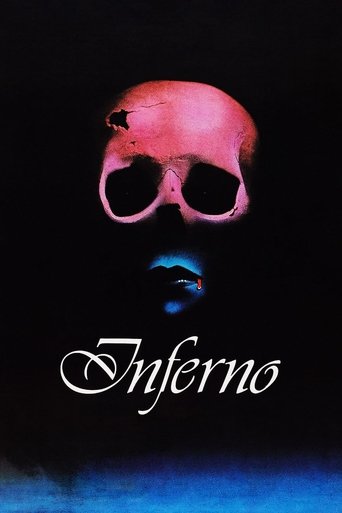
Argento would continue the Three Mothers trilogy with Inferno and The Mother of Tears, but neither film achieves Suspiria's intensity. The first film in the trilogy remains the pure distillation: a nightmare in primary colors, a lullaby that wants to eat you, a dance school where the final lesson is how to run.
The film ends with Suzy walking away as the academy burns behind her. She has survived the initiation by refusing it. The Mother of Sighs is dead — or at least, her current form is destroyed. But the Three Mothers are ancient. What dies in one place may rise in another. The nightmare continues, somewhere, always.
Questions this film answers
What is the deeper meaning of Suspiria?
Suspiria is the most visually operatic horror film ever made — and beneath its drenched colors and Goblin's hypnotic score lies a parable about the feminine divine forced into monstrosity. The Tanz Dance Academy is run by witches. But what are witches? Women whose power was never honored, never integrated, pushed underground until it curdled into something that feeds on the daughters who should have inherited it. Argento's color palette — primary reds and blues, lighting that ignores physics, spaces that feel like dreams — creates a world where the normal rules do not apply. This is feminine space, but wounded feminine space. The mothers who rule here have been distorted by centuries of persecution into something that consumes rather than nurtures. The dance academy is the feminine mystery tradition, and it has gone terribly wrong. Suzy Bannion, the American innocent who stumbles into this world, represents the daughter who has not yet been devoured. Her survival depends on recognizing what rules here and choosing not to serve it. Suspiria is an initiation narrative, but the initiation is into refusal — the discovery that some mysteries are traps.
What is the hidden symbolism in Suspiria?
Suzy Bannion arrives at a prestigious German ballet academy during a thunderstorm. That same night, a student who fled the academy is brutally murdered. Over the following days, strange events accumulate: maggots rain from the ceiling, a blind pianist is killed by his own guide dog, students sicken and disappear. Suzy discovers that the academy is run by a coven of witches serving an ancient entity called the Black Queen.
What esoteric traditions appear in Suspiria?
Suspiria draws from Initiation, Shamanism traditions. Suspiria is not a horror film that uses dance as setting. It is a film about what feminine power becomes when it is forced underground — the witch-mother who should have been honored now hiding in the basement, demanding blood from the daughters who serve her without knowing.
What does Suspiria teach about the witch-mothers?
The academy sorts for vitality — identifying who has enough life force to be worth consuming. The students are not educated; they are fattened. The witches who run the academy represent the feminine divine in its distorted, underground form. The burning times — the centuries of witch persecution — forced women's power into hiding. What should have been honored became hunted. What should have been taught became secret. The result is not healthy feminine wisdom but something that has rotted in the basement.
What does Suspiria teach about the music as spell?
The viewer is not just watching a film about witchcraft; the viewer is being subjected to something that operates like witchcraft. Goblin's score is one of the most distinctive in horror — hypnotic, repetitive, combining music-box melodies with industrial percussion and whispered voices. The main theme is almost childlike, a lullaby that becomes increasingly sinister with each repetition.
Is Suspiria worth watching for spiritual seekers?
Suspiria (1977) directed by Dario Argento is essential viewing for those interested in Witchcraft, Feminine Power, Initiation. The Dance School That Eats Its Daughters. It rewards multiple viewings and contemplation.
Rewatch With New Eyes
Now that you've seen the architecture, experience it again. The same film becomes a different film when you know what to watch for.
This time, watch for:
- Mark the threshold: the old self dies, the ordeal transforms, the new self returns
- Follow the descent: what dies, what guides, what returns transformed
Links may include affiliate partnerships that support Media Revelations