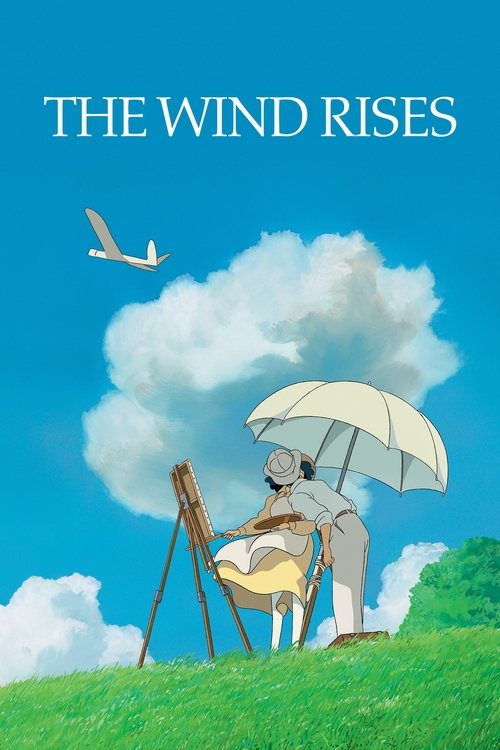
The Wind Rises
The Wind Rises Holds Beauty and Annihilation in One Hand. Miyazaki Refuses to Choose.
Directed by Hayao Miyazaki
Miyazaki made a film about dreaming under impossible conditions, and the dream produced the weapon that burned the dreamers.
Jiro Horikoshi wanted to build beautiful machines. The Zero fighter he actually built killed thousands. The Wind Rises refuses to look away from that arithmetic, and it also refuses to condemn Jiro for it. This is the film's radical move: it insists that genuine creation and genuine destruction emerge from the same source, that beauty is not innocent, and that the artist who serves pure vision may serve terror with equal purity. Most films about makers give their protagonist a moral escape hatch. Miyazaki gives Jiro none. The film holds both truths at once without flinching, and that simultaneous holding is where the esoteric depth lives.
Alchemy: The Dream-Workshop as Coniunctio
Jiro's recurring dream sequences with the Italian aircraft engineer Giovanni Caproni are the film's alchemical laboratory. In the dreams, Jiro and Caproni share a sky that does not belong to any nation's war. They speak about beauty as engineering's only worthy purpose. These sequences operate as the coniunctio, the alchemical marriage of opposites: the material and the ideal, the finite and the timeless, the maker and the vision. Caproni tells Jiro that an airplane is a cursed dream, beautiful but fated to serve destruction. The alchemist's work was always this: holding the tension between sulfur and mercury, the volatile and the fixed, until something third emerged. Jiro's Zero is that third thing, the Philosopher's Stone wrought from competing impossibilities, and like the Stone in its shadow aspect, it transforms everything it touches into ruin. The dream-sky is the only place Jiro can see clearly, which means the clearest seeing in this film is also the most dangerous. See also how Princess Mononoke runs the same alchemical current: iron-making as sacred craft that simultaneously destroys the forest that enables it.
Sufism: The Dying Beloved as the Engine of Creation
Naoko has tuberculosis when Jiro courts her. She is dying when they marry. She is dying in the sanatorium while he finalizes the Zero's design. Jiro knows this the entire time. The Sufi poets understood that the Beloved who cannot stay is the most potent force in the universe, precisely because her impermanence makes every moment of contact absolute. Naoko releases herself from medical care to spend Jiro's critical design phase beside him, choosing presence over survival. In that season, his most beautiful work comes through. Rumi's reed flute cries because it was cut from the reed bed, and the wound is why it sings. Naoko's approaching absence is Jiro's wound. The night she finally leaves, walking back into the wind so that Jiro can work unencumbered by grief, is the Sufi moment of fana: the Beloved consenting to dissolution so that the lover's highest work can complete itself. She does not die for the war. She dies so the dream can fly. Grave of the Fireflies holds the same Japan, the same annihilation, but strips out the dream entirely, leaving only the burning. Together they bracket what Miyazaki keeps insisting: that beauty and destruction share a birth canal. The Tale of the Princess Kaguya carries the same sacrifice logic, a being of luminous presence choosing to withdraw so that ordinary life can continue.
The wind that Valéry promised has risen. It asks whether you are willing to see what it lifted.
Questions this film answers
What is the deeper meaning of The Wind Rises?
Jiro Horikoshi wanted to build beautiful machines. The Zero fighter he actually built killed thousands. The Wind Rises refuses to look away from that arithmetic, and it also refuses to condemn Jiro for it. This is the film's radical move: it insists that genuine creation and genuine destruction emerge from the same source, that beauty is not innocent, and that the artist who serves pure vision may serve terror with equal purity. Most films about makers give their protagonist a moral escape hatch. Miyazaki gives Jiro none. The film holds both truths at once without flinching, and that simultaneous holding is where the esoteric depth lives.
What is the hidden symbolism in The Wind Rises?
Jiro's recurring dream sequences with the Italian aircraft engineer Giovanni Caproni are the film's alchemical laboratory. In the dreams, Jiro and Caproni share a sky that does not belong to any nation's war. They speak about beauty as engineering's only worthy purpose. These sequences operate as the coniunctio, the alchemical marriage of opposites: the material and the ideal, the finite and the timeless, the maker and the vision. Caproni tells Jiro that an airplane is a cursed dream, beautiful but fated to serve destruction. The alchemist's work was always this: holding the tension between sulfur and mercury, the volatile and the fixed, until something third emerged. Jiro's Zero is that third thing, the Philosopher's Stone wrought from competing impossibilities, and like the Stone in its shadow aspect, it transforms everything it touches into ruin. The dream-sky is the only place Jiro can see clearly, which means the clearest seeing in this film is also the most dangerous. See also how Princess Mononoke runs the same alchemical current: iron-making as sacred craft that simultaneously destroys the forest that enables it.
What esoteric traditions appear in The Wind Rises?
The Wind Rises draws from Alchemy, Sufism traditions. Miyazaki made a film about dreaming under impossible conditions, and the dream produced the weapon that burned the dreamers.
Is The Wind Rises worth watching for spiritual seekers?
The Wind Rises (2013) directed by Hayao Miyazaki is essential viewing for those interested in Alchemy, Sufism. The Wind Rises Holds Beauty and Annihilation in One Hand. Miyazaki Refuses to Choose.. It rewards multiple viewings and contemplation.
Rewatch With New Eyes
Now that you've seen the architecture, experience it again. The same film becomes a different film when you know what to watch for.
This time, watch for:
- Track the stages: blackening, whitening, reddening — death before rebirth
- Feel the love that transforms: what the heart sees that the mind cannot
Links may include affiliate partnerships that support Media Revelations