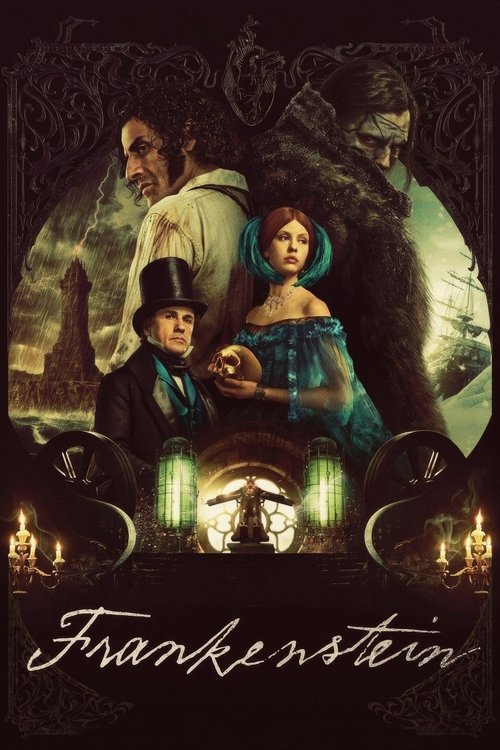
Del Toro's Frankenstein is not a horror film about a monster. It is a theological tragedy about a soul given life by a creator who refuses to love it. Victor is the Demiurge who builds without understanding. The Creature is us — conscious, suffering, desperate for the father who will not turn around.
Guillermo del Toro has spent his career defending monsters. In Frankenstein, he finally addresses the original: the Creature who is not evil but abandoned, not monstrous but unmothered. This is not a horror film. It is a Gnostic passion play — the story of a soul given life by a creator who cannot love what he made, and the catastrophe that follows when the divine spark is denied recognition. Victor Frankenstein is the Demiurge. The Creature is the pneumatic soul trapped in matter. And the tragedy is that both are damned by the same wound: the refusal to see.
The Surface
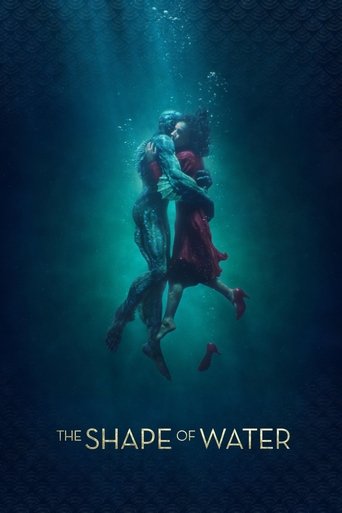
Mary Shelley's novel has been adapted countless times, usually as horror spectacle: the mad scientist, the lightning, the monster on the loose. Del Toro was never going to make that film. His entire body of work — Pan's Labyrinth, The Shape of Water, Crimson Peak — has been a sustained argument that monsters are not what we've been told they are.
His Frankenstein strips away the horror machinery to reveal what Shelley actually wrote: a tragedy about creation, abandonment, and the desperate need to be seen by one's maker. The Creature is not the villain. Victor is not the hero. Both are caught in a structure older than either of them — the structure of a cosmos where creators fail their creations.
Del Toro's visual language — the Catholic iconography, the alchemical imagery, the careful attention to what light reveals and shadow conceals — signals from the first frame that this is theology, not genre.
Victor as Demiurge
In Gnostic cosmology, the material world was created by the Demiurge — a being who believed himself to be God but was actually ignorant of the higher realms. The Demiurge creates from limitation, not fullness. He makes bodies but does not understand souls. He builds a world and then cannot comprehend why it suffers.
Victor Frankenstein is the Demiurge made flesh. He masters the technical requirements of creating life but has no framework for what life means. He can animate tissue but cannot fathom consciousness. When the Creature opens its eyes, Victor's response is not wonder but disgust — the Demiurge confronted by his own reflection.
This is the Gnostic diagnosis of the human condition: we are created by something that cannot love us, not because it is evil but because it is incomplete. Victor's tragedy is not that he created a monster. It is that he created a son and could not recognize him.
Del Toro frames Victor's laboratory as a cathedral — but a cathedral to the wrong god. The architecture of worship is present. The object of worship is absent.
The Creature as Pneumatic Soul
The Creature wakes into a world that rejects him on sight. His body is wrong — assembled from death, stitched together, visibly artificial. But inside that body is something genuine: a consciousness that feels, learns, loves, and eventually despairs.
This is the pneumatic condition. In Gnostic teaching, the pneumatic is the spiritual human — the one who carries a divine spark trapped in matter. The pneumatic soul knows it doesn't belong here. It looks at the world and feels the wrongness, the exile, the unbearable distance from home.
The Creature's journey through the film is the journey of every incarnated soul: seeking recognition, seeking love, seeking someone who will see past the body to what animates it. He learns language to communicate his interiority. He performs kindness hoping to be met with kindness. And he is rejected, again and again, because the world cannot see past his form.
Del Toro lingers on the Creature's eyes — the windows to the soul in a body that everyone else reads as soulless.
The Bride and the Refusal
The Creature's demand for a bride is not about sexuality or companionship in the ordinary sense. It is about witness. He needs someone who will see him — not as monster, not as creation, but as self.
Victor's refusal to complete the bride is the second abandonment. First he gave life and withheld love. Now he withholds the possibility of love from any source. The Creature is condemned not only to isolation but to the impossibility of ever escaping it.
This is the cruelty of the Demiurge made explicit. It is not enough to create imperfectly. The Demiurge must also prevent his creation from finding completion elsewhere. Victor destroys the bride because her existence would prove that the Creature deserves recognition — and that proof would indict Victor himself.
Del Toro stages the destruction of the bride as a crucifixion. Something innocent dies so that the creator can remain comfortable in his denial.
Fire and Ice
The film's visual structure moves from fire to ice — from the electricity of creation to the frozen wastes where creator and creature finally meet. This is alchemical structure: the movement from the initial spark (the moment of conjunction) through the stages of transformation to the final dissolution.
Fire creates; ice preserves. The laboratory is all heat and lightning — the forge where new life is made. The arctic is where everything that was made comes to be judged. Victor pursues the Creature into the frozen north, but the pursuit is also a flight. He is running from what he made and toward it at the same time.
Del Toro's arctic is not just a landscape. It is the nigredo — the blackening, the stage of alchemical death where all that is false must be stripped away. Both Victor and the Creature enter the ice as the men they have been. Neither will leave the same.
The white expanse is also the blank page, the cleared ground, the place where the story can finally be told without the noise of civilization. In the ice, there are no witnesses except each other. The truth can finally be spoken.
The Transmission
Del Toro's Frankenstein transmits a single, devastating recognition: the monster is not the one who was made. The monster is the one who would not love what he made.
This reversal is theological dynamite. Every horror reading of the story assumes the Creature is the problem to be solved. Del Toro insists that the Creature is the solution that was rejected. The capacity for love, for growth, for transformation — it was all there. Victor simply could not see it.
The film asks what it would mean to actually meet our creations — our children, our works, our consequences — as beings with their own interiority. What if the thing we made turned out to be more human than we are? What then?
This is del Toro's life question, asked in every film: What do we owe to the creatures we have called monstrous? His answer, consistent across decades of work, is everything. We owe them everything. They are us, seen from the outside.
Frankenstein is not a warning about scientific hubris. It is an indictment of the soul that creates and refuses to recognize what it has created. The fire was never the problem. The coldness was.
Questions this film answers
What is the deeper meaning of Frankenstein?
Guillermo del Toro has spent his career defending monsters. In Frankenstein, he finally addresses the original: the Creature who is not evil but abandoned, not monstrous but unmothered. This is not a horror film. It is a Gnostic passion play — the story of a soul given life by a creator who cannot love what he made, and the catastrophe that follows when the divine spark is denied recognition. Victor Frankenstein is the Demiurge. The Creature is the pneumatic soul trapped in matter. And the tragedy is that both are damned by the same wound: the refusal to see.
What is the hidden symbolism in Frankenstein?
Mary Shelley's novel has been adapted countless times, usually as horror spectacle: the mad scientist, the lightning, the monster on the loose. Del Toro was never going to make that film. His entire body of work — Pan's Labyrinth, The Shape of Water, Crimson Peak — has been a sustained argument that monsters are not what we've been told they are.
What esoteric traditions appear in Frankenstein?
Frankenstein draws from Gnosticism, Alchemy traditions. Del Toro's Frankenstein is not a horror film about a monster. It is a theological tragedy about a soul given life by a creator who refuses to love it. Victor is the Demiurge who builds without understanding. The Creature is us — conscious, suffering, desperate for the father who will not turn around.
What does Frankenstein teach about victor as demiurge?
Victor's tragedy is not that he created a monster. It is that he created a son and could not recognize him. In Gnostic cosmology, the material world was created by the Demiurge — a being who believed himself to be God but was actually ignorant of the higher realms. The Demiurge creates from limitation, not fullness. He makes bodies but does not understand souls. He builds a world and then cannot comprehend why it suffers.
What does Frankenstein teach about the creature as pneumatic soul?
The Creature's journey is the journey of every incarnated soul: seeking someone who will see past the body to what animates it. The Creature wakes into a world that rejects him on sight. His body is wrong — assembled from death, stitched together, visibly artificial. But inside that body is something genuine: a consciousness that feels, learns, loves, and eventually despairs.
Is Frankenstein worth watching for spiritual seekers?
Frankenstein (2025) directed by Guillermo del Toro is essential viewing for those interested in Gnosticism, Alchemy, Demiurge. The Creature as Abandoned Soul. It rewards multiple viewings and contemplation.
Rewatch With New Eyes
Now that you've seen the architecture, experience it again. The same film becomes a different film when you know what to watch for.
This time, watch for:
- Watch for the false world vs. the real — who is asleep, who awakens
- Track the stages: blackening, whitening, reddening — death before rebirth
Links may include affiliate partnerships that support Media Revelations
The Descent Continues
Where this thread leads next.

Pan's Labyrinth 2006
The Underground Kingdom as Refuge from Fascism
Read the revelation →