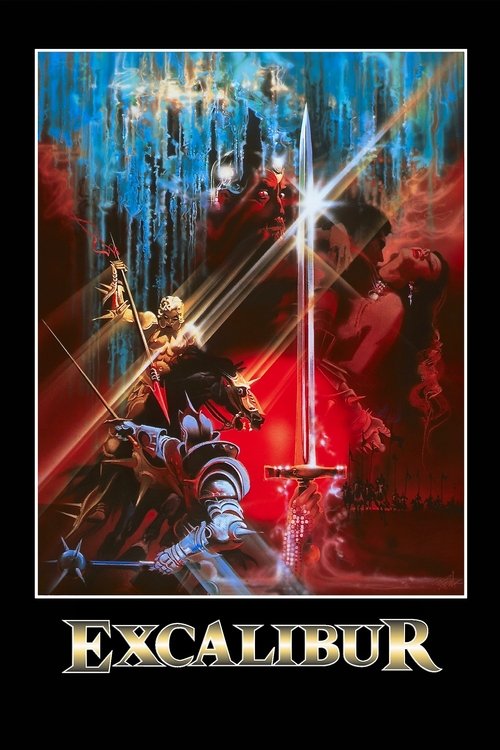
Excalibur is not a film about King Arthur. It is a film about the relationship between the sacred and the land, between the ruler and the realm, between human will and the forces that exceed it. The sword is not a weapon. The sword is authority itself, granted from below, returning when the time has ended.
Excalibur is the definitive Arthurian film because Boorman understood what the myth actually is: a teaching about sacred kingship, the Grail as healing for a wounded land, and the necessary union between masculine will and feminine wisdom. The film operates on multiple levels simultaneously — adventure spectacle, psychological drama, and esoteric instruction. The central teaching: 'The land and the King are one.' When Arthur rules well, the land flourishes. When Arthur is wounded by his own sin with Morgana, the land becomes a Waste Land. The Grail quest is not about finding an object — it is about healing the king so the king can heal the land. Perceval's answer to the Grail question — 'What is the secret of the Grail? Who does it serve?' — is the key: 'You, my lord.' The king. The land. The same thing. Merlin represents the old magic, the wild forces that must be tamed by civilization but cannot be destroyed without disaster. When Merlin's wisdom is lost, Arthur's court declines. The film shows this as inevitable: magic recedes as the world becomes Christian, rational, 'modern.' But something essential is lost in this recession. The Waste Land is the result.
The Surface
John Boorman's Excalibur compresses the entire Arthurian cycle into two hours: Uther's lust and Merlin's manipulation, Arthur's conception through magical deception, the sword in the stone, Camelot's glory, Lancelot and Guinevere's adultery, the Grail quest, Mordred's rebellion, and the final battle. The scope is epic, operatic, deliberately overwhelming.
The film's look — green-tinged armor, forests of silver and emerald, Merlin's glittering crystalline skull-cap — creates a world that exists outside historical time. This is not medieval England; this is the mythic Britain that existed before history proper, when magic still worked and gods still walked.
Wagner dominates the soundtrack, particularly the 'Siegfried's Funeral March' that accompanies the charging knights and the 'Tristan und Isolde' prelude that scores the adultery. The music announces the register: this is not realism. This is myth, and myth operates by different rules.
The Sword from the Lake
Excalibur is not a sword Arthur earns or wins. It is given to him by the Lady of the Lake — by feminine power rising from the depths to arm masculine authority. This origin is essential. Legitimate rule does not come from conquest. It comes from relationship with the sacred feminine, symbolized by water, depth, the unconscious.
When Uther uses Excalibur to serve his lust rather than justice, he loses it. Merlin drives it into the stone, where it waits for the rightful king. The sword chooses; the king does not choose the sword. This reversal of power is the point: true authority is not claimed but recognized.
Arthur pulls the sword from the stone not because he is strongest but because he is rightful. The sword is an instrument of discrimination — it knows who should wield it. When Arthur breaks Excalibur fighting Lancelot in a moment of pride, the Lady restores it, but the lesson is clear: the sword can be lost through unworthiness.
At the film's end, Arthur commands Perceval to throw Excalibur back into the lake. The Lady catches it and draws it down. The authority returns to its source. The myth completes its circuit. The sword belongs to the depths, lent for a time, reclaimed when the time has ended.
The Wound and the Waste Land
Arthur's sin with Morgana — unknowingly fathering Mordred with his half-sister — creates a wound that spreads to the land itself. The king's body and the kingdom's body are the same body. What harms one harms the other. Arthur withdraws into illness; Britain withers into waste.
This is the core teaching of sacred kingship, preserved in Celtic traditions and the Grail romances: the ruler is not merely political authority but mystical representative of the land's fertility. A wounded king means a wounded land. A healed king means a healed land.
The Grail quest is therefore not about individual salvation. It is about finding the medicine that can heal the king. The Grail is that medicine — but the Grail only works when the seeker understands the question. 'What is the secret of the Grail? Who does it serve?' Until Perceval answers correctly, the Grail remains inert.
Perceval's answer — 'The King!' — is simple but contains the entire teaching. The Grail serves the king because the king serves the land because the land is the people because the people are the king. The mystical identity that sounds like metaphor is, in the film's logic, literal. Heal the king and the flowers bloom.
Merlin and the Passing of Magic
Nicol Williamson's Merlin is the film's most complex figure — trickster, prophet, manipulator, guide. He serves the future Arthur sees, but he also serves older forces that Arthur's Christian court will marginalize. Merlin knows that his time is ending. The old magic is receding.
Merlin's seduction by Morgana and imprisonment in crystal is the pivot point. When wisdom is trapped, when the old ways are sealed away, the court loses its access to the deep powers. Arthur's decline follows Merlin's absence. The king without the wizard is incomplete.
This is Boorman's elegiac vision: civilization advances but loses its connection to the numinous. The rational, Christian, political order replaces the magical order, and something essential is sacrificed. The Waste Land is not just Arthur's wound. It is modernity's wound — the loss of contact with the powers that once sustained the land.
Merlin's final appearance — helping Perceval understand the Grail — comes from his crystal prison, his consciousness still active even as his body is entombed. The wisdom persists but is inaccessible except to those who know how to reach it. This is the condition of esoteric teaching in any age: available but hidden, present but buried.
The Final Battle
The confrontation between Arthur and Mordred is the battle between legitimate and illegitimate authority, between the king who serves the land and the would-be king who would consume it. Mordred's golden armor reflects his nature: brilliant, flashy, hollow. Arthur's battered silver is the mark of a king who has suffered for his people.
Arthur kills Mordred but is mortally wounded — the prophecy fulfilled, the circle closed. The Round Table is broken. The knights are dead. Camelot falls. This is not failure but completion. The myth was never about permanent victory. It was about what is possible for a time, and what is lost when that time ends.
Perceval carries Arthur to the lake where a ship waits to carry him to Avalon. The king does not die but passes beyond — to the Isle of Apples, to the Otherworld, to wherever wounded gods go to heal. The promise implicit: he will return when Britain needs him. But that is another story, for another time.
The film ends with dawn breaking over the lake, the sword returned to the Lady, the king departed. The world that remains is our world — diminished, disenchanted, waiting. Excalibur remembers what we have forgotten and makes us feel the loss.
The Transmission
Excalibur transmits the Arthurian myth in its fullness — not as adventure story or romance but as teaching about sacred kingship, the union of masculine and feminine, and the cost of civilization's break from the numinous. The film takes the myth seriously as myth, not as history to be rationalized.
The visual language — armor that gleams impossibly, forests that seem alive, Merlin's crystalline presence — creates a world where the mythic dimension is visible. This is not realistic filmmaking. This is imaginal filmmaking, depicting the world as it appears to the mythic imagination.
Boorman understood that the Arthurian cycle is not about Arthur. It is about the relationship between human rule and sacred power, between the visible kingdom and the invisible forces that sustain it. When that relationship is broken — by sin, by hubris, by the simple recession of magic — the result is the Waste Land.
The film asks: what have we lost? What wound do we carry that we no longer know how to heal? What Grail might restore us, if we knew the right question to ask? Excalibur does not answer. It simply reminds us that the questions exist, and that we have forgotten to ask them.
Questions this film answers
What is the deeper meaning of Excalibur?
Excalibur is the definitive Arthurian film because Boorman understood what the myth actually is: a teaching about sacred kingship, the Grail as healing for a wounded land, and the necessary union between masculine will and feminine wisdom. The film operates on multiple levels simultaneously — adventure spectacle, psychological drama, and esoteric instruction. The central teaching: 'The land and the King are one.' When Arthur rules well, the land flourishes. When Arthur is wounded by his own sin with Morgana, the land becomes a Waste Land. The Grail quest is not about finding an object — it is about healing the king so the king can heal the land. Perceval's answer to the Grail question — 'What is the secret of the Grail? Who does it serve?' — is the key: 'You, my lord.' The king. The land. The same thing. Merlin represents the old magic, the wild forces that must be tamed by civilization but cannot be destroyed without disaster. When Merlin's wisdom is lost, Arthur's court declines. The film shows this as inevitable: magic recedes as the world becomes Christian, rational, 'modern.' But something essential is lost in this recession. The Waste Land is the result.
What is the hidden symbolism in Excalibur?
John Boorman's Excalibur compresses the entire Arthurian cycle into two hours: Uther's lust and Merlin's manipulation, Arthur's conception through magical deception, the sword in the stone, Camelot's glory, Lancelot and Guinevere's adultery, the Grail quest, Mordred's rebellion, and the final battle. The scope is epic, operatic, deliberately overwhelming.
What esoteric traditions appear in Excalibur?
Excalibur draws from Alchemy, Initiation traditions. Excalibur is not a film about King Arthur. It is a film about the relationship between the sacred and the land, between the ruler and the realm, between human will and the forces that exceed it. The sword is not a weapon. The sword is authority itself, granted from below, returning when the time has ended.
What does Excalibur teach about the sword from the lake?
Legitimate rule does not come from conquest. It comes from relationship with the sacred feminine. Excalibur is not a sword Arthur earns or wins. It is given to him by the Lady of the Lake — by feminine power rising from the depths to arm masculine authority. This origin is essential. Legitimate rule does not come from conquest. It comes from relationship with the sacred feminine, symbolized by water, depth, the unconscious.
Is Excalibur worth watching for spiritual seekers?
Excalibur (1981) directed by John Boorman is essential viewing for those interested in Grail, Kingship, Alchemy. The Land and the King Are One. It rewards multiple viewings and contemplation.
Rewatch With New Eyes
Now that you've seen the architecture, experience it again. The same film becomes a different film when you know what to watch for.
This time, watch for:
- Track the stages: blackening, whitening, reddening — death before rebirth
- Mark the threshold: the old self dies, the ordeal transforms, the new self returns
Links may include affiliate partnerships that support Media Revelations