M
M Is About a City That Hunts Its Own Shadow and Discovers It Cannot Convict It
Directed by Fritz Lang
Fritz Lang built the first modern serial-killer film and used it to ask a question no procedural has answered since: if the murderer cannot help himself, who exactly is guilty. The answer the criminals demand and the answer the film gives are not the same.
A child-killer stalks Berlin. The police cannot catch him, so the city's organized criminals, whose business the manhunt has ruined, hunt him themselves and drag him to a kangaroo court in a derelict distillery. Hans Beckert, played by Peter Lorre, is cornered and forced to speak. Everyone remembers this as a thriller about catching a monster. What Lang actually filmed is a trial about the nature of evil itself, staged by the guilty against a man who claims he is not free. The whole underworld wants him dead for what he chose. He stands in the center of the mob and screams that he never chose anything.
Demonological Reading: The Compulsion That Speaks in the First Person as Someone Else
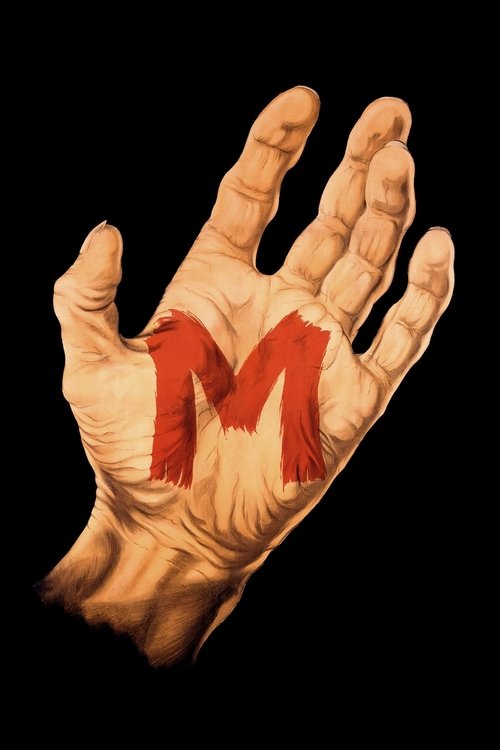
The oldest language for what afflicts Beckert is possession. He describes an inner drive that is not him and will not be reasoned with: "Always there is this evil force inside me. It is there all the time, driving me out to wander the streets, following me, silently, but I can feel it there. It is myself pursuing myself." He whistles Grieg's "In the Hall of the Mountain King" only when the compulsion takes him, so that the tune becomes the audible signature of the thing that rides him. A blind balloon-seller recognizes the melody and marks him, and the letter M is chalked onto his coat from behind. He is branded by the sound the demon makes.
This is the demonological structure exactly: an agency inside the person that seizes control, announces itself through a repeated sign, and can be identified by that sign though the host cannot see it on his own back. Beckert is not defending murder. He is testifying to bondage, describing an occupant. The film refuses to tell you whether that occupant excuses him.
Jungian Reading: A Whole Society Externalizes Its Darkness Onto One Marked Man
Lang shoots the city and the underworld as mirror images. Police and criminals hold parallel meetings, filmed with matching compositions, both hunting the same prey, both organized, both certain of their own legitimacy. Beckert becomes the collective shadow: the one figure onto whom an entire anxious society can load its darkness so that everyone else may feel clean. The mob that judges him is composed of thieves and murderers who have simply drawn a line beneath their own crimes and above his.
The film's final image is the deepest cut. As the mob prepares to lynch him, the real police break in, and a mother says to the camera, "This won't bring back our children. We too should keep a closer watch on our children." The shadow cannot be resolved by execution. Watchfulness turned inward is the only response the film will endorse, because the darkness was never contained in one marked coat.
Questions this film answers
What is the deeper meaning of M?
A child-killer stalks Berlin. The police cannot catch him, so the city's organized criminals, whose business the manhunt has ruined, hunt him themselves and drag him to a kangaroo court in a derelict distillery. Hans Beckert, played by Peter Lorre, is cornered and forced to speak. Everyone remembers this as a thriller about catching a monster. What Lang actually filmed is a trial about the nature of evil itself, staged by the guilty against a man who claims he is not free. The whole underworld wants him dead for what he chose. He stands in the center of the mob and screams that he never chose anything.
What is the hidden symbolism in M?
The oldest language for what afflicts Beckert is possession. He describes an inner drive that is not him and will not be reasoned with: "Always there is this evil force inside me. It is there all the time, driving me out to wander the streets, following me, silently, but I can feel it there. It is myself pursuing myself." He whistles Grieg's "In the Hall of the Mountain King" only when the compulsion takes him, so that the tune becomes the audible signature of the thing that rides him. A blind balloon-seller recognizes the melody and marks him, and the letter M is chalked onto his coat from behind. He is branded by the sound the demon makes.
What esoteric traditions appear in M?
M draws from Jungian, Demonology traditions. Fritz Lang built the first modern serial-killer film and used it to ask a question no procedural has answered since: if the murderer cannot help himself, who exactly is guilty. The answer the criminals demand and the answer the film gives are not the same.
Is M worth watching for spiritual seekers?
M (1931) directed by Fritz Lang is essential viewing for those interested in Jungian, Demonology. M Is About a City That Hunts Its Own Shadow and Discovers It Cannot Convict It. It rewards multiple viewings and contemplation.
Rewatch With New Eyes
Now that you've seen the architecture, experience it again. The same film becomes a different film when you know what to watch for.
This time, watch for:
- Meet the shadow: what is rejected, projected, and finally integrated
- Identify the hierarchy: which demon, which rank, which grimoire it comes from
Links may include affiliate partnerships that support Media Revelations
The Descent Continues
Where this thread leads next.
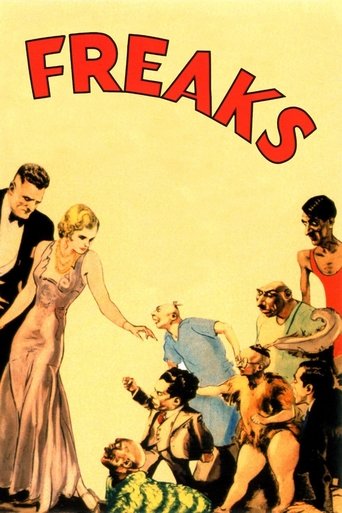
Freaks 1932
Freaks Is an Initiation Rite Filmed as a Circus, and the Beautiful Ones Fail It
Read the revelation →