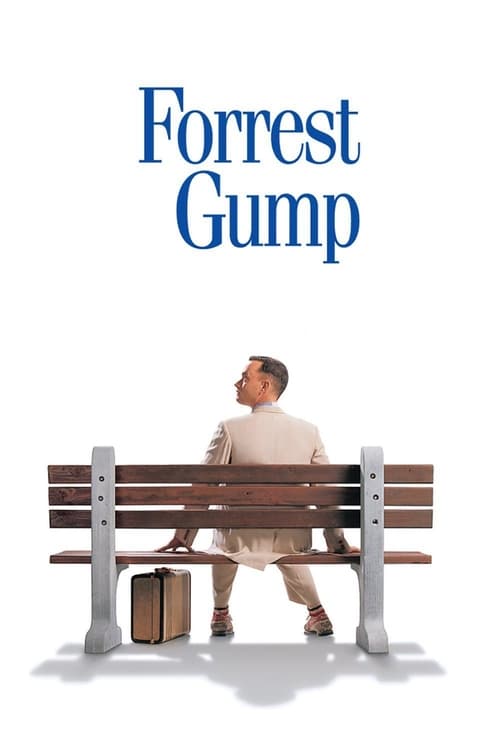
Forrest Gump
The Holy Fool and the Feather of Grace
Directed by Robert Zemeckis
Forrest Gump is not a film about a simpleton who got lucky. It is a film about the holy fool, the man so empty of self that grace moves through him without resistance, and the feather that opens and closes it is the whole argument about fate and chance in a single image.
Forrest Gump is not a film about a simpleton who gets lucky. It is a film about the one figure every wisdom tradition guards as a secret, the holy fool, the man so empty of self that grace moves through him without resistance. Forrest cannot scheme, cannot hold a grudge, cannot want the fruit of his own actions, and so he becomes the still point around which an entire violent century turns. The feather that drifts down in the first frame and lifts away in the last is the whole argument in a single image, the question of whether a life is written or blown about by chance, and the film answers with both at once. Jenny is the wounded soul that cannot stop running from itself. Lieutenant Dan is the man who rages at a destiny denied him and has to make his peace with heaven on the mast of a boat in a storm. And Forrest, who understands none of it, is the only one who arrives home.
The Surface: America's Favorite Feel-Good Movie
A man sits on a bench at a bus stop in Savannah with a box of chocolates on his lap and tells his life story to whoever happens to sit down next to him.
Over two hours that story turns out to contain most of the second half of the American century. A boy in leg braces who runs so fast the braces fly off. A college football star, a war hero in Vietnam, a ping-pong champion who thaws the Cold War, a shrimp-boat millionaire, a jogger who crosses the country three times, and a man who loves one woman his whole life without ever quite winning her. The film won Best Picture, made Tom Hanks a saint of the multiplex, and gave the culture a decade of quotable lines about chocolates and running.
The usual arguments about it split two ways. One camp calls it a warm parable about an ordinary man who succeeds through decency and persistence. The other calls it reactionary comfort food, a movie that rewards its passive, apolitical hero with every prize while punishing Jenny, the one character who actually questions her country, with degradation and death. Both readings are looking at the same surface and both are partly right.
Underneath the sentiment there is a much older structure, and once you see it the film stops being a nostalgic biopic and becomes what it always was, a parable in the strict religious sense, a teaching story dressed in the costume of one man's luck. The clues are not hidden. They are the two objects the film opens and closes on, the feather and the box of chocolates, and the one word his mother leaves him with, and nobody trained to read parables could miss them.
Forrest Is the Holy Fool Every Tradition Keeps as a Secret
Every wisdom tradition guards a figure who looks, from the outside, like an idiot.
Parsifal is the pure fool who alone can find the Grail, precisely because he is too simple to be cunning and asks the healing question no clever knight thought to ask. The Tarot's Fool is card zero, the figure stepping off the cliff with a white rose and a small dog, both the beginning of the journey and its end, the innocence you set out with and the innocence you earn back. The Russian tradition has the yurodivy, the holy idiot the tsar himself feared, because the one man exempt from courtly cunning was the one man who could speak the truth to power. The Sufis have the majzub, the God-intoxicated one whose reason has been burned clean away by nearness to the divine. Dostoevsky wrote a whole novel about this man and titled it, without irony, The Idiot.
Forrest is this figure set loose in American history. He has no strategy, no irony, no self-image to defend, no inner committee second-guessing what he does. Because there is no ego straining the world through its wants, whatever passes through him comes out clean. He teaches a young Elvis the hips that will scandalize a nation, he stumbles into the break-in that ends a presidency, he hands the age its smiley-face shirt and its bumper-sticker philosophy, and he never once realizes he did any of it. The force of the century moves through him the way light moves through clear glass.
This is why the cynical reading, that the film rewards a passive fool, misses the point of the fool. He is not passive. He acts constantly, more than anyone else on screen. What he lacks is the grasping that turns action into striving. The tradition calls this a station, not a defect. The fool is not the man who has fallen short of understanding. He is the man on the far side of it.
Stupid Is as Stupid Does: Action Without Attachment to the Fruit
His mother gives him the sentence he lives by. 'Stupid is as stupid does.' A man is not what he thinks or what others take him for. A man is what he does, and Forrest acts without the paralyzing layer of self-consultation that governs everyone around him.
This is karma yoga almost to the letter, the teaching at the heart of the Bhagavad Gita, action performed without attachment to its result. Forrest runs because running feels good in his legs. He plays ping-pong because the ball keeps coming back. He fishes for shrimp because he made a promise to a dead friend. He never acts in order to get. When his shrimp company makes him one of the richest men in the country through a stake in what he calls 'some kind of fruit company,' meaning Apple, he cannot be bothered to grasp what he owns. The money is real and it means nothing to him, because he was never fishing for money.
Non-attachment of this kind is easy to mistake for simplemindedness, which is exactly why the tradition hides it inside the fool. It is not indifference. It is doing the deed all the way through and then letting go of the outcome completely, and it is one of the hardest disciplines a human being can attempt. Forrest does it without effort because there is no self in him demanding a return.
Set him beside everyone else in the film and the contrast is the whole meaning. Lieutenant Dan is bound to the death he believes he is owed. Jenny is bound to the need to be anywhere but inside her own skin. The binding is the wound in each of them. Forrest carries no such binding, and that, not luck, is why he walks through a century that breaks nearly everyone he loves.
The Feather Is the Whole Argument: Providence and Chance at Once
The feather is the most important thing in the film and it never says a word.
It drifts down out of the sky in the first shot, tumbling on the wind past a church steeple and down through the town until it comes to rest against Forrest's mud-stained shoe. He picks it up and presses it into a book. In the last shot it lifts off that same book and rises back into the blue over his son. Everything between those two moments is held inside the flight of a single feather, and the film is daring you to ask what the feather is.
Forrest answers, standing at Jenny's grave, in the line the whole movie is built to earn. 'I don't know if we each have a destiny, or if we're all just floating around accidental-like on a breeze. But I think maybe it's both. Maybe both is happening at the same time.' That is not a line for a greeting card. It is the oldest problem in theology, providence against chance, the question of whether a life is authored or merely blown about, and the film refuses to solve it because the truth is the paradox and not either half.
Kabbalah calls the divine attention to the falling of every leaf hashgachah, providence, and its sages spent centuries on the exact tension Forrest names, whether the divine watches each sparrow or whether the world runs on its own machinery once set in motion. The deepest answer they reach is the one the fool blurts at a graveside, that the two are one thing seen from two heights. The box of chocolates is the same teaching in candy. You do not choose the box. The box is handed to you, and that is fate. What you do with the piece already in your hand is the freedom. Determinism of the deal, liberty of the eating.
Jenny Is the Wounded Soul, the Anima He Loves and Cannot Save
Jenny is not a love interest the plot forgot to develop. She is Forrest's soul, the anima, the interior feminine he spends his whole life reaching toward and cannot heal.
Where Forrest is whole because he is empty, Jenny is shattered because she is full, full of a father's abuse that taught her, before she could read, that her body was a thing to be used. Everything she does after is flight. She runs through every exit her era offers, the folk stage, radical politics, hard drugs, a parade of men who each repeat her father, and finally the balcony ledge she stands on with one foot raised. As a girl she kneels in a field and prays, 'make me a bird so I can fly far away.' That prayer is the film's other flight image, the wounded mirror of the feather. The feather drifts and is carried wherever the wind sets it down. Jenny flees and is hunted by the thing inside her.
In Jungian terms the lesson is that Forrest cannot individuate by fixing her, because the anima is never healed from the outside. He can only love her without any condition and outlast her running, and she can only come home when she has finally run out of road. That she returns carrying his child and dying of a virus the film will not name is its hardest and truest note. The soul comes home wounded past saving. Love does not undo the wound. Love receives it, and raises the child it leaves behind.
Lieutenant Dan Is the Book of Job on a Shrimp Boat
Lieutenant Dan is the film's second protagonist and carries its most complete initiatory arc, the one Forrest, who never suffers a dark night, cannot have.
Dan comes from a family that has given a son to death in every American war, and he intends to keep the covenant and die gloriously with his men. When Forrest hauls him off the field and saves his life, Dan does not thank him. He curses him, because Forrest has cheated him of the destiny he was raised for and left him legless and alive in a body he never agreed to keep. This is the Book of Job set in a veterans' ward, a man certain he knew the shape of his fate, stripped of his legs, his purpose, and his dignity, screaming at a God who broke the deal.
His descent is total. The wheelchair, the bottle, the squalor, the hookers on New Year's Eve, the open contempt for Forrest's idiot faith. Then the turn comes, and it comes on the water. In the middle of the hurricane that sinks every other boat in the bay, Dan climbs the mast and screams his rage straight up into the storm, daring God to finish him, and God declines. Somewhere in that wind he makes his peace. Afterward, in the calm, he slips over the side into the sea and simply floats, and Forrest tells us, in the plainest miracle the film allows itself, that he believes Lieutenant Dan made his peace with God that day.
He returns with steel legs and a wife and thanks Forrest for the life he once cursed him for saving. The man who wanted to die the death his fathers died was healed, and not by getting the destiny he demanded. He was healed by surrendering it.
The Run Ends the Only Way a True Pilgrimage Can
Then there is the run. Jenny leaves again in the dark, and Forrest, with nothing to hold and nothing to say, walks out the door and starts running, and does not stop for three years, two months, and fourteen days, across the country and back and across again.
He runs for no cause at all. Reporters chase him down demanding to know what he is running for, world peace, the homeless, women's rights, the environment, and he is running for none of it. Crowds gather and fall in behind him and turn him into a prophet, reading scripture into a man who is only moving because moving was the one thing grief left him able to do. He hands the age two of its favorite slogans by accident along the way and keeps going, understanding none of the meaning that everyone insists on pouring into him.
This is the pilgrim, the wandering dervish, the renunciate who walks until the walking is finished and not a step longer. And the end of it is the most Taoist moment in American film. He stops dead in the middle of a desert highway, the crowd behind him holding its breath for the revelation, and he says, 'I'm pretty tired. I think I'll go home now.' No teaching. No summit reached. The walk was the entire point, and when it was done he simply stopped, which is wu wei exactly, action that ends when it is exhausted and not one stride after.
Then he goes home. That is the secret the clever spend their lives failing to learn. Of everyone in the film, the fool is the only one who arrives. The last frame lifts the feather off the book beside his son and returns it to the sky, the boy already sharper than his father and bound to carry it some other way. The feather belongs to no one. It lands where the breeze and the destiny, both happening at the same time, decide to set it down.
You will not watch it as a feel-good movie again. It was always a parable about the one man empty enough to let grace land on him, and clear enough to go home when the running was done.
Questions this film answers
What is the deeper meaning of Forrest Gump?
Forrest Gump is not a film about a simpleton who gets lucky. It is a film about the one figure every wisdom tradition guards as a secret, the holy fool, the man so empty of self that grace moves through him without resistance. Forrest cannot scheme, cannot hold a grudge, cannot want the fruit of his own actions, and so he becomes the still point around which an entire violent century turns. The feather that drifts down in the first frame and lifts away in the last is the whole argument in a single image, the question of whether a life is written or blown about by chance, and the film answers with both at once. Jenny is the wounded soul that cannot stop running from itself. Lieutenant Dan is the man who rages at a destiny denied him and has to make his peace with heaven on the mast of a boat in a storm. And Forrest, who understands none of it, is the only one who arrives home.
What is the hidden symbolism in Forrest Gump?
A man sits on a bench at a bus stop in Savannah with a box of chocolates on his lap and tells his life story to whoever happens to sit down next to him.
What esoteric traditions appear in Forrest Gump?
Forrest Gump draws from Sufism, Buddhism, Kabbalah, Jungian, Initiation traditions. Forrest Gump is not a film about a simpleton who got lucky. It is a film about the holy fool, the man so empty of self that grace moves through him without resistance, and the feather that opens and closes it is the whole argument about fate and chance in a single image.
Is Forrest Gump worth watching for spiritual seekers?
Forrest Gump (1994) directed by Robert Zemeckis is essential viewing for those interested in The Holy Fool, Karma Yoga, Providence. The Holy Fool and the Feather of Grace. It rewards multiple viewings and contemplation.
Rewatch With New Eyes
Now that you've seen the architecture, experience it again. The same film becomes a different film when you know what to watch for.
This time, watch for:
- Feel the love that transforms: what the heart sees that the mind cannot
- See impermanence: what clings, what releases, what remains
- Notice the vessels: what contains, what shatters, what repairs
Links may include affiliate partnerships that support Media Revelations
The Descent Continues
Where this thread leads next.
The Tree of Life 2011
Nature, Grace, and the Wound of Incarnation
Read the revelation →