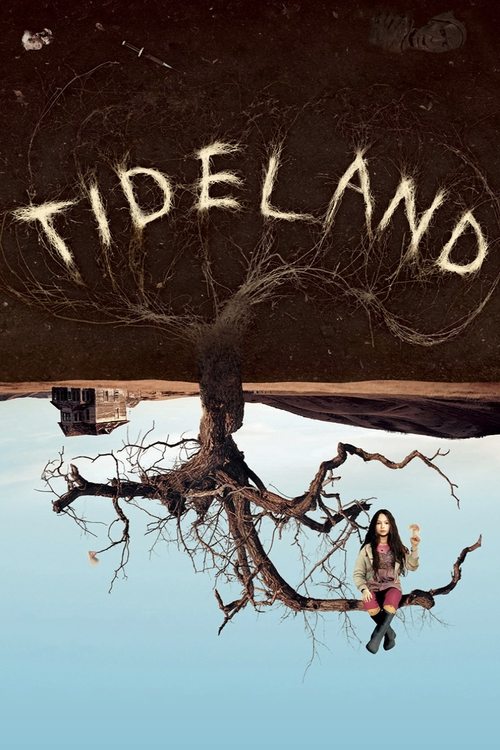
Tideland
Tideland Is What a Child's Psyche Actually Does to Survive Horror: It Does Not Break, It Enchants
Directed by Terry Gilliam
Gilliam opens the film by warning you that many will hate it. He means: you will want to look away from what a child will do to keep living.
Jeliza-Rose is a little girl whose parents are heroin addicts. She prepares her father's needle for him. Her mother dies of an overdose; then her father drives her to a rotting farmhouse on an empty Texas prairie and dies there too, in his chair, where he slowly decomposes across the entire film while Jeliza-Rose keeps talking to him and keeps living beside the corpse. Around this unbearable fact she constructs an entire luminous world: severed doll heads she wears on her fingertips and gives names and personalities, a neighbor woman who is a taxidermist and witch, and that woman's brain-damaged adult brother Dickens, who becomes her playmate and imagined lover. Audiences call the film disgusting. It is not disgusting. It is an accurate portrait of the one power a child has when reality is annihilating: the power to re-enchant it faster than it can destroy her.
Shamanic Reading: The Child Who Walks in Both Worlds Because She Was Given No Choice
Shamanic cultures know a figure who lives between the world of the living and the world of the dead and passes freely across the membrane. Usually that figure is made by an initiatory crisis, an illness or catastrophe that cracks the ordinary self open. Jeliza-Rose is that figure, minted by the death of both parents in a house with no adults left alive. She converses with her dead father as though the border does not exist, and for her it does not. She has crossed into the country where the dead still speak, because she had nowhere else to stand.
The doll heads on her fingers are her spirit familiars, the shaman's helping voices given faces and names. Dell the taxidermist, who preserves dead animals and even attempts to preserve the father's corpse, is the underworld guardian who fixes the dead into keepable form. Dickens, who believes a shark lives in the prairie and that he must destroy the passing train, is the wounded ally in the other world. Jeliza-Rose moves among all of them unharmed, and the film's final image, a train wreck she watches with wonder, is the initiate emerging from the underworld still able to see the world as marvelous. She has not been destroyed. She has been made into someone who can survive anything by seeing it transfigured.
Jungian Reading: Imagination as the Psyche's Emergency Compensation
Jung observed that when the conscious situation becomes intolerable, the unconscious produces compensating images of extraordinary intensity, and that this is not madness but the psyche's self-regulation. Jeliza-Rose's fantastical world is textbook compensation, generated at exactly the pressure the outer facts require. The worse the reality, the more vivid the enchantment, because the enchantment is load-bearing. It is holding a personality together over a void that would otherwise swallow it.
Watch what the fantasy never does: it never lies to her about death. She knows her father is dead. She narrates his decay. The imagination is not denial, it is metabolism, a way to keep contact with the horror without being shattered by it. This is why the film refuses to rescue her with sentiment. Jung warned that the compensating image can either heal or possess. Jeliza-Rose ends the film alive, curious, and profoundly alone, holding a fragile equilibrium that the world has done nothing to earn her. The enchantment worked. That is the mercy and the indictment at once.
Questions this film answers
What is the deeper meaning of Tideland?
Jeliza-Rose is a little girl whose parents are heroin addicts. She prepares her father's needle for him. Her mother dies of an overdose; then her father drives her to a rotting farmhouse on an empty Texas prairie and dies there too, in his chair, where he slowly decomposes across the entire film while Jeliza-Rose keeps talking to him and keeps living beside the corpse. Around this unbearable fact she constructs an entire luminous world: severed doll heads she wears on her fingertips and gives names and personalities, a neighbor woman who is a taxidermist and witch, and that woman's brain-damaged adult brother Dickens, who becomes her playmate and imagined lover. Audiences call the film disgusting. It is not disgusting. It is an accurate portrait of the one power a child has when reality is annihilating: the power to re-enchant it faster than it can destroy her.
What is the hidden symbolism in Tideland?
Shamanic cultures know a figure who lives between the world of the living and the world of the dead and passes freely across the membrane. Usually that figure is made by an initiatory crisis, an illness or catastrophe that cracks the ordinary self open. Jeliza-Rose is that figure, minted by the death of both parents in a house with no adults left alive. She converses with her dead father as though the border does not exist, and for her it does not. She has crossed into the country where the dead still speak, because she had nowhere else to stand.
What esoteric traditions appear in Tideland?
Tideland draws from Shamanism, Jungian traditions. Gilliam opens the film by warning you that many will hate it. He means: you will want to look away from what a child will do to keep living.
Is Tideland worth watching for spiritual seekers?
Tideland (2005) directed by Terry Gilliam is essential viewing for those interested in Shamanism, Jungian. Tideland Is What a Child's Psyche Actually Does to Survive Horror: It Does Not Break, It Enchants. It rewards multiple viewings and contemplation.
Rewatch With New Eyes
Now that you've seen the architecture, experience it again. The same film becomes a different film when you know what to watch for.
This time, watch for:
- Follow the descent: what dies, what guides, what returns transformed
- Meet the shadow: what is rejected, projected, and finally integrated
Links may include affiliate partnerships that support Media Revelations
The Descent Continues
Where this thread leads next.
Pan's Labyrinth 2006
The Underground Kingdom as Refuge from Fascism
Read the revelation →