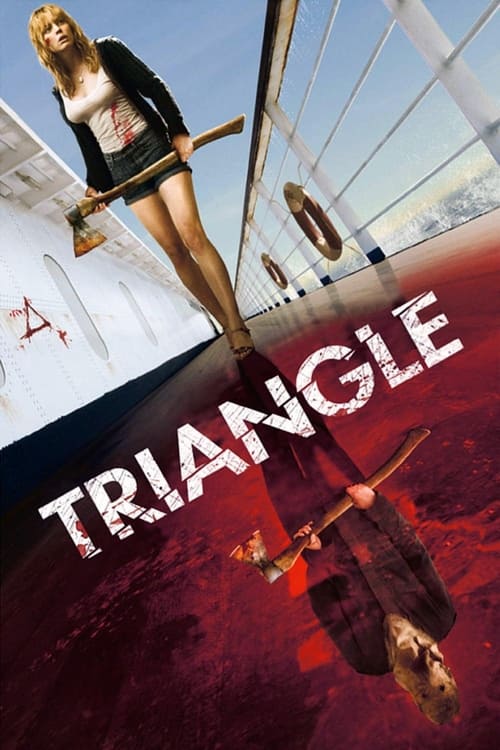
Triangle
The Aeolus Is Jess's Psyche, Looping on the Morning She Failed Her Son
Directed by Christopher Smith
Christopher Smith's 2009 film is classified as a nautical horror loop. It is actually a study of how the psyche constructs a private hell from one unconfessed act.
Jess boards a yacht and something feels wrong from the start. The wrongness is not the storm, not the ghost ship, not the masked killer picking off her friends. The wrongness is Jess herself. By the end, the film has revealed that she died in a car crash before any of this began, and everything she experiences on the Aeolus is a mechanism her own guilt has generated to force the confrontation she cannot face in ordinary life. The loop is not something that happens to Jess. The loop is Jess. She built it, and she keeps rebuilding it every time she refuses the only exit it offers.
The Sisyphean Reading: Hell Is What You Repeat When You Refuse to Confess
The ship is named the Aeolus, after the keeper of the winds in Greek mythology, a figure associated with circulation and return. This is precise naming. In Greek cosmological thought, the souls of the unjust are not simply punished; they are condemned to a labor that mirrors the nature of their sin, endlessly, without comprehension of the mechanism. Sisyphus rolls his boulder because he cheated death. Jess loops the massacre on the Aeolus because she killed her son through neglect and cruelty and cannot admit it.
The key scene arrives late: Jess at the diner, met by a stranger who hands her exactly the warning she ignores. She has been here before. The pile of identical corpses stacked below the deck establishes how many iterations have passed. Each loop begins in hope and ends in carnage she authored. What the Sisyphean framework clarifies is that the repetition is not the punishment. The refusal to stop is. Sisyphus does not suffer because the boulder is heavy. He suffers because he will not acknowledge why he is carrying it. Jess keeps boarding the Aeolus because she keeps choosing the version of events where someone else is the monster.
The Jungian Reading: The Masked Killer on the Deck Is the Shadow She Left at Home
Jung called the Shadow the sum of everything the ego refuses to own. It accumulates in the unconscious, gathers density and purpose, and eventually finds a form that the ego is forced to confront. What makes the confrontation unbearable is that the Shadow wears the ego's face. It always does.
Jess spends the film's middle hunting a masked figure who is killing her friends. When she finally corners the killer and pulls off the mask, she finds herself looking back. This is not a twist. It is the architecture. The Shadow has been externalized into the one place the ego cannot avoid looking: the mirror at the end of a long corridor. Everything that follows, the chase, the violence, the increasingly desperate reasoning Jess uses to justify each murder, is the ego fighting its own unconscious contents rather than integrating them. Jung was explicit about the outcome of that war: the ego that destroys the Shadow becomes indistinguishable from it. The final shot of the film, the seagulls dead on the driveway, confirms the loop has restarted. Jess will board the yacht again, because she has not yet done the one thing that could end it, which is to stand in the driveway and tell the truth about what she did to her son.
Questions this film answers
What is the deeper meaning of Triangle?
Jess boards a yacht and something feels wrong from the start. The wrongness is not the storm, not the ghost ship, not the masked killer picking off her friends. The wrongness is Jess herself. By the end, the film has revealed that she died in a car crash before any of this began, and everything she experiences on the Aeolus is a mechanism her own guilt has generated to force the confrontation she cannot face in ordinary life. The loop is not something that happens to Jess. The loop is Jess. She built it, and she keeps rebuilding it every time she refuses the only exit it offers.
What is the hidden symbolism in Triangle?
The ship is named the Aeolus, after the keeper of the winds in Greek mythology, a figure associated with circulation and return. This is precise naming. In Greek cosmological thought, the souls of the unjust are not simply punished; they are condemned to a labor that mirrors the nature of their sin, endlessly, without comprehension of the mechanism. Sisyphus rolls his boulder because he cheated death. Jess loops the massacre on the Aeolus because she killed her son through neglect and cruelty and cannot admit it.
What esoteric traditions appear in Triangle?
Triangle draws from Jungian traditions. Christopher Smith's 2009 film is classified as a nautical horror loop. It is actually a study of how the psyche constructs a private hell from one unconfessed act.
Is Triangle worth watching for spiritual seekers?
Triangle (2009) directed by Christopher Smith is essential viewing for those interested in Jungian. The Aeolus Is Jess's Psyche, Looping on the Morning She Failed Her Son. It rewards multiple viewings and contemplation.
Rewatch With New Eyes
Now that you've seen the architecture, experience it again. The same film becomes a different film when you know what to watch for.
This time, watch for:
- Meet the shadow: what is rejected, projected, and finally integrated
Links may include affiliate partnerships that support Media Revelations
The Descent Continues
Where this thread leads next.
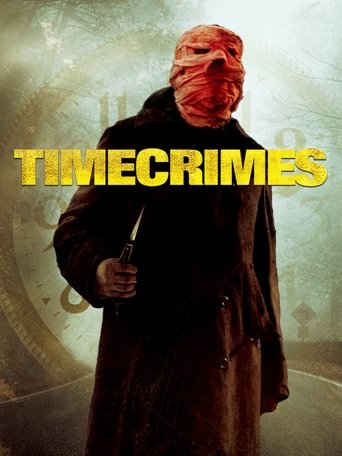
Timecrimes 2007
Timecrimes Reveals That the Monster Chasing You Is the Version of You Covering Its Tracks
Read the revelation →