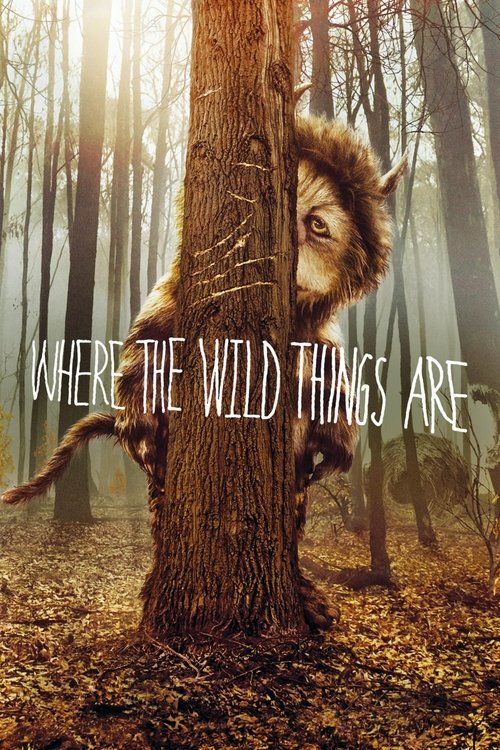
Where the Wild Things Are
The Wild Things Are Max's Feelings, and He Is Learning He Cannot Rule Them
Directed by Spike Jonze
Spike Jonze took a ten-sentence picture book and built from it the most accurate film about a child's inner life ever made. The island is not an escape. It is a diagnosis.
Max bites his mother. He is sent to his room, or he runs from it, and he sails to an island where enormous creatures make him their king. The easy reading is that this is a story about imagination, a lonely boy inventing a kingdom. The film is doing something harder. Each Wild Thing is a piece of Max, externalized and given fur and teeth. Carol is his rage and his need, the one who builds and then destroys what he builds. KW is the part that wanders off, the attachment that cannot be commanded to stay. Judith is the voice that says it will all end badly before anything has begun. Max crowns himself king of these creatures because that is exactly the fantasy a nine-year-old in a house he cannot control clings to: that his own overwhelming feelings could be commanded to behave if he were only in charge. The film is the story of him discovering they cannot.
Jungian Reading: The King Who Cannot Govern His Own Complexes
Jung called the autonomous fragments of the psyche complexes: clusters of feeling that operate with a will of their own, that seize the ego and speak through it. A child in a rage does not have a temper. The temper has him. The Wild Things are complexes rendered visible. They are larger than Max, older than Max, and they do not obey him despite his crown.
Watch the scene where Max promises to keep out all the sadness, to build a fort where only the things you want to happen would happen. This is the ego's grandiose bid to master the unconscious by decree. It fails immediately. Carol, who most wants the promise kept, is the one who breaks it, tearing through the fort in fury when KW brings the owls, when the group he needed to hold together drifts apart. Max sees his own destructiveness from the outside for the first time. When Carol finally turns on him, ready to eat him, Max is small and frightened, and the lie of kingship collapses. He is not the ruler of these forces. He is a boy who was never in charge of them. That recognition is the whole work. Integration does not begin until the ego stops pretending it is the king.
Shamanism Reading: The Sea Voyage as Soul Retrieval
The film is structured as a classic shamanic journey: a wounding at home, a departure across water into a spirit world, an ordeal among powerful beings, and a return carrying something the ordinary world needed. Max does not travel to have fun. He travels because something at home has torn, and the tear must be repaired in a place where the forces involved can take a form he can meet.
Among the Wild Things, Max encounters the raw powers of his own wound and survives them without being consumed. His departure is the shaman's return: he does not stay in the spirit world, which is the temptation and the trap. Carol runs to the shore and howls, unable to follow. Max sails back and finds his mother waiting, and she feeds him and falls asleep watching him eat. He has retrieved the part of himself that fled when he bit her. He came home.
Questions this film answers
What is the deeper meaning of Where the Wild Things Are?
Max bites his mother. He is sent to his room, or he runs from it, and he sails to an island where enormous creatures make him their king. The easy reading is that this is a story about imagination, a lonely boy inventing a kingdom. The film is doing something harder. Each Wild Thing is a piece of Max, externalized and given fur and teeth. Carol is his rage and his need, the one who builds and then destroys what he builds. KW is the part that wanders off, the attachment that cannot be commanded to stay. Judith is the voice that says it will all end badly before anything has begun. Max crowns himself king of these creatures because that is exactly the fantasy a nine-year-old in a house he cannot control clings to: that his own overwhelming feelings could be commanded to behave if he were only in charge. The film is the story of him discovering they cannot.
What is the hidden symbolism in Where the Wild Things Are?
Jung called the autonomous fragments of the psyche complexes: clusters of feeling that operate with a will of their own, that seize the ego and speak through it. A child in a rage does not have a temper. The temper has him. The Wild Things are complexes rendered visible. They are larger than Max, older than Max, and they do not obey him despite his crown.
What esoteric traditions appear in Where the Wild Things Are?
Where the Wild Things Are draws from Jungian, Shamanism traditions. Spike Jonze took a ten-sentence picture book and built from it the most accurate film about a child's inner life ever made. The island is not an escape. It is a diagnosis.
Is Where the Wild Things Are worth watching for spiritual seekers?
Where the Wild Things Are (2009) directed by Spike Jonze is essential viewing for those interested in Jungian, Shamanism. The Wild Things Are Max's Feelings, and He Is Learning He Cannot Rule Them. It rewards multiple viewings and contemplation.
Rewatch With New Eyes
Now that you've seen the architecture, experience it again. The same film becomes a different film when you know what to watch for.
This time, watch for:
- Meet the shadow: what is rejected, projected, and finally integrated
- Follow the descent: what dies, what guides, what returns transformed
Links may include affiliate partnerships that support Media Revelations
The Descent Continues
Where this thread leads next.
Pan's Labyrinth 2006
The Underground Kingdom as Refuge from Fascism
Read the revelation →