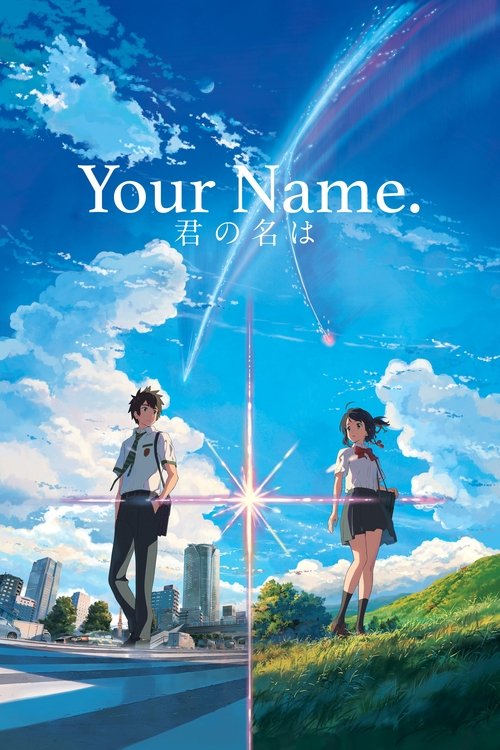
Your Name.
The Red Thread Across Time (Musubi and the Memory That Won’t Let Go)
Directed by Makoto Shinkai
Two strangers switch bodies across time and space. When they wake, they forget. But something remains — a feeling, a longing, a name they cannot quite recall. Shinkai made a film about the Buddhist teaching of karmic connection: some souls have been reaching for each other across lifetimes.
Your Name is the most successful anime film ever made not because of its animation (though it is gorgeous) or its romance (though it is affecting) but because it touches something universal: the feeling that you are looking for someone you have already met. The longing that precedes the meeting. The recognition that defies explanation. Shinkai built the film around the Shinto concept of musubi — the interconnection of all things through invisible threads. The red thread of fate, the braided cord that Mitsuha weaves, the intertwining of two lives across time. But the film also carries Buddhist teaching: karmic connection persists across lifetimes, and souls that have met before will be drawn to meet again. The body-switching is not a gimmick. It is a literalization of what connection actually feels like — waking up in someone else’s life, seeing through their eyes, feeling their feelings. When Taki and Mitsuha forget each other upon waking, they are experiencing what we all experience: the forgetting that incarnation requires, the veil between lives that hides what the soul knows.
The Surface
Mitsuha, a girl in rural Japan, dreams of Tokyo life. Taki, a boy in Tokyo, lives the busy urban existence she imagines. They begin switching bodies randomly, living each other’s lives while asleep. At first comedic — navigating unfamiliar bodies, leaving notes about what happened — the connection deepens until they cannot remember each other’s names upon waking.
The plot reveals that they are separated not just by space but by time: Mitsuha’s town was destroyed by a comet three years before Taki’s present. Their connection spans dimensions that should not touch. Taki must find a way to warn Mitsuha before the disaster — to save someone he is beginning to forget.
Shinkai’s signature longing — that particular ache of distance and connection — reaches its fullest expression here. The film grossed over $350 million worldwide because it articulates something people feel but cannot name: the sense that someone is missing, that a connection exists just beyond memory’s reach.
Musubi: The Thread That Binds
Mitsuha’s grandmother explains musubi while they weave braided cords: ‘Tying thread is musubi. Connecting people is musubi. The flow of time is musubi. They’re all the same thing — the god’s power.’ This is not metaphor in the film’s logic. It is physics.
The braided cord is the visible form of what is invisible: connection that persists regardless of separation. Mitsuha weaves her grandmother’s hair into the cord. When Taki later holds that cord, he holds a physical link across generations and across time. The weaving is a spiritual technology.
Shinto teaches that kami — spirits, gods — exist in relationships rather than in objects. The sacred is not located in the shrine but in the connection between worshipper and place. Musubi is this relational nature of reality: everything is connected because connection is what everything is made of.
The comet, too, is musubi — a catastrophe that ties Mitsuha’s fate to Taki’s mission. The disaster creates the connection by creating the need. Without the comet, they would never have reached for each other across time. The tragedy is the thread’s origin.
Forgetting as Incarnation’s Cost
The most painful element of the film is the forgetting. Taki and Mitsuha wake from their connections and the details fade like dreams. They know something important happened. They cannot remember what. The name — the essence of who they met — disappears first.
This is the Buddhist teaching of incarnation’s veil. We enter each life forgetting what we knew in previous lives. The soul carries connections, but the personality does not remember them. We feel the resonance of karmic ties without knowing their source.
The film makes this literal. ‘Musubi also means forgetting,’ the grandmother says. The thread that connects is also the thread that veils. To be in time is to forget where you came from. To be in a body is to forget who you were. The longing that remains is the echo of knowledge the conscious mind cannot access.
When Taki and Mitsuha finally meet on the stairs in Tokyo, they recognize each other without knowing why. ‘Haven’t we met before?’ This is the moment that the whole film builds toward — not the meeting but the recognition. The veil thins. The names almost return.
Twilight and the Space Between
Taki and Mitsuha can only meet during kataware-doki — ‘twilight,’ literally ‘the edge of time.’ This is the liminal hour when neither day nor night rules, when the boundaries between worlds grow thin. In this in-between space, the two timelines touch.
Every esoteric tradition identifies such threshold times: the Celtic belief in dawn and dusk as spirit-hours, the Jewish teaching about bein hashmashot (between the suns), the Hindu sandhya (junction) times for prayer. Shinkai places his lovers’ single physical meeting in this space because only there can the impossible become possible.
The meeting is brief. They write their names on each other’s hands so they will not forget. But before Mitsuha can read what Taki wrote, she forgets why she is looking at her hand. The twilight closes. The worlds separate. The name fades.
This is the film’s cruelest and truest moment: even direct contact is not enough to pierce the veil permanently. The connection is real. The memory is fragile. Love persists; names do not.
The Disaster as Initiation
The comet’s destruction of Itomori is not random tragedy. It is the crisis that creates the connection, the death that enables the rebirth. Without the disaster, there would be no reaching across time, no urgency, no transformation.
Mitsuha dies in the original timeline. Taki’s mission is resurrection — saving her by rewriting history. But to save her, he must become her: inhabit her body, convince her town to evacuate, carry her will when she cannot remember her own purpose. He must die to himself to bring her back.
This is initiatory structure: the hero descends into death (Mitsuha’s destroyed town), retrieves something from the underworld (the knowledge that can save her), and returns transformed. Taki is not the same person after the twilight meeting. Neither is Mitsuha. They have touched the sacred and it has marked them.
The film suggests that such connections are not accidents but purposes. They found each other because they were supposed to find each other. The comet fell because the comet was always going to fall, and the falling created the thread that let them save each other.
The Transmission
Your Name transmits the feeling of karmic connection to audiences who may have no framework for it. The massive worldwide success suggests something universal is being touched: the sense that we have met someone before, that certain connections are not new but renewed.
The film also transmits grief — the grief of forgetting, of losing connections we cannot explain, of knowing something important was lost without knowing what. This is the grief of incarnation itself: we carry the weight of what we have forgotten.
But the ending offers hope. Taki and Mitsuha find each other again, years later, on those Tokyo stairs. They ask the question that has haunted them: ‘Your name is—?’ The film ends before the answer, but the meeting confirms that the thread held. What is connected stays connected.
The red cord cannot be cut. The names can be forgotten. The souls remember anyway.
Questions this film answers
What is the deeper meaning of Your Name.?
Your Name is the most successful anime film ever made not because of its animation (though it is gorgeous) or its romance (though it is affecting) but because it touches something universal: the feeling that you are looking for someone you have already met. The longing that precedes the meeting. The recognition that defies explanation. Shinkai built the film around the Shinto concept of musubi — the interconnection of all things through invisible threads. The red thread of fate, the braided cord that Mitsuha weaves, the intertwining of two lives across time. But the film also carries Buddhist teaching: karmic connection persists across lifetimes, and souls that have met before will be drawn to meet again. The body-switching is not a gimmick. It is a literalization of what connection actually feels like — waking up in someone else’s life, seeing through their eyes, feeling their feelings. When Taki and Mitsuha forget each other upon waking, they are experiencing what we all experience: the forgetting that incarnation requires, the veil between lives that hides what the soul knows.
What is the hidden symbolism in Your Name.?
Mitsuha, a girl in rural Japan, dreams of Tokyo life. Taki, a boy in Tokyo, lives the busy urban existence she imagines. They begin switching bodies randomly, living each other’s lives while asleep. At first comedic — navigating unfamiliar bodies, leaving notes about what happened — the connection deepens until they cannot remember each other’s names upon waking.
What esoteric traditions appear in Your Name.?
Your Name. draws from Buddhism, Shamanism traditions. Two strangers switch bodies across time and space. When they wake, they forget. But something remains — a feeling, a longing, a name they cannot quite recall. Shinkai made a film about the Buddhist teaching of karmic connection: some souls have been reaching for each other across lifetimes.
What does Your Name. teach about musubi: the thread that binds?
The sacred is not located in objects but in the connection between things. Connection is what everything is made of. Mitsuha’s grandmother explains musubi while they weave braided cords: ‘Tying thread is musubi. Connecting people is musubi. The flow of time is musubi. They’re all the same thing — the god’s power.’ This is not metaphor in the film’s logic. It is physics.
What does Your Name. teach about forgetting as incarnation’s cost?
To be in time is to forget where you came from. The longing that remains is the echo of knowledge the conscious mind cannot access. The most painful element of the film is the forgetting. Taki and Mitsuha wake from their connections and the details fade like dreams. They know something important happened. They cannot remember what. The name — the essence of who they met — disappears first.
Is Your Name. worth watching for spiritual seekers?
Your Name. (2016) directed by Makoto Shinkai is essential viewing for those interested in Buddhism, Karma, Shinkai. The Red Thread Across Time (Musubi and the Memory That Won’t Let Go). It rewards multiple viewings and contemplation.
Rewatch With New Eyes
Now that you've seen the architecture, experience it again. The same film becomes a different film when you know what to watch for.
This time, watch for:
- See impermanence: what clings, what releases, what remains
- Follow the descent: what dies, what guides, what returns transformed
Links may include affiliate partnerships that support Media Revelations
The Descent Continues
Where this thread leads next.
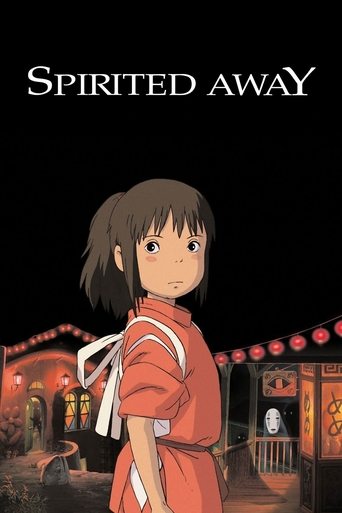
Spirited Away 2001
The Shamanic Descent of the Child Soul
Read the revelation →