The Garden of Words
The Garden of Words Is a Rain Ritual Two Broken People Perform Without Knowing Its Name
Directed by Makoto Shinkai
They only meet when it rains. Shinkai built a forty-six-minute film about the one weather condition that gives two people permission to stop pretending.
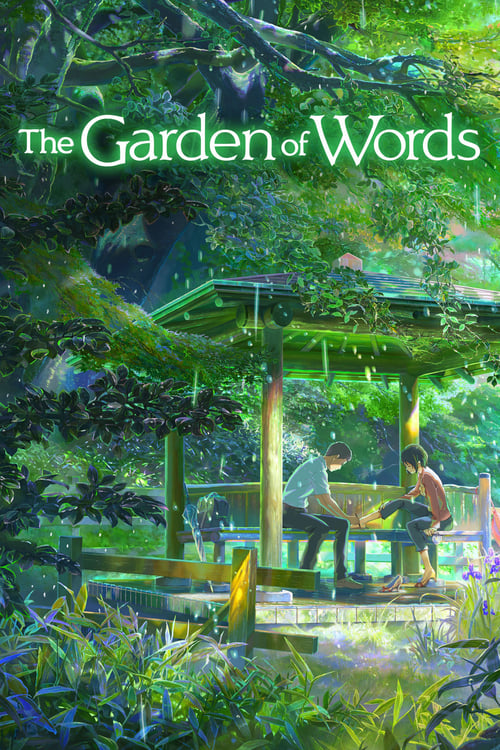
A fifteen-year-old boy skips his morning classes whenever it rains and goes to a garden pavilion to sketch shoes. A woman in her late twenties skips her job for the same reason and sits in the same pavilion drinking beer at ten in the morning. Takao is training to make shoes for a world he does not yet know how to walk in. Yukino has stopped being able to walk at all, undone by a wound the film withholds until late. They never plan their meetings. They are bound only by the rain. When the sky is clear they return to the lives that are failing them, Takao to a classroom he cannot bear, Yukino to a school where students drove her out with cruelty until she lost her sense of taste, her body registering her devastation as literal numbness. This is not a romance about age difference. It is about two people who can only be real inside a weather that suspends the ordinary world, and what happens when the rainy season ends and the ritual space closes.
Shamanic Reading: The Garden as Liminal World, Rain as the Drum
Shamanic practice depends on a threshold state, a condition that separates the practitioner from ordinary reality so that healing can occur. The drum, the smoke, the dark of the lodge: all of them do one job, which is to make a space where the usual rules do not apply. Rain is Takao and Yukino's threshold. Shinkai renders it obsessively, every droplet on every leaf hand-drawn, because the rain is not backdrop. It is the technology of the encounter. Inside the storm the garden becomes a world apart, green and enclosed and outside of time, where a truant boy and a broken woman can meet as equals with no roles to defend. They exchange no names for a long while. They exchange presence. Yukino recovers her ability to taste inside this space, her numbness lifting through the meals Takao makes her, which is the shamanic pattern precisely: the wound that severed her from her senses is treated in the liminal world before she can carry the healing back. When the season turns and the rain stops, the door closes, and both must decide whether the healing was real enough to survive daylight.
Alchemical Reading: Rain as the Solutio That Dissolves Before It Can Reform
Alchemy's solutio is the stage where a hardened substance is returned to liquid so it can be reshaped. Nothing solid can become something new until it first dissolves. Both characters arrive at the garden hardened, Takao into a private fantasy of shoemaking he shows no one, Yukino into a paralysis dressed up as calm. The rain performs solutio on both. It softens Takao's silence until he confesses his craft and measures her feet to make her shoes, and it softens Yukino's frozen grief until, in the film's shattering stairwell scene, she finally breaks, chases him, and screams the truth she had buried under composure. The dissolving is not comfortable. The vessel that holds solutio is meant to hold heat and rupture. Their reforming remains unfinished when the film ends, and that honesty is the point. Solutio does not promise the new form. It only promises that the old one is no longer possible.
Other Shinkai films where distance and longing are the true subject: Your Name (two bodies searching across a severed thread), 5 Centimeters Per Second (the slow speed at which love falls away), Weathering With You (rain as a bargain with the sky).
Questions this film answers
What is the deeper meaning of The Garden of Words?
A fifteen-year-old boy skips his morning classes whenever it rains and goes to a garden pavilion to sketch shoes. A woman in her late twenties skips her job for the same reason and sits in the same pavilion drinking beer at ten in the morning. Takao is training to make shoes for a world he does not yet know how to walk in. Yukino has stopped being able to walk at all, undone by a wound the film withholds until late. They never plan their meetings. They are bound only by the rain. When the sky is clear they return to the lives that are failing them, Takao to a classroom he cannot bear, Yukino to a school where students drove her out with cruelty until she lost her sense of taste, her body registering her devastation as literal numbness. This is not a romance about age difference. It is about two people who can only be real inside a weather that suspends the ordinary world, and what happens when the rainy season ends and the ritual space closes.
What is the hidden symbolism in The Garden of Words?
Shamanic practice depends on a threshold state, a condition that separates the practitioner from ordinary reality so that healing can occur. The drum, the smoke, the dark of the lodge: all of them do one job, which is to make a space where the usual rules do not apply. Rain is Takao and Yukino's threshold. Shinkai renders it obsessively, every droplet on every leaf hand-drawn, because the rain is not backdrop. It is the technology of the encounter. Inside the storm the garden becomes a world apart, green and enclosed and outside of time, where a truant boy and a broken woman can meet as equals with no roles to defend. They exchange no names for a long while. They exchange presence. Yukino recovers her ability to taste inside this space, her numbness lifting through the meals Takao makes her, which is the shamanic pattern precisely: the wound that severed her from her senses is treated in the liminal world before she can carry the healing back. When the season turns and the rain stops, the door closes, and both must decide whether the healing was real enough to survive daylight.
What esoteric traditions appear in The Garden of Words?
The Garden of Words draws from Shamanism, Alchemy traditions. They only meet when it rains. Shinkai built a forty-six-minute film about the one weather condition that gives two people permission to stop pretending.
Is The Garden of Words worth watching for spiritual seekers?
The Garden of Words (2013) directed by Makoto Shinkai is essential viewing for those interested in Shamanism, Alchemy. The Garden of Words Is a Rain Ritual Two Broken People Perform Without Knowing Its Name. It rewards multiple viewings and contemplation.
Rewatch With New Eyes
Now that you've seen the architecture, experience it again. The same film becomes a different film when you know what to watch for.
This time, watch for:
- Follow the descent: what dies, what guides, what returns transformed
- Track the stages: blackening, whitening, reddening — death before rebirth
Links may include affiliate partnerships that support Media Revelations