Weathering with You
Weathering With You Chooses the Beloved Over the World, and Refuses to Repent
Directed by Makoto Shinkai
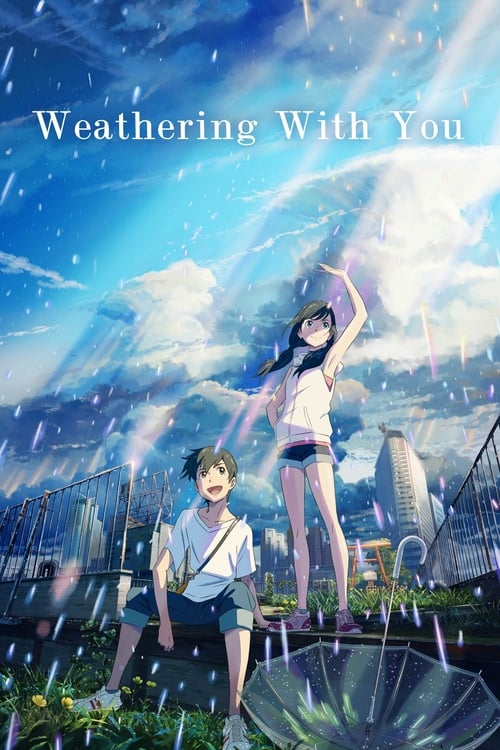
Hina can stop the rain by praying. The price of stopping it is Hina. Hodaka decides Tokyo can drown.
Most disaster stories are built to be survived by everyone who matters. Shinkai builds one that isn't. Hina is a sunshine girl, a shrine maiden whose prayer clears the sky, and the old cosmology is explicit: the weather maiden is a human sacrifice, and the more she uses the gift the more her body thins toward vanishing into the clouds. To end the endless rain over Tokyo, Hina must disappear into the sky permanently. Hodaka goes up after her and pulls her back down, and Tokyo floods, and stays flooded for years. The film's radicalism is that it never treats this as a mistake. An old woman tells the boys, near the end, that Tokyo was once ocean anyway, that it is only returning to what it was. Hodaka, older, refuses even that consolation. He says plainly: we changed the world. Not the world was already doomed. We did this, for her, and I would do it again. This is a children's movie that declines to punish its children for loving one person more than the collective.
Shamanic Reading: The Weather Maiden as Sacrificial Bridge Between Worlds
Across cultures the one who controls the weather is not a hero but a mediator, a body stretched between the human village and the sky-powers, and that stretching is fatal. Hina is a textbook figure of this: the person who can beg rain and sun from the heavens pays with her own substance, growing translucent, being pulled up and out of the middle world into the upper one. The shamanic contract is that the community's balance is bought with the specialist's flesh. She is the bridge, and bridges are walked on.
Hodaka's ascent is an inverted shamanic journey. Ordinarily the practitioner climbs the world-axis to retrieve a lost soul and bring it back to the body. Hodaka does exactly this, climbing through the torii gate in the clouds, seizing Hina's hand, returning her to earth. But the classical shaman restores the cosmic order by his journey. Hodaka restores a single soul at the direct cost of that order. He performs the soul-retrieval and refuses the balance it was supposed to serve. The middle world floods because the sacrifice was taken back, and the film says: let it flood. The one soul was worth the ordered many. Shinkai has made the shaman's forbidden choice into the whole point.
Gnostic Reading: A Waterlogged Demiurge's World, Rejected for the Spark
The Gnostics held that the created order is not our true home, that it was built by a lesser power and is not owed our loyalty over the divine spark in another person. Weathering With You is soaked in this suspicion of the given world. The Tokyo of the film is already a machinery of exploitation before any flood: Hodaka runs away to it and it grinds him, denies him work, threatens him with police and gun and the loss of the one person who sees him. The city is the archon-order, indifferent, arranged against the lovers.
Against this stands the spark, the recognition between two abandoned children that is more real than the whole apparatus around them. Gnosis is precisely the knowledge that the spark outranks the cosmos that imprisons it. Hodaka chooses the spark and lets the archon-city sink back into the sea, and grants it no repentance, because you do not apologize to a prison for preferring the light it was built to contain.
Questions this film answers
What is the deeper meaning of Weathering with You?
Most disaster stories are built to be survived by everyone who matters. Shinkai builds one that isn't. Hina is a sunshine girl, a shrine maiden whose prayer clears the sky, and the old cosmology is explicit: the weather maiden is a human sacrifice, and the more she uses the gift the more her body thins toward vanishing into the clouds. To end the endless rain over Tokyo, Hina must disappear into the sky permanently. Hodaka goes up after her and pulls her back down, and Tokyo floods, and stays flooded for years. The film's radicalism is that it never treats this as a mistake. An old woman tells the boys, near the end, that Tokyo was once ocean anyway, that it is only returning to what it was. Hodaka, older, refuses even that consolation. He says plainly: we changed the world. Not the world was already doomed. We did this, for her, and I would do it again. This is a children's movie that declines to punish its children for loving one person more than the collective.
What is the hidden symbolism in Weathering with You?
Across cultures the one who controls the weather is not a hero but a mediator, a body stretched between the human village and the sky-powers, and that stretching is fatal. Hina is a textbook figure of this: the person who can beg rain and sun from the heavens pays with her own substance, growing translucent, being pulled up and out of the middle world into the upper one. The shamanic contract is that the community's balance is bought with the specialist's flesh. She is the bridge, and bridges are walked on.
What esoteric traditions appear in Weathering with You?
Weathering with You draws from Shamanism, Gnosticism traditions. Hina can stop the rain by praying. The price of stopping it is Hina. Hodaka decides Tokyo can drown.
Is Weathering with You worth watching for spiritual seekers?
Weathering with You (2019) directed by Makoto Shinkai is essential viewing for those interested in Shamanism, Gnosticism. Weathering With You Chooses the Beloved Over the World, and Refuses to Repent. It rewards multiple viewings and contemplation.
Rewatch With New Eyes
Now that you've seen the architecture, experience it again. The same film becomes a different film when you know what to watch for.
This time, watch for:
- Follow the descent: what dies, what guides, what returns transformed
- Watch for the false world vs. the real — who is asleep, who awakens
Links may include affiliate partnerships that support Media Revelations
The Descent Continues
Where this thread leads next.

Your Name. 2016
The Red Thread Across Time (Musubi and the Memory That Won’t Let Go)
Read the revelation →