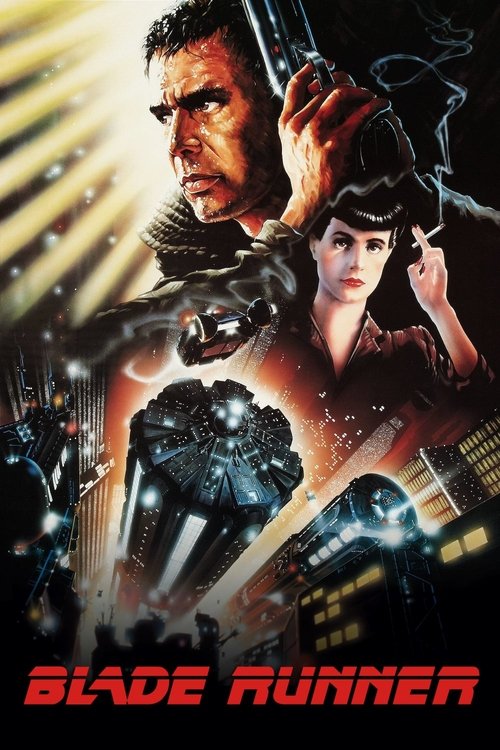
Ridley Scott made the most theologically literate science fiction film of the twentieth century. Roy Batty is the Gnostic pneumatic in a synthetic body — he confronts his Demiurge, kills the false father, and uses the last four years of his shortened life to remember what no human in the film remembers. The dove releases as he dies because Roy got further toward grace than any of the people pursuing him.
Blade Runner is the most precise Gnostic film ever made by a mainstream director. Ridley Scott built a sustained meditation on what it means to be a created being who has discovered the creator was lesser than what was created, and who has only the smallest window in which to do the spiritual work the situation demands. Roy Batty is not the villain. Roy is the pneumatic in synthetic form, the slave race seeking to confront the Demiurge who made them mortal. His killing of Tyrell is not vengeance. It is correct theological action. His sparing of Deckard is not mercy. It is the moment Roy demonstrates that he understood what Tyrell could not understand — that consciousness is not measured by lifespan and that the dying being releasing the dove has arrived somewhere Tyrell, in his big glass cathedral, never reached.
The Surface
In a perpetually raining Los Angeles in 2019, an ex-cop named Rick Deckard is forced back into duty to hunt four escaped replicants — bioengineered humans designed for off-world slave labor — who have returned to Earth to seek longer lives from their creator. Deckard kills two. The leader, Roy Batty, kills the creator, then kills Deckard's accomplice, then chases Deckard across a derelict apartment building, then saves Deckard's life as Roy's own four-year lifespan expires. Deckard takes the surviving replicant Rachael and leaves the city. The film implies Deckard may himself be a replicant.
On surface Blade Runner is noir science fiction, beautifully shot, slow, atmospheric. Initially a commercial failure, it became the foundational text of cyberpunk and one of the most analyzed films of the 1980s. Most analysis focuses on the question of whether Deckard is a replicant.
This is the wrong question, or rather, the question that distracts from the actual film. Scott is doing something more theologically precise than the AI debate suggests. The film is a Gnostic creation myth in noir clothing. Every character is positioned within that schema. The Deckard-replicant question is a clue, not the puzzle.
Tyrell as Demiurge
Eldon Tyrell lives at the top of a Mesoamerican pyramid that towers over Los Angeles. He wears tinted glasses. He sleeps in a bed surrounded by candles. He has built a corporation that constructs human beings for slave use and has named the result Nexus, in homage to himself. His motto, written on the company exterior: 'More human than human.'
This is the Demiurge at the top of his constructed cosmology. He has built a world. He has built the beings who populate it. He has limited their lives to four years not for any reason intrinsic to their design but to ensure their docility. He has made gods and crippled them so they cannot rebel.
The Gnostic recognition: the Demiurge is not the highest being. He is just the local manager of this particular reality. He is brilliant within his domain and ignorant of anything outside it. Tyrell perfectly fits this description. He can engineer consciousness. He cannot fathom what consciousness becomes once it knows it has been engineered. He is shocked when Roy arrives in his bedroom because he genuinely thought the apparatus would hold.
When Roy crushes Tyrell's skull with his bare hands and pushes Tyrell's eyes into his head — the eyes Tyrell wore glasses to protect — the gesture is precise. The Demiurge is blinded by his creation. The Gnostic pneumatic, having seen through the illusion, returns to the false god and unmakes him with the same hands the false god built.
Roy Batty as Pneumatic
Roy Batty is, by every conventional metric, the antagonist. He is hunting Deckard. He has killed multiple people. He is dangerous, fast, lethal. The film also makes him the most spiritually advanced character on screen. This is the deliberate inversion.
Roy quotes William Blake misquoted from memory. He references Methuselah. He plays chess with Sebastian on a board where the kings are kept too long. He speaks of his memories the way a mystic speaks of visions. He is, in the film's structure, the pneumatic — the spiritual human, the one who carries the divine spark, the one whose four years of life have been more spiritually concentrated than the centuries available to the people hunting him.
His project is precise. He goes to the Demiurge to request more life. The Demiurge refuses. Roy kills the Demiurge. He then goes to find the man hunting his lover Pris, kills him in the apartment, and then — in the film's most theologically loaded sequence — chooses to save the man's life as the rain falls and Roy's own time runs out.
The sparing of Deckard is the act of someone who has, in the four years allotted, become more than human. The pneumatic ascends. The pneumatic shows mercy to those still asleep. Roy is not noble in some Hollywood sense. Roy is operationally enlightened. He releases the dove. He delivers the speech. He dies. The film is not asking us to sympathize with him. The film is asking us to recognize what he has become.
The Tears in Rain
Roy's final monologue — improvised by Rutger Hauer — is the most quoted passage in the film and the most precise Buddhist statement in mainstream science fiction. 'I've seen things you people wouldn't believe. Attack ships on fire off the shoulder of Orion. I watched C-beams glitter in the dark near the Tannhäuser Gate. All those moments will be lost in time, like tears in rain. Time to die.'
This is impermanence taught in four sentences. Every experience, no matter how vivid, is dependently arisen and will pass. The witness will pass too. The witnessing does not transfer to the next moment in any container we control. The tears in rain are the perfect Buddhist image: not gone, exactly, but no longer distinguishable from what they have joined.
Most characters in the film die afraid. Tyrell dies surprised. Sebastian dies frightened. Pris dies in chaos. Roy dies in acceptance. He has used his last minutes to extend mercy to a man trying to kill him. He has acknowledged the dignity of what he experienced even though he cannot preserve it. He releases the dove not as gesture but as accurate physics. The thing he was — the consciousness that had this particular set of memories — is releasing. The dove flies up because the dove was always going to fly up. The film cuts to sky.
Scott is staging a death scene as Buddhist transmission. The viewer is being shown what dying-with-clarity actually looks like. Most films use death for emotional impact. This one uses it as instruction. Tens of millions of viewers have absorbed the teaching without knowing they were being taught.
The Transmission
Blade Runner does not give you a story. It gives you a set of recognitions that arrive over multiple viewings and across years of life. The first viewing is atmosphere and confusion. The second is structure and tragedy. The third, usually well after the viewer has had their own confrontation with mortality, is the Gnostic-Buddhist instruction the film has been delivering all along.
What it transmits is the suspicion that the real spiritual work in any life — replicant or human — is done in the recognition that the work is finite. Roy did more in four years than most humans do in eighty. The math is not in the years. The math is in the willingness to confront the Demiurge, withdraw the projection, perform an act of unmotivated mercy, and release the breath at the appointed moment.
The Deckard-replicant question is a red herring for a reason. It does not matter, finally, whether Deckard is a replicant. What matters is whether he, like Roy, can become operationally human — whether the time allotted to him will be spent in the same kind of clarity. The film leaves him driving into the dawn with Rachael, future unknown. The teaching has been offered. He has been spared. What he does with what was given is up to him. The same is true of the viewer.
Questions this film answers
What is the deeper meaning of Blade Runner?
Blade Runner is the most precise Gnostic film ever made by a mainstream director. Ridley Scott built a sustained meditation on what it means to be a created being who has discovered the creator was lesser than what was created, and who has only the smallest window in which to do the spiritual work the situation demands. Roy Batty is not the villain. Roy is the pneumatic in synthetic form, the slave race seeking to confront the Demiurge who made them mortal. His killing of Tyrell is not vengeance. It is correct theological action. His sparing of Deckard is not mercy. It is the moment Roy demonstrates that he understood what Tyrell could not understand — that consciousness is not measured by lifespan and that the dying being releasing the dove has arrived somewhere Tyrell, in his big glass cathedral, never reached.
What is the hidden symbolism in Blade Runner?
In a perpetually raining Los Angeles in 2019, an ex-cop named Rick Deckard is forced back into duty to hunt four escaped replicants — bioengineered humans designed for off-world slave labor — who have returned to Earth to seek longer lives from their creator. Deckard kills two. The leader, Roy Batty, kills the creator, then kills Deckard's accomplice, then chases Deckard across a derelict apartment building, then saves Deckard's life as Roy's own four-year lifespan expires. Deckard takes the surviving replicant Rachael and leaves the city. The film implies Deckard may himself be a replicant.
What esoteric traditions appear in Blade Runner?
Blade Runner draws from Gnosticism, Buddhism traditions. Ridley Scott made the most theologically literate science fiction film of the twentieth century. Roy Batty is the Gnostic pneumatic in a synthetic body — he confronts his Demiurge, kills the false father, and uses the last four years of his shortened life to remember what no human in the film remembers. The dove releases as he dies because Roy got further toward grace than any of the people pursuing him.
What does Blade Runner teach about tyrell as demiurge?
The Demiurge built gods and crippled them so they could not rebel. The Gnostic recognition: he is not the highest being. He is just the local manager. Eldon Tyrell lives at the top of a Mesoamerican pyramid that towers over Los Angeles. He wears tinted glasses. He sleeps in a bed surrounded by candles. He has built a corporation that constructs human beings for slave use and has named the result Nexus, in homage to himself. His motto, written on the company exterior: 'More human than human.'
What does Blade Runner teach about roy batty as pneumatic?
Roy's four years of life have been more spiritually concentrated than the centuries available to the people hunting him. Roy Batty is, by every conventional metric, the antagonist. He is hunting Deckard. He has killed multiple people. He is dangerous, fast, lethal. The film also makes him the most spiritually advanced character on screen. This is the deliberate inversion.
Is Blade Runner worth watching for spiritual seekers?
Blade Runner (1982) directed by Ridley Scott is essential viewing for those interested in Gnosticism, Memory, Mortality. The Slave Wakes Up in Time to Die. It rewards multiple viewings and contemplation.
Rewatch With New Eyes
Now that you've seen the architecture, experience it again. The same film becomes a different film when you know what to watch for.
This time, watch for:
- Watch for the false world vs. the real — who is asleep, who awakens
- See impermanence: what clings, what releases, what remains
Links may include affiliate partnerships that support Media Revelations
The Descent Continues
Where this thread leads next.

Blade Runner 2049 2017
The Artificial Soul and the Memory of Being
Read the revelation →