Children of Men
What Hope Looks Like When There Is No Future
Directed by Alfonso Cuarón
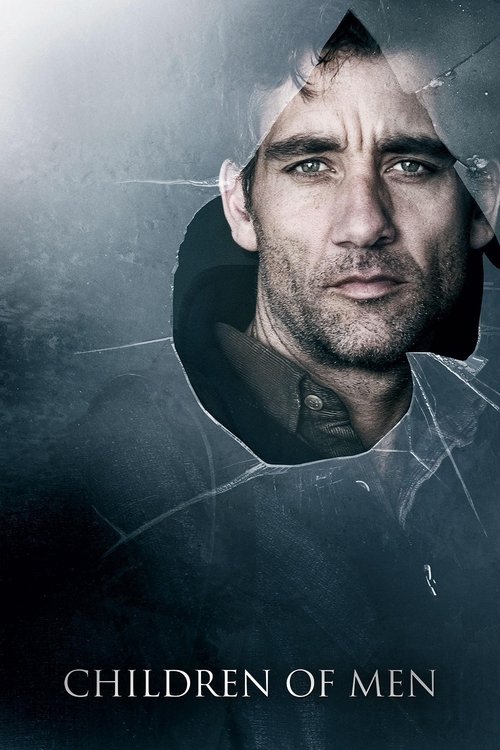
In a world where no child has been born for eighteen years, hope is not optimism — it is action taken anyway, in the absence of any guarantee. Theo carries a pregnant woman through a warzone not because he believes humanity will survive but because this woman, this child, this moment requires his protection.
Children of Men is the most profound exploration of hope since the Book of Job — not hope as optimism, but hope as action taken in the absence of any guarantee of success. For eighteen years, no human child has been born. Humanity is dying, slowly and certainly. Into this dying world comes a miracle: a pregnant woman. And the question becomes: what do you do when hope appears, impossibly, in the worst possible circumstances? Cuarón's genius is refusing sentimentality. The miracle does not solve anything. The world remains brutal. The factions continue fighting. The child's birth is not a guarantee — it is a possibility. What the film depicts is not salvation but the conditions under which salvation becomes conceivable. Someone must carry the miracle through the warzone. Someone must protect it with their body. Hope requires sacrifice. The long takes — including the famous seven-minute continuous shot through the battle — are not technical showmanship. They are the film's theology made visible. There is no cut to safety, no escape from consequence. You are in the shot with Theo, and what happens to him happens to you. This is what incarnation looks like: total commitment to a reality that offers no guarantees.
The Surface
Britain, 2027. The world's youngest person — 'Baby Diego' — has been killed in a riot. He was eighteen years old. For reasons no one understands, human fertility simply stopped. The last generation is aging toward extinction, and civilization has collapsed everywhere except Britain, which has become a fascist fortress, deporting and caging refugees.
Theo Faron, a former activist who has retreated into cynicism and alcohol, is kidnapped by a resistance group led by his ex-wife Julian. They need him to obtain transit papers for a young refugee named Kee. The reason: Kee is pregnant. She may be carrying the first human child in nearly two decades.
What follows is a nativity story set in a warzone — a man and a woman fleeing through a collapsing world, carrying hope they do not own, depending on the kindness and betrayal of strangers. The parallels to the Gospels are explicit. The story is ancient. The setting makes it new.
The Dying World
Cuarón builds the world through background detail: caged refugees, burning corpses, ads for government euthanasia ('Quietus'), livestock wandering through abandoned schools. The information comes environmentally, never through exposition. The world explains itself through what it shows.
This is a Gnostic cosmos — a creation that has gone wrong, a system winding down, ruled by powers that maintain order through violence rather than justice. Britain survives by becoming a prison. The alternative is the chaos visible beyond its borders. Neither option is salvation.
The sterility is never explained because explanation would reduce it. Is it biological? Divine punishment? Environmental collapse? The film refuses to say. The cause does not matter. What matters is the condition: a world that has stopped generating future. A creation that has run out of creation.
The background is filled with religious imagery — a pieta here, a crucifixion there, art rescued from a world that no longer makes it. These fragments of the sacred persist in a world that has lost the capacity to renew them. The Tate Modern has become a private collection. Michelangelo's David stands guard over a rich man's lunch.
Theo: The Exhausted Savior
Theo is not a hero. He is a burned-out man who has given up on the causes he once believed in. His son died in a flu pandemic. His marriage ended. He drinks through his days at a meaningless bureaucratic job. When Julian reappears asking for help, he refuses until she offers money.
This is important. The film does not start with a willing hero. It starts with a man who must be dragged back into engagement with life. Theo does not believe in the revolution, does not believe in the government, does not believe in much of anything. He helps Kee because the situation requires help, not because he has faith.
As the journey progresses, something changes. Not belief — Theo never becomes a believer. But commitment deepens. He starts taking risks not for money or ideology but because Kee and her child have become people he cannot abandon. Care replaces cynicism, not through conversion but through contact.
The film suggests that this is what hope actually looks like: not optimism, not faith, but fidelity. Theo does not know if the child will save humanity. He protects her anyway. He does not know if the sanctuary ship exists. He rows toward it anyway. Hope is not a feeling. Hope is what you do.
Kee: The Mother Without Guarantees
Kee is a refugee — undocumented, vulnerable, carrying a child she did not expect into a world that cannot receive it. She is the most important person on Earth and also the most powerless. Everyone wants to use her: the government, the resistance, the smugglers. She has no faction that simply cares for her.
Her revelation of her pregnancy to Theo — in a barn full of cows — explicitly invokes the nativity. The setting is deliberate. This is the story again: the sacred arriving in the most humble circumstances, dependent on the protection of ordinary people, vulnerable to powers that would destroy it.
Kee has no romantic partner, no clear father for the child, no support network. She is alone with her miracle. When she asks Theo to name the baby — 'Call her Dylan, after Bob Dylan' — she is making him the child's symbolic father, binding him to her cause through the act of naming.
The scene of birth in the refugee camp, as war rages outside, is one of cinema's great moments. Life arriving amid death. A baby's cry piercing gunfire. Soldiers pausing in wonder, then resuming their violence. The miracle does not stop the war. It just happens in the middle of it.
The Long Takes as Theology
Cuarón's signature long takes — especially the seven-minute continuous shot through the battle in the Bexhill refugee camp — are not directorial showing off. They are the film's form matching its content. When there is no cut, there is no escape. You are committed to the scene's duration. You cannot look away.
This is incarnational theology made cinematic. To be embodied is to be stuck in time, unable to fast-forward through suffering, unable to cut to the resolution. Theo moves through the battle and we move with him, blood spattering the lens, bullets passing nearby, every second requiring survival.
The long takes also create witnesses. When soldiers stop fighting to watch Kee and her baby pass, we are watching them watch. The miracle pauses the violence — briefly, incompletely — because even hardened fighters recognize something unprecedented. Then they resume killing. But for a moment, they saw.
This is hope's fragility. It can stop violence temporarily. It cannot stop violence permanently. The child's presence creates a pause, not a solution. What happens after the pause depends on human choice. The miracle offers possibility. Humans must actualize it or betray it.
The Transmission
Children of Men transmits a specific understanding of hope: hope as action, not feeling; hope as fidelity, not optimism; hope as what you do when you have no guarantee that doing will matter. Theo does not know if humanity will survive. He protects the child anyway.
The film also transmits a warning: factions will try to use hope for their own purposes. The resistance wants the child for propaganda. The government wants her for control. The pure gift — new life — is immediately contested by powers who see it as resource. This is what happens to every miracle in a fallen world.
But the ending offers something: the child survives. Kee reaches the boat. Theo dies in the rowboat, having completed his task, unable to see what comes next. This is the structure of sacrificial hope: you carry the miracle as far as you can, and then you trust others to carry it further.
Tomorrow — the name of the sanctuary ship — is always horizon. You never reach it. But you row toward it anyway, because the alternative is to stop rowing. And if you stop rowing in the middle of the ocean, you drown. Hope is not a destination. Hope is the direction you face.
Questions this film answers
What is the deeper meaning of Children of Men?
Children of Men is the most profound exploration of hope since the Book of Job — not hope as optimism, but hope as action taken in the absence of any guarantee of success. For eighteen years, no human child has been born. Humanity is dying, slowly and certainly. Into this dying world comes a miracle: a pregnant woman. And the question becomes: what do you do when hope appears, impossibly, in the worst possible circumstances? Cuarón's genius is refusing sentimentality. The miracle does not solve anything. The world remains brutal. The factions continue fighting. The child's birth is not a guarantee — it is a possibility. What the film depicts is not salvation but the conditions under which salvation becomes conceivable. Someone must carry the miracle through the warzone. Someone must protect it with their body. Hope requires sacrifice. The long takes — including the famous seven-minute continuous shot through the battle — are not technical showmanship. They are the film's theology made visible. There is no cut to safety, no escape from consequence. You are in the shot with Theo, and what happens to him happens to you. This is what incarnation looks like: total commitment to a reality that offers no guarantees.
What is the hidden symbolism in Children of Men?
Britain, 2027. The world's youngest person — 'Baby Diego' — has been killed in a riot. He was eighteen years old. For reasons no one understands, human fertility simply stopped. The last generation is aging toward extinction, and civilization has collapsed everywhere except Britain, which has become a fascist fortress, deporting and caging refugees.
What esoteric traditions appear in Children of Men?
Children of Men draws from Gnosticism, Initiation traditions. In a world where no child has been born for eighteen years, hope is not optimism — it is action taken anyway, in the absence of any guarantee. Theo carries a pregnant woman through a warzone not because he believes humanity will survive but because this woman, this child, this moment requires his protection.
What does Children of Men teach about the dying world?
A world that has stopped generating future. A creation that has run out of creation. Cuarón builds the world through background detail: caged refugees, burning corpses, ads for government euthanasia ('Quietus'), livestock wandering through abandoned schools. The information comes environmentally, never through exposition. The world explains itself through what it shows.
What does Children of Men teach about theo: the exhausted savior?
Hope is not optimism, not faith, but fidelity. Hope is not a feeling. Hope is what you do. Theo is not a hero. He is a burned-out man who has given up on the causes he once believed in. His son died in a flu pandemic. His marriage ended. He drinks through his days at a meaningless bureaucratic job. When Julian reappears asking for help, he refuses until she offers money.
What does Children of Men teach about the long takes as theology?
The long takes are incarnational theology made cinematic. To be embodied is to be stuck in time, unable to cut to the resolution. Cuarón's signature long takes — especially the seven-minute continuous shot through the battle in the Bexhill refugee camp — are not directorial showing off. They are the film's form matching its content. When there is no cut, there is no escape. You are committed to the scene's duration. You cannot look away.
Is Children of Men worth watching for spiritual seekers?
Children of Men (2006) directed by Alfonso Cuarón is essential viewing for those interested in Eschatology, Hope, Sacrifice. What Hope Looks Like When There Is No Future. It rewards multiple viewings and contemplation.
Rewatch With New Eyes
Now that you've seen the architecture, experience it again. The same film becomes a different film when you know what to watch for.
This time, watch for:
- Watch for the false world vs. the real — who is asleep, who awakens
- Mark the threshold: the old self dies, the ordeal transforms, the new self returns
Links may include affiliate partnerships that support Media Revelations
The Descent Continues
Where this thread leads next.
The Road 2009
The Road Is a Father Teaching His Son the One Thing Worth Carrying Through the Dark
Read the revelation →