Gravity
Gravity Is a Birth Filmed Backwards, From the Womb of Space to the Mud of Earth
Directed by Alfonso Cuarón
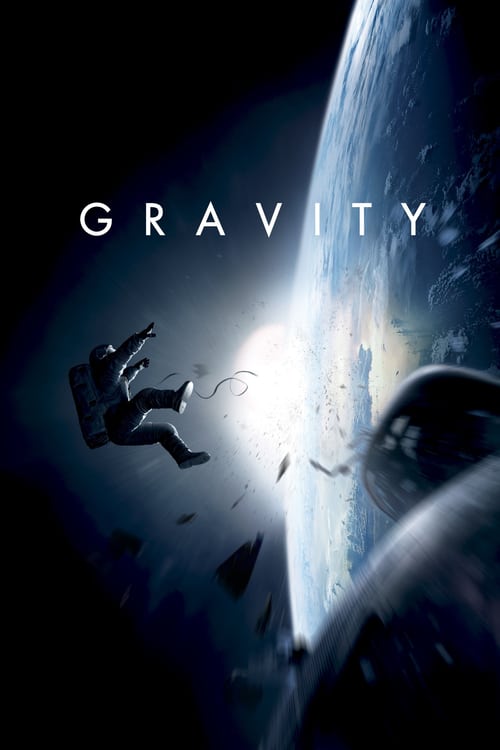
Cuarón spends ninety minutes returning one woman to the ground. The debris is not the antagonist. The vacuum is.
Dr. Ryan Stone is a medical engineer stranded in orbit after debris destroys her shuttle, and the film follows her single continuous fight to get back down. The survival-thriller surface is real and it works. But watch what the camera actually does. After Stone reaches the first station and pulls herself through the airlock, she strips to her underwear and curls into a foetal ball, and behind her a tether floats in a perfect umbilical arc. Cuarón is not being subtle. This is a woman who lost her daughter, who has been living in a kind of death, and who must be born again to want to live. The whole film is a labor. The disaster in orbit is not the story. The story is whether Stone will consent to descend into a body, into weight, into a world where you can lose a child and still have to breathe.
Initiatory Reading: The Underworld Was Always Weightlessness
Every initiation requires a descent into the underworld, a place stripped of the ordinary supports of life, where the initiate confronts death directly and either dies or is remade. Gravity inverts the geography. The underworld is up. Space is the realm without ground, without breath, without direction, where a single loosed bolt kills and silence swallows every scream. Stone enters it already half-dead, admitting she drives aimlessly at night since her daughter died, at home nowhere.
The threshold guardian arrives as hallucination. Stone, out of oxygen and out of will, shuts down the cabin to die, and Kowalski appears at the hatch, impossible, already lost to space, and tells her exactly what she needs: that to live she must plant her feet and let go of the dead. He is the guide who cannot return with her, the voice of the descent that speaks the initiate back toward life. The dead do not come to keep you. They come to send you down. When Stone finally splashes into water, sheds her suit, and swims for the surface, she is not escaping the underworld. She has completed it. The initiate returns from the land of the dead with the one thing she went to retrieve: the choice to be alive.
Buddhist Reading: Learning to Let Go by Learning to Let Go of the Tether
The Buddhist path turns on non-attachment, the recognition that clinging to what cannot be held is the root of suffering, and that liberation comes through release rather than grasping. Gravity dramatizes this at the level of the hand. Almost every crisis in the film is a question of holding on or letting go. Stone grips Kowalski's tether as they drift, and he understands what she does not: if they both hold on, both die. He unclips himself and lets go so she can live. His release is the film's first teaching and its purest.
Stone spends the rest of the film learning to repeat it. She must release the dead daughter she has been gripping in her grief. She must let go of the ruined stations one after another, each temporary refuge that she clings to and must abandon. The Tibetan bardo teachings say the consciousness that will not release its old form cannot take a new one. Stone is in a bardo the entire film, suspended between a death she is drifting through and a rebirth she keeps refusing. She is reborn the instant she stops holding on to being already dead.
Questions this film answers
What is the deeper meaning of Gravity?
Dr. Ryan Stone is a medical engineer stranded in orbit after debris destroys her shuttle, and the film follows her single continuous fight to get back down. The survival-thriller surface is real and it works. But watch what the camera actually does. After Stone reaches the first station and pulls herself through the airlock, she strips to her underwear and curls into a foetal ball, and behind her a tether floats in a perfect umbilical arc. Cuarón is not being subtle. This is a woman who lost her daughter, who has been living in a kind of death, and who must be born again to want to live. The whole film is a labor. The disaster in orbit is not the story. The story is whether Stone will consent to descend into a body, into weight, into a world where you can lose a child and still have to breathe.
What is the hidden symbolism in Gravity?
Every initiation requires a descent into the underworld, a place stripped of the ordinary supports of life, where the initiate confronts death directly and either dies or is remade. Gravity inverts the geography. The underworld is up. Space is the realm without ground, without breath, without direction, where a single loosed bolt kills and silence swallows every scream. Stone enters it already half-dead, admitting she drives aimlessly at night since her daughter died, at home nowhere.
What esoteric traditions appear in Gravity?
Gravity draws from Initiation, Buddhism traditions. Cuarón spends ninety minutes returning one woman to the ground. The debris is not the antagonist. The vacuum is.
Is Gravity worth watching for spiritual seekers?
Gravity (2013) directed by Alfonso Cuarón is essential viewing for those interested in Initiation, Buddhism. Gravity Is a Birth Filmed Backwards, From the Womb of Space to the Mud of Earth. It rewards multiple viewings and contemplation.
Rewatch With New Eyes
Now that you've seen the architecture, experience it again. The same film becomes a different film when you know what to watch for.
This time, watch for:
- Mark the threshold: the old self dies, the ordeal transforms, the new self returns
- See impermanence: what clings, what releases, what remains
Links may include affiliate partnerships that support Media Revelations