Chronos
Chronos Speeds Time Up Until You See That Nothing Solid Was Ever There
Directed by Ron Fricke
Ron Fricke compresses hours and centuries into seconds. What survives the compression is the only thing that was ever real.
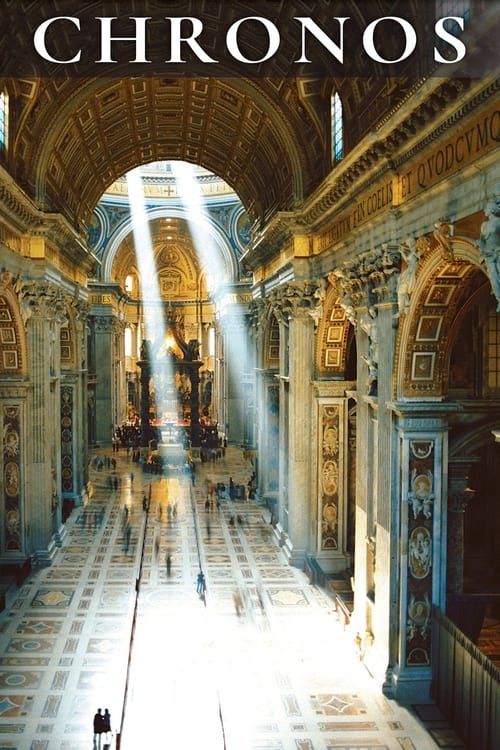
Chronos has no dialogue, no narration, no characters. Ron Fricke points his camera at cathedrals, deserts, cemeteries, cities, and the great stone monuments of vanished civilizations, and then he runs time forward. Clouds boil across the sky in seconds. Crowds pour through cathedral doors and dissolve into streaks of motion. The sun rakes across ancient ruins in the space of a breath. Shadows swing like the hand of a clock over pyramids that took generations to raise. The surface reading is a technical showcase, a forty-minute time-lapse demonstration of cinematography and the Fairlight-scored grandeur of the earth. But Fricke chose the Greek name for time as the destroyer, and the film's real subject is what time does to everything the eye normally trusts as solid: it reveals it as flow.
Buddhist Reading: Impermanence Made Visible to the Naked Eye
The Buddhist mark of existence called anicca holds that all conditioned things are impermanent, arising and passing without pause, and that suffering comes from perceiving as fixed what is actually in ceaseless motion. Ordinary perception cannot see this. The cathedral looks permanent. The mountain looks eternal. Our time-scale is too slow to catch the passing.
Fricke's time-lapse is a machine for correcting exactly this perceptual error. By speeding the world up, he lets you see with your own eyes what the meditator sees in deep concentration: that the crowd is not a thing but a current, that the clouds have no edges, that the light does not rest, that even the great stone temple is a slow wave in the process of rising and eroding. When people become blurs streaming through the frame, the film delivers the teaching directly to the retina. There is no solid self standing in the doorway. There is only movement, briefly taking a human shape, then gone. Chronos does with a camera what the Buddhist does with attention: it dissolves the illusion of the static world.
Kabbalistic Reading: The World Renewed Each Instant by a Descending Light
Kabbalah teaches that creation is not a single past event but a continuous act, the divine light of Ein Sof descending through the sefirot and reconstituting the world at every moment. If that flow of light paused even once, existence would vanish. Reality is not a finished object. It is a fountain being poured without cease.
Fricke's compressed time makes this continuous pouring perceptible. Watch how the sun functions in the film, the source of light sweeping over every temple, city, and desert, its passage the pulse that drives the entire montage. The monuments do not stand on their own. They flicker in and out of visibility as the light rakes across them, present only while illuminated, structured entirely by a radiance moving through them from above. This is the Kabbalistic vision rendered in celluloid: the material world as a screen upon which a ceaseless descending light writes and rewrites everything, moment by moment, so that what looks like solid stone is really light passing through, briefly caught, endlessly renewed.
Other wordless films that read time and the world as flow: Koyaanisqatsi (imbalance seen from above), Baraka (Fricke's later, fuller vision of the sacred earth), Samsara (the cycle of birth and dissolution filmed whole).
Questions this film answers
What is the deeper meaning of Chronos?
Chronos has no dialogue, no narration, no characters. Ron Fricke points his camera at cathedrals, deserts, cemeteries, cities, and the great stone monuments of vanished civilizations, and then he runs time forward. Clouds boil across the sky in seconds. Crowds pour through cathedral doors and dissolve into streaks of motion. The sun rakes across ancient ruins in the space of a breath. Shadows swing like the hand of a clock over pyramids that took generations to raise. The surface reading is a technical showcase, a forty-minute time-lapse demonstration of cinematography and the Fairlight-scored grandeur of the earth. But Fricke chose the Greek name for time as the destroyer, and the film's real subject is what time does to everything the eye normally trusts as solid: it reveals it as flow.
What is the hidden symbolism in Chronos?
The Buddhist mark of existence called anicca holds that all conditioned things are impermanent, arising and passing without pause, and that suffering comes from perceiving as fixed what is actually in ceaseless motion. Ordinary perception cannot see this. The cathedral looks permanent. The mountain looks eternal. Our time-scale is too slow to catch the passing.
What esoteric traditions appear in Chronos?
Chronos draws from Buddhism, Kabbalah traditions. Ron Fricke compresses hours and centuries into seconds. What survives the compression is the only thing that was ever real.
Is Chronos worth watching for spiritual seekers?
Chronos (1985) directed by Ron Fricke is essential viewing for those interested in Buddhism, Kabbalah. Chronos Speeds Time Up Until You See That Nothing Solid Was Ever There. It rewards multiple viewings and contemplation.
Rewatch With New Eyes
Now that you've seen the architecture, experience it again. The same film becomes a different film when you know what to watch for.
This time, watch for:
- See impermanence: what clings, what releases, what remains
- Notice the vessels: what contains, what shatters, what repairs
Links may include affiliate partnerships that support Media Revelations
The Descent Continues
Where this thread leads next.
Forrest Gump 1994
The Holy Fool and the Feather of Grace
Read the revelation →