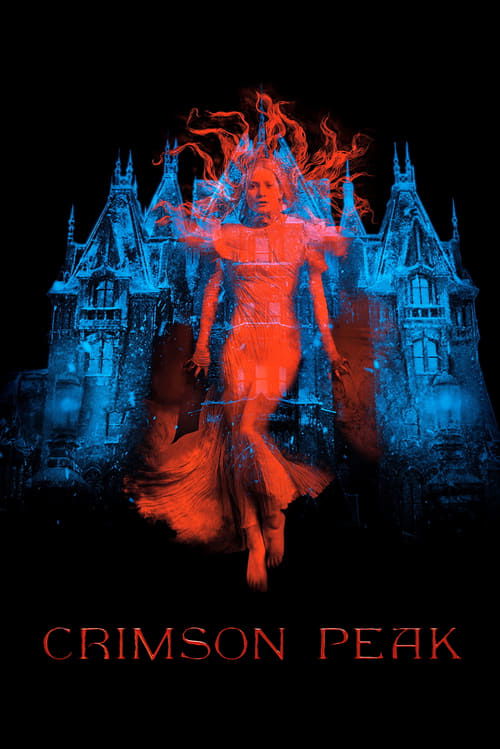
Crimson Peak
Crimson Peak Is About a House That Bleeds Because the Past Cannot Digest Its Own Murders
Directed by Guillermo del Toro
Del Toro said it plainly: it is not a ghost story, it is a story with ghosts. The ghosts are the least of what haunts Allerdale Hall.
Everyone files Crimson Peak under gothic romance and stops there. Look at what the house is doing. Allerdale Hall sits on a mountain of red clay, and the clay seeps up through the floorboards and snow so the whole mansion looks like it is bleeding from the inside. The mine beneath extracts that scarlet ore. The Sharpe siblings live off a soil that is literally the color of blood because their fortune, their bodies, and their bond are all built on murder they keep committing and refuse to metabolize. Edith Cushing, the aspiring author who "sees ghosts," is not the one in danger from the dead. She is in danger from the living, and the ghosts keep appearing to warn her because they are the only honest residents of the place. The real horror is architectural: a family sealed in a rotting vessel, unable to change, feeding on its own decay while the dead look on.
Alchemical Reading: The Nigredo That Will Not Move to Whitening
Alchemy begins with the nigredo, the blackening: putrefaction, dissolution, the substance breaking down in the vessel before it can be reborn. Allerdale Hall is a nigredo that has jammed. The house is decomposing in real time, roof open to the falling snow, walls weeping red, moths devouring butterflies on the floor in a scene del Toro stages as a thesis statement. The alchemical vessel must be sealed so transformation can happen inside it, but here the seal has become a tomb. Nothing transmutes. The rot only deepens.
The red clay is the tell. In the tradition, the reddening, the rubedo, is the final stage, the marriage of sulfur and mercury into the perfected work. Allerdale Hall has the color of the rubedo with none of the substance: red everywhere, transformation nowhere, the pigment of completion smeared across a process that never advanced past decay. Thomas Sharpe builds clay-mining machines trying to raise gold from red earth and cannot. He is an alchemist with the right materials and a dead vessel. Edith is the true solvent. She enters the blackened house, survives its poison, and her arrival forces the stalled matter to finally break, kill, and clear. She completes the operation the Sharpes could not.
Jungian Reading: Lucille as the Devouring Mother Who Refuses Individuation
Jung named the shadow the disowned material a psyche buries, and the mother-complex the pull backward into fusion, away from the separate adult self. Lucille Sharpe is both, incarnate. She murdered the actual mother in the bathtub, then took the mother's role over Thomas so completely that brother and sister share a bed. She poisons every wife who might let Thomas grow into a separate man. She is the devouring feminine that will not permit individuation, keeping her brother in permanent regressive fusion because a Thomas who becomes his own person is a Thomas she loses.
The keys tell the truth of it. Lucille wears the household keys at her waist and forbids certain doors, and behind those doors are the corpses of the previous wives and the recordings of their poisoning. The locked room is the classic image of the repressed: the psyche's basement where the murders are stored. Edith's whole arc is the drive to open every forbidden door, to make the buried content conscious. When she finally descends into the clay pit and confronts Lucille in the red snow, she is doing the exact work Thomas never could. She faces the shadow directly instead of living on top of it.
Questions this film answers
What is the deeper meaning of Crimson Peak?
Everyone files Crimson Peak under gothic romance and stops there. Look at what the house is doing. Allerdale Hall sits on a mountain of red clay, and the clay seeps up through the floorboards and snow so the whole mansion looks like it is bleeding from the inside. The mine beneath extracts that scarlet ore. The Sharpe siblings live off a soil that is literally the color of blood because their fortune, their bodies, and their bond are all built on murder they keep committing and refuse to metabolize. Edith Cushing, the aspiring author who "sees ghosts," is not the one in danger from the dead. She is in danger from the living, and the ghosts keep appearing to warn her because they are the only honest residents of the place. The real horror is architectural: a family sealed in a rotting vessel, unable to change, feeding on its own decay while the dead look on.
What is the hidden symbolism in Crimson Peak?
Alchemy begins with the nigredo, the blackening: putrefaction, dissolution, the substance breaking down in the vessel before it can be reborn. Allerdale Hall is a nigredo that has jammed. The house is decomposing in real time, roof open to the falling snow, walls weeping red, moths devouring butterflies on the floor in a scene del Toro stages as a thesis statement. The alchemical vessel must be sealed so transformation can happen inside it, but here the seal has become a tomb. Nothing transmutes. The rot only deepens.
What esoteric traditions appear in Crimson Peak?
Crimson Peak draws from Alchemy, Jungian traditions. Del Toro said it plainly: it is not a ghost story, it is a story with ghosts. The ghosts are the least of what haunts Allerdale Hall.
Is Crimson Peak worth watching for spiritual seekers?
Crimson Peak (2015) directed by Guillermo del Toro is essential viewing for those interested in Alchemy, Jungian. Crimson Peak Is About a House That Bleeds Because the Past Cannot Digest Its Own Murders. It rewards multiple viewings and contemplation.
Rewatch With New Eyes
Now that you've seen the architecture, experience it again. The same film becomes a different film when you know what to watch for.
This time, watch for:
- Track the stages: blackening, whitening, reddening — death before rebirth
- Meet the shadow: what is rejected, projected, and finally integrated
Links may include affiliate partnerships that support Media Revelations
The Descent Continues
Where this thread leads next.

The Devil's Backbone 2001
The Devil's Backbone Is About an Unexploded Bomb and a Murdered Boy That Are the Same Buried Truth
Read the revelation →