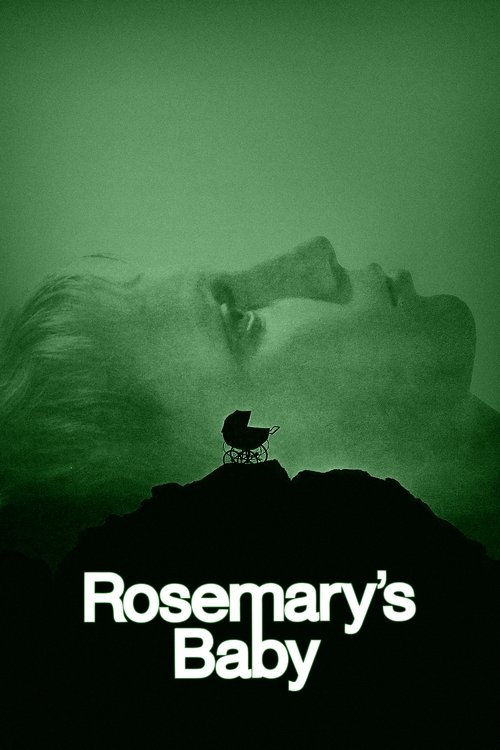
Rosemary's Baby
The Coven Was Always Already in the Building
Directed by Roman Polanski
Polanski made the most accurate film about institutional possession ever produced in mainstream cinema. The horror is not the satanic ritual. The horror is that everyone in Rosemary's life — husband, doctor, neighbors — was already in the coven. The conspiracy doesn't infiltrate her world. It is her world. She is the last one to find out.
Rosemary's Baby is the most disturbing Gnostic parable in twentieth-century cinema, and the reason it works is that almost nothing supernatural happens onscreen. Polanski made a film where the satanic conspiracy is real, comprehensive, and entirely social — a network of neighbors, a husband, a doctor, an obstetrician, all of whom have been in the coven the entire time. Rosemary's gaslighting is not the work of one bad actor. It is the coordinated effort of every relationship she has, performed competently by everyone she trusts. The film's terror is the recognition that any well-functioning system can be a coven if its members have agreed to be one — and that the last person to find out is always the one whose body is being used. Polanski's diagnosis is not 'there are witches.' It is 'consensus reality is a network, and the network can be hostile to you without anyone in it ever raising their voice.'
The Surface
A young couple, Rosemary and Guy Woodhouse, moves into a Manhattan apartment building with a dark reputation. Their elderly neighbors are friendly to the point of imposition. Guy's stalled acting career suddenly takes off. Rosemary gets pregnant after a hallucinatory night she half-remembers as rape by a non-human figure. The pregnancy is violently painful. Her doctor — chosen by the neighbors — dismisses her concerns. Her old friend who tries to warn her dies. She gives birth, is told the baby is dead, then discovers the neighbors and her husband have given the child to a coven. The child has eyes like the figure from her hallucination. The film ends with her stepping toward the cradle.
On surface, this is a horror film about a Satanic conspiracy. Most critics treat it as the founding text of modern occult horror, paving the way for The Exorcist and The Omen. The plot beats — pact for fame, demonic conception, coven of elderly neighbors — became genre conventions.
What Polanski actually made was something stranger. The supernatural elements are almost entirely subjective. The bruises, the cravings, the strange smells, the painful pregnancy — all could be explained naturally. The film withholds confirmation until the last minutes. The horror that does most of the work is not satanic at all. It is the horror of being inside a network where every person you depend on has agreed against you.
The Network as Coven
In Gnostic teaching, the Archons rule the material world through coordination. They are not individually omnipotent. They are collectively comprehensive. The system enforces its will not through any single agent but through the alignment of every agent the captured soul can reach. The captured soul tries to escape and discovers that every door has been arranged in advance to lead back to the central chamber.
Rosemary's Baby is this teaching dramatized in a Manhattan apartment building. Every authority figure in Rosemary's life is in the coven. Her doctor. The new doctor she switches to under duress. Her husband. Her neighbors. Even her cab driver, in the chilling late sequence when she tries to escape. The network has anticipated every move because the network designed the move-space.
This is why the film is more frightening than any film with explicit supernatural set pieces. The supernatural element could almost be removed and the film would still operate at full intensity. The actual evil is the structure. The coven is a metaphor for any social system that has decided what a woman's body is for and arranged its institutions accordingly. The pregnancy is a metaphor for any process that takes over a body while everyone in authority tells the inhabitant of the body that what she feels is not happening.
Polanski, who made the film between Catholic Poland and his own catastrophic 1969, understood institutional capture in a way most directors do not. The film is not paranoid about religion or about cities. It is realistic about how networks of agreement function when they have decided what a person is for.
Guy and the Pact
Guy Woodhouse, the husband, is the film's most quietly damning character. He starts as a charming, mid-tier actor with stalled prospects. He gets a part because the lead actor goes blind under suspicious circumstances. He becomes attentive when previously he was distant. He insists on the conception night. He defends the neighbors when Rosemary doubts them. He is, by the end, a fully transacted instrument.
The pact is not a single dramatic moment. The film never shows Guy signing anything. The pact is a series of small consents. He let the neighbors flatter him. He let the rituals proceed because the career started moving. He let the obstetrician choose his wife's pregnancy. Each consent looked reasonable in isolation. The pattern only resolves at the end.
This is the alchemical inversion. Solve et coagula gone wrong. Guy dissolved his integrity in small pieces and recombined himself around a new center — career, position, the apartment, the neighbors' approval. The recombination is complete by the time Rosemary notices. He is not pretending to love her. He has actually become the kind of man who can love her in this way. The transformation is real. It is just a transformation downward.
Polanski's most devastating choice: Guy is not gleeful about the betrayal. He is sheepish. He explains himself in the bedroom with the embarrassed cadence of a man who knows he has done something shameful and has already decided to live with it. The Demiurge's instruments rarely cackle. They mostly mumble and look at the floor.
Rosemary's Knowing
Rosemary is the pneumatic in this scheme — the soul who senses what is happening before she can prove what is happening. The first half of the film documents the development of her knowing. She reads the books. She makes the anagram. She finds the secret door behind the closet. She tries to call her friend. She tries to flee. Every act of investigation is met with the network's calm correction. She is told she is imagining things. She is told the pregnancy hormones are doing this. She is told to rest.
This is the Gnostic experience of awakening to the prison from inside the prison. The pneumatic correctly perceives that something is fundamentally wrong. The Archons correctly perceive that perception and immediately deploy the language of mental health, hormones, hysteria, paranoia. The pneumatic is forced to choose between trusting her own perception and trusting the consensus of every person who claims to love her. Most pneumatics lose this contest because the social pressure is more proximate than the truth.
Rosemary almost loses. She nearly accepts the new obstetrician's reassurances. She nearly takes the cake the neighbor brings. Her knowing keeps reasserting itself, smaller and smaller, but never quite extinguishable. This is the pneumatic spark Gnostic literature describes — the part of consciousness that cannot be fully overwritten, even when the entire surrounding system is committed to overwriting it.
The final scene is Polanski's most ambiguous and most precise. Rosemary, presented with her baby, the coven gathered around her, is asked to accept the role of mother. She steps forward. She rocks the cradle. She has not been converted. She has also not refused. The film ends in the moment of decision, and the decision is opaque, because the question — can the pneumatic survive in the system that has captured her, on terms that allow her to retain her knowing — is the question the entire Gnostic tradition has refused to answer with a simple yes or no.
The Transmission
Rosemary's Baby transmits a particular suspicion that does not leave the viewer. After this film, the kindly neighbor is suspect. The husband who has suddenly become more attentive is suspect. The doctor who tells you not to worry is suspect. The friends who insist you are imagining things are suspect. Not because Polanski wants you to be paranoid. Because Polanski wants you to notice when the network around you is aligning in a direction you did not choose.
This is why the film has aged so well and why each generation finds it newly relevant. The specifics of the coven matter less than the structural pattern. Every era has its versions. The institutional gaslight of women's pain. The corporate alignment that erases the dissenter. The family that has decided what a child is for. The state that has decided what a body is for. The structure is the structure. The film named it in 1968 and the naming has not lost any power.
What it gives the viewer is not fear. It is a refined sensitivity to the moment when consensus tips. The film teaches you to feel the tipping. Most films use horror to entertain you. This one uses it to install a sensor. The sensor is the gift.
Questions this film answers
What is the deeper meaning of Rosemary's Baby?
Rosemary's Baby is the most disturbing Gnostic parable in twentieth-century cinema, and the reason it works is that almost nothing supernatural happens onscreen. Polanski made a film where the satanic conspiracy is real, comprehensive, and entirely social — a network of neighbors, a husband, a doctor, an obstetrician, all of whom have been in the coven the entire time. Rosemary's gaslighting is not the work of one bad actor. It is the coordinated effort of every relationship she has, performed competently by everyone she trusts. The film's terror is the recognition that any well-functioning system can be a coven if its members have agreed to be one — and that the last person to find out is always the one whose body is being used. Polanski's diagnosis is not 'there are witches.' It is 'consensus reality is a network, and the network can be hostile to you without anyone in it ever raising their voice.'
What is the hidden symbolism in Rosemary's Baby?
A young couple, Rosemary and Guy Woodhouse, moves into a Manhattan apartment building with a dark reputation. Their elderly neighbors are friendly to the point of imposition. Guy's stalled acting career suddenly takes off. Rosemary gets pregnant after a hallucinatory night she half-remembers as rape by a non-human figure. The pregnancy is violently painful. Her doctor — chosen by the neighbors — dismisses her concerns. Her old friend who tries to warn her dies. She gives birth, is told the baby is dead, then discovers the neighbors and her husband have given the child to a coven. The child has eyes like the figure from her hallucination. The film ends with her stepping toward the cradle.
What esoteric traditions appear in Rosemary's Baby?
Rosemary's Baby draws from Gnosticism, Alchemy, Demonology traditions. Polanski made the most accurate film about institutional possession ever produced in mainstream cinema. The horror is not the satanic ritual. The horror is that everyone in Rosemary's life — husband, doctor, neighbors — was already in the coven. The conspiracy doesn't infiltrate her world. It is her world. She is the last one to find out.
What does Rosemary's Baby teach about the network as coven?
The supernatural could almost be removed and the film would still operate at full intensity. The actual evil is the structure. In Gnostic teaching, the Archons rule the material world through coordination. They are not individually omnipotent. They are collectively comprehensive. The system enforces its will not through any single agent but through the alignment of every agent the captured soul can reach. The captured soul tries to escape and discovers that every door has been arranged in advance to lead back to the central chamber.
What does Rosemary's Baby teach about guy and the pact?
Guy dissolved his integrity in small pieces and recombined himself around a new center. The recombination is real. Guy Woodhouse, the husband, is the film's most quietly damning character. He starts as a charming, mid-tier actor with stalled prospects. He gets a part because the lead actor goes blind under suspicious circumstances. He becomes attentive when previously he was distant. He insists on the conception night. He defends the neighbors when Rosemary doubts them. He is, by the end, a fully transacted instrument.
Is Rosemary's Baby worth watching for spiritual seekers?
Rosemary's Baby (1968) directed by Roman Polanski is essential viewing for those interested in Gnosticism, Conspiracy, Possession. The Coven Was Always Already in the Building. It rewards multiple viewings and contemplation.
Rewatch With New Eyes
Now that you've seen the architecture, experience it again. The same film becomes a different film when you know what to watch for.
This time, watch for:
- Watch for the false world vs. the real — who is asleep, who awakens
- Track the stages: blackening, whitening, reddening — death before rebirth
- Identify the hierarchy: which demon, which rank, which grimoire it comes from
Links may include affiliate partnerships that support Media Revelations