Fahrenheit 451
Fahrenheit 451 Burns Books Because a Sleeping World Cannot Tolerate Anything That Might Wake It
Directed by François Truffaut
Truffaut made a film where the firemen start the fires. Montag reads his first stolen book and cannot go back to sleep. The whole film is the story of a man waking up inside a system engineered to keep everyone unconscious.
Montag is a fireman in a future where firemen exist to burn books, and books are outlawed because they make people feel, remember, and doubt. The population lives sedated by wall-sized television that calls its viewers "family," by pills, by a soft constant hum of comfort. Truffaut sharpens Bradbury into something close to a spiritual diagram: this is not a story about censorship as policy. It is a story about a civilization that has chosen sleep, and one man who is accidentally infected with wakefulness. When Montag hides a book and reads it by night, moving his lips because he has forgotten how, he is not committing a crime. He is remembering that he has a mind. The state burns books for the same reason any sleeping thing lashes at an alarm.
Gnostic Reading: The Sleep of the World and the One Who Remembers
Gnosticism begins with a diagnosis: humanity is asleep, drugged by the world, and salvation is not belief but awakening, the remembering of what you truly are. Fahrenheit 451 renders that diagnosis as social fact. The people are narcotized by the television walls, addicted to a flow of empty content that Montag's wife Linda treats as her real family. She overdoses on pills and does not even remember it the next morning. This is the Gnostic sleep made literal: a soul so anesthetized it cannot recall its own near-death.
Montag is the one who wakes. The book is his gnosis, the forbidden knowledge that shatters the comfortable trance. Notice the moment a woman chooses to burn alive on top of her own library rather than live without it. Montag watches her strike the match. Something in him tears open. He has seen a human being who values inner life more than survival, and after that he cannot un-know that such a life exists. The Gnostic awakening is exactly this: not new information, but the sudden unbearable awareness that everyone around you is dreaming, and that you are not, anymore.
Alchemical Reading: Fire That Purifies Instead of Destroys
Fire in alchemy is the agent of transformation, and the film is built on a deliberate inversion of it. The state uses fire only to destroy, to reduce meaning to ash and keep the population base and unchanging. Montag's whole arc is the reclamation of fire's true function, its power to transmute rather than merely burn.
The reclaimed fire appears at the end, among the Book People at the edge of the woods. Each has become a book, memorizing a text whole so that when the body dies the work survives. They walk in the falling snow reciting their pages, and their fire is now warmth and preservation, the exact opposite of the fireman's flamethrower. The alchemical reversal completes: the same element that burned knowledge now keeps it alive inside living vessels. Montag joins them, becomes a book, and the destroyer of texts is transformed into their crucible. Fire went from calcination to transmutation, from erasing the gold to protecting it.
Questions this film answers
What is the deeper meaning of Fahrenheit 451?
Montag is a fireman in a future where firemen exist to burn books, and books are outlawed because they make people feel, remember, and doubt. The population lives sedated by wall-sized television that calls its viewers "family," by pills, by a soft constant hum of comfort. Truffaut sharpens Bradbury into something close to a spiritual diagram: this is not a story about censorship as policy. It is a story about a civilization that has chosen sleep, and one man who is accidentally infected with wakefulness. When Montag hides a book and reads it by night, moving his lips because he has forgotten how, he is not committing a crime. He is remembering that he has a mind. The state burns books for the same reason any sleeping thing lashes at an alarm.
What is the hidden symbolism in Fahrenheit 451?
Gnosticism begins with a diagnosis: humanity is asleep, drugged by the world, and salvation is not belief but awakening, the remembering of what you truly are. Fahrenheit 451 renders that diagnosis as social fact. The people are narcotized by the television walls, addicted to a flow of empty content that Montag's wife Linda treats as her real family. She overdoses on pills and does not even remember it the next morning. This is the Gnostic sleep made literal: a soul so anesthetized it cannot recall its own near-death.
What esoteric traditions appear in Fahrenheit 451?
Fahrenheit 451 draws from Gnosticism, Alchemy traditions. Truffaut made a film where the firemen start the fires. Montag reads his first stolen book and cannot go back to sleep. The whole film is the story of a man waking up inside a system engineered to keep everyone unconscious.
Is Fahrenheit 451 worth watching for spiritual seekers?
Fahrenheit 451 (1966) directed by François Truffaut is essential viewing for those interested in Gnosticism, Alchemy. Fahrenheit 451 Burns Books Because a Sleeping World Cannot Tolerate Anything That Might Wake It. It rewards multiple viewings and contemplation.
Rewatch With New Eyes
Now that you've seen the architecture, experience it again. The same film becomes a different film when you know what to watch for.
This time, watch for:
- Watch for the false world vs. the real — who is asleep, who awakens
- Track the stages: blackening, whitening, reddening — death before rebirth
Links may include affiliate partnerships that support Media Revelations
The Descent Continues
Where this thread leads next.
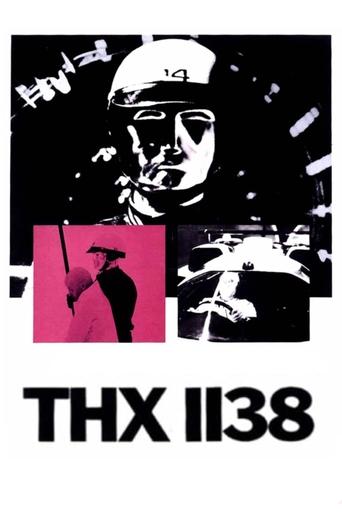
THX 1138 1971
THX 1138 Is About Escaping a Prison That Has No Walls, Only a Budget
Read the revelation →