Häxan
Häxan Argues That the Witch and the Hysteric Are the Same Woman, Burned by Two Centuries
Directed by Benjamin Christensen
Christensen builds a documentary about the Devil, then reveals in the last reel that the Devil was always a diagnosis.
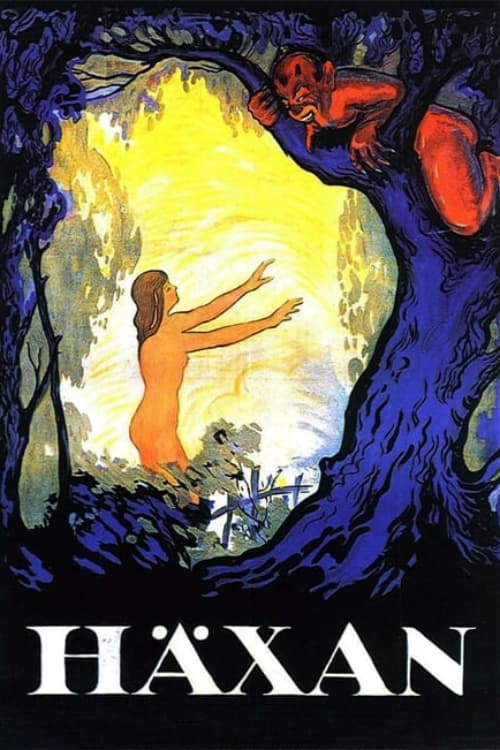
Häxan is a silent film that pretends to be a lecture and turns out to be an indictment. Christensen opens with woodcuts and pointers, the scholar explaining medieval cosmology, and then dramatizes it in vignettes so vivid they scandalized audiences in 1922: the Devil churning butter, monks buying love potions, an old woman accused by neighbors and tortured until she confesses to a Sabbath she describes in gleeful detail. The film seems to be reveling in the demonic. Then it closes its trap. In the final act Christensen leaps to the modern clinic and shows the same behaviors, the same women, renamed. The witch who signed the Devil's book is now the hysteric, the kleptomaniac, the somnambulist. The stake has become the asylum, the water torture has become the warm shower and the restraint. The thesis is quiet and devastating: the fire changed its name. Society still burns the woman who does not fit. It just calls the burning treatment.
Demonological Reading: The Devil as a Confession Extracted, Not a Being Encountered
Watch how the Sabbath actually enters the film. It arrives through the mouth of a tortured old woman. The inquisitors show her the instruments, and she begins to describe the black mass, the flight, the demons, the kiss on the Devil's backside, and the film shows us her descriptions as if real. Christensen is precise about the mechanism: the demonic imagery is generated by the interrogation, poured into the accused and then read back out as evidence.
This is the actual theology of the medieval witch trial, which the film understands better than its scholarly frame lets on. The Devil in these vignettes is never independently met. He is always summoned by the accuser, the confessor, the manual of demonology that tells the torturer which questions to ask. The demon is a co-production of fear and pain. Christensen dramatizes the Sabbath in full so we cannot pretend it was harmless fantasy, then shows us its factory: a frightened woman and a man with an instrument, manufacturing hell.
Jungian Reading: The Sabbath as the Repressed Shadow of a Repressive Age
Jung held that whatever a culture refuses to live is not destroyed but driven underground, where it festers into the shadow and eventually erupts. Medieval Christianity refused the body, sexuality, female power, and pagan ecstasy, and Häxan shows exactly where those exiled energies went. They gathered at the Sabbath. The black mass in the film is the photographic negative of the church: the same rituals inverted, the same reverence pointed at the opposite pole. That is precisely how the shadow appears, wearing the mirror-image of what consciousness worships.
The witch hunt is the psyche attacking its own disowned half. The pious accuse the ecstatic of exactly the desires the pious cannot admit to holding. Christensen's final move is the Jungian one. The shadow was never exorcised, only relocated. The energy the medieval world projected onto the witch, the modern world projects onto the hysteric and locks in a clinic. The material was never integrated. It was simply moved to a cleaner building and given a Latin name.
Questions this film answers
What is the deeper meaning of Häxan?
Häxan is a silent film that pretends to be a lecture and turns out to be an indictment. Christensen opens with woodcuts and pointers, the scholar explaining medieval cosmology, and then dramatizes it in vignettes so vivid they scandalized audiences in 1922: the Devil churning butter, monks buying love potions, an old woman accused by neighbors and tortured until she confesses to a Sabbath she describes in gleeful detail. The film seems to be reveling in the demonic. Then it closes its trap. In the final act Christensen leaps to the modern clinic and shows the same behaviors, the same women, renamed. The witch who signed the Devil's book is now the hysteric, the kleptomaniac, the somnambulist. The stake has become the asylum, the water torture has become the warm shower and the restraint. The thesis is quiet and devastating: the fire changed its name. Society still burns the woman who does not fit. It just calls the burning treatment.
What is the hidden symbolism in Häxan?
Watch how the Sabbath actually enters the film. It arrives through the mouth of a tortured old woman. The inquisitors show her the instruments, and she begins to describe the black mass, the flight, the demons, the kiss on the Devil's backside, and the film shows us her descriptions as if real. Christensen is precise about the mechanism: the demonic imagery is generated by the interrogation, poured into the accused and then read back out as evidence.
What esoteric traditions appear in Häxan?
Häxan draws from Demonology, Jungian traditions. Christensen builds a documentary about the Devil, then reveals in the last reel that the Devil was always a diagnosis.
Is Häxan worth watching for spiritual seekers?
Häxan (1922) directed by Benjamin Christensen is essential viewing for those interested in Demonology, Jungian. Häxan Argues That the Witch and the Hysteric Are the Same Woman, Burned by Two Centuries. It rewards multiple viewings and contemplation.
Rewatch With New Eyes
Now that you've seen the architecture, experience it again. The same film becomes a different film when you know what to watch for.
This time, watch for:
- Identify the hierarchy: which demon, which rank, which grimoire it comes from
- Meet the shadow: what is rejected, projected, and finally integrated
Links may include affiliate partnerships that support Media Revelations
The Descent Continues
Where this thread leads next.
The Witch 2015
Black Phillip Keeps His Word. No One Else in the Film Does.
Read the revelation →