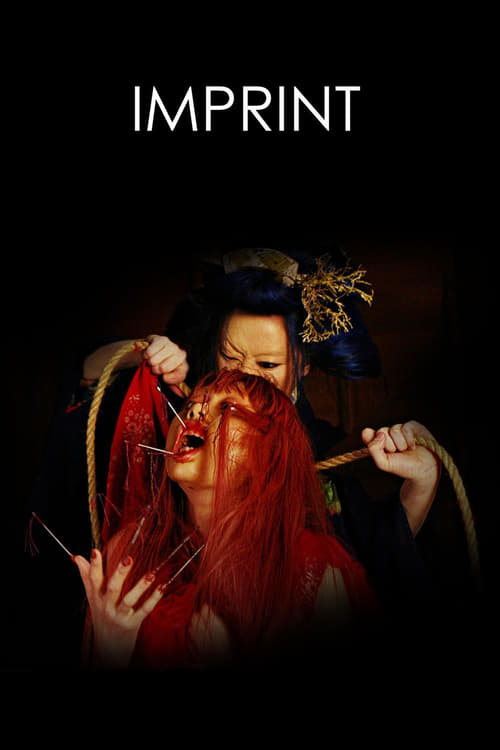
Imprint
Imprint Is a Hell Realm Where Every Kindness Was Already a Cruelty in Disguise
Directed by Takashi Miike
Miike's entry in the Masters of Horror series was banned from the network that commissioned it. It is set in a brothel on a fog-drowned island, and it is built as a set of nested confessions, each one revealing the last was a lie.
The American, Christopher, returns to 19th-century Japan to find Komomo, the prostitute he loved and promised to rescue. He finds instead a disfigured woman who tells him Komomo is dead, and who tells the story of that death three times, each version darker than the last, each retraction exposing the previous kindness as a mask over a horror. The disfigured woman was born with a twin sister growing from the side of her head, a parasitic entity that whispers to her and, it emerges, has been the author of every cruelty in her life. The film's structure is not a mystery to be solved. It is a descent, level by level, into a place where mercy keeps turning out to have been torture and love keeps turning out to have been the setup for a longer suffering. Nothing offered here is what it appears to be, and the pattern is the point.
Buddhist Reading: The Naraka of Endless Retold Suffering
Buddhist cosmology describes the naraka, the hell realms, not as eternal punishment but as states generated by karma, where beings suffer torments that renew as fast as they end. The island brothel is a naraka rendered exactly. The fog seals it off from the living world, the water is choked with the corpses of murdered infants, and the woman's story loops back on itself, each telling reopening a wound that the previous telling had seemed to close. This is the mechanism of samsaric suffering made visible: the compulsion to repeat, the tale told again because the teller cannot release it, mercy and cruelty revealed as the same act seen from different angles. The film's most Buddhist stroke is the parasitic twin, karma personified as a growth you did not choose and cannot cut away, whispering the next cruelty before you have finished the last. Christopher came seeking to rescue one soul from this realm. The teaching the film delivers is that you cannot extract a single being from a hell built out of the collective refusal to stop causing harm. He only descends into it with her.
Demonological Reading: The Familiar That Wears Your Own Face
Demonology across traditions describes the familiar, the attached spirit that speaks with the victim's own voice and directs their hand toward evil while they believe the impulse is theirs. The twin sister growing from the woman's skull is the familiar made anatomical, indistinguishable from her because it grew from her own body, its counsel indistinguishable from her own thought. Every atrocity she recounts, the drowned infants, the tortures, the betrayals, the twin claims as its authorship, and the horror is that the woman can never be sure where she ends and the parasite begins. This is the true demonological terror, older than any monster: not possession by something foreign, but the discovery that the voice urging you toward cruelty has always been housed in your own flesh, has always sounded exactly like you, and was there before you had a self to defend.
Questions this film answers
What is the deeper meaning of Imprint?
The American, Christopher, returns to 19th-century Japan to find Komomo, the prostitute he loved and promised to rescue. He finds instead a disfigured woman who tells him Komomo is dead, and who tells the story of that death three times, each version darker than the last, each retraction exposing the previous kindness as a mask over a horror. The disfigured woman was born with a twin sister growing from the side of her head, a parasitic entity that whispers to her and, it emerges, has been the author of every cruelty in her life. The film's structure is not a mystery to be solved. It is a descent, level by level, into a place where mercy keeps turning out to have been torture and love keeps turning out to have been the setup for a longer suffering. Nothing offered here is what it appears to be, and the pattern is the point.
What is the hidden symbolism in Imprint?
Buddhist cosmology describes the naraka, the hell realms, not as eternal punishment but as states generated by karma, where beings suffer torments that renew as fast as they end. The island brothel is a naraka rendered exactly. The fog seals it off from the living world, the water is choked with the corpses of murdered infants, and the woman's story loops back on itself, each telling reopening a wound that the previous telling had seemed to close. This is the mechanism of samsaric suffering made visible: the compulsion to repeat, the tale told again because the teller cannot release it, mercy and cruelty revealed as the same act seen from different angles. The film's most Buddhist stroke is the parasitic twin, karma personified as a growth you did not choose and cannot cut away, whispering the next cruelty before you have finished the last. Christopher came seeking to rescue one soul from this realm. The teaching the film delivers is that you cannot extract a single being from a hell built out of the collective refusal to stop causing harm. He only descends into it with her.
What esoteric traditions appear in Imprint?
Imprint draws from Buddhism, Demonology traditions. Miike's entry in the Masters of Horror series was banned from the network that commissioned it. It is set in a brothel on a fog-drowned island, and it is built as a set of nested confessions, each one revealing the last was a lie.
Is Imprint worth watching for spiritual seekers?
Imprint (2006) directed by Takashi Miike is essential viewing for those interested in Buddhism, Demonology. Imprint Is a Hell Realm Where Every Kindness Was Already a Cruelty in Disguise. It rewards multiple viewings and contemplation.
Rewatch With New Eyes
Now that you've seen the architecture, experience it again. The same film becomes a different film when you know what to watch for.
This time, watch for:
- See impermanence: what clings, what releases, what remains
- Identify the hierarchy: which demon, which rank, which grimoire it comes from
Links may include affiliate partnerships that support Media Revelations
The Descent Continues
Where this thread leads next.

Audition 2000
The Audition Is a Magic Ritual. Aoyama Summoned Exactly What He Was.
Read the revelation →