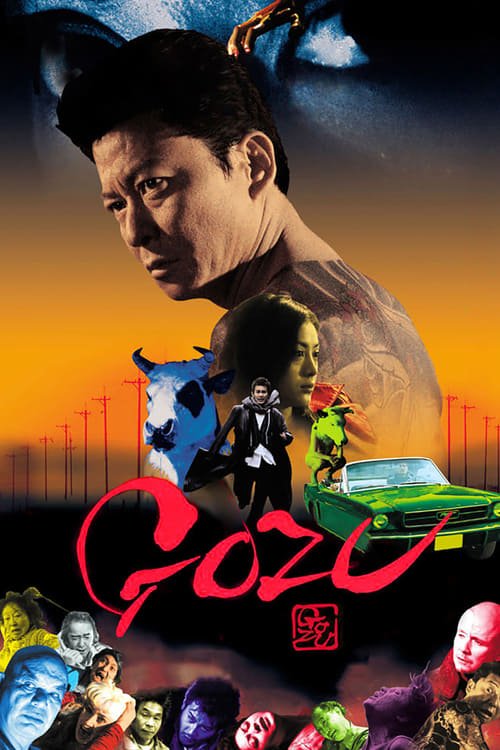
Gozu
Gozu Is a Yakuza's Descent Into the Underworld to Retrieve His Own Anima
Directed by Takashi Miike
Minami drives his brother's body to a disposal yard and never comes back the same man. Miike filmed a katabasis and disguised it as a gangster errand.
Gozu opens with the crime and then abandons the crime entirely. Ozaki, Minami's yakuza "brother," is killed early, his corpse loaded into a car, and then the corpse vanishes from a parking lot. Everyone reads what follows as Miike being deliberately incoherent. It is the opposite of incoherent. The moment the body disappears, Minami has crossed a threshold. Nagoya is not Nagoya anymore. It is the land of the dead, and Minami is there to recover something he did not know he had lost. The cow-headed demon that licks his face in the inn, the innkeeper who lactates and hands him the milk in a bottle, the dead brother who returns from a woman's body fully grown: none of this is dream-logic for its own sake. It is the precise machinery of a soul-retrieval, run by a director who trusts the images to do the work while the audience waits for a plot that is never coming back.
Shamanic Reading: The Errand Was Always a Journey to the Dead
In shamanic practice, soul loss is the diagnosis behind a certain kind of numbness. A part of the self splits off under trauma and remains in the other world, and the healer must travel there to bring it home. Minami is numb from the first frame. He kills Ozaki on command and feels nothing, because the part of him that could feel has already left.
The Nagoya he enters is a textbook lower world. The gatekeepers are grotesque and specific: a transvestite innkeeper, her brother who marks his territory with white paint on the walls, a man with his face covered in ladle-scars. Minami is fed and disoriented and moved from room to room by beings who know why he is there before he does. The Gozu itself, the cow-headed guardian, arrives exactly where shamanic guardians arrive: at the point of maximum vulnerability, licking him while he lies paralyzed, testing whether he can bear contact with the numinous without breaking. The whole grotesque itinerary is one long ordeal designed to strip the yakuza's armor until the lost soul can be reclaimed.
Jungian Reading: Ozaki Comes Back as a Woman Because That Is What He Always Was
Ozaki is Minami's anima wearing a man's body and a yakuza suit. He is the emotional, unstable, "gone soft" part that the organization wants destroyed precisely because it feels too much. Minami is ordered to kill his anima, and the film is the cost of that order.
So Ozaki returns from the underworld the only honest way he can: reborn out of a young woman's body, emerging into the world naked and female and asking to be recognized. The infamous final birth is not shock for its own sake. It is the anima refusing to stay repressed, insisting on integration through the body. When Minami finally has sex with the woman who is Ozaki, and then the grown Ozaki climbs back out of her, Miike is staging the return of the split-off feminine into a man who tried to murder it on a boss's say-so. The retrieval is complete. Minami leaves the underworld with the two of them, no longer the numb executioner who drove in.
Other Miike films that route their violence through ritual and the underworld: Audition (the woman as returning shadow), Ichi the Killer (sadism as botched initiation), Imprint (hell staged as a brothel).
Questions this film answers
What is the deeper meaning of Gozu?
Gozu opens with the crime and then abandons the crime entirely. Ozaki, Minami's yakuza "brother," is killed early, his corpse loaded into a car, and then the corpse vanishes from a parking lot. Everyone reads what follows as Miike being deliberately incoherent. It is the opposite of incoherent. The moment the body disappears, Minami has crossed a threshold. Nagoya is not Nagoya anymore. It is the land of the dead, and Minami is there to recover something he did not know he had lost. The cow-headed demon that licks his face in the inn, the innkeeper who lactates and hands him the milk in a bottle, the dead brother who returns from a woman's body fully grown: none of this is dream-logic for its own sake. It is the precise machinery of a soul-retrieval, run by a director who trusts the images to do the work while the audience waits for a plot that is never coming back.
What is the hidden symbolism in Gozu?
In shamanic practice, soul loss is the diagnosis behind a certain kind of numbness. A part of the self splits off under trauma and remains in the other world, and the healer must travel there to bring it home. Minami is numb from the first frame. He kills Ozaki on command and feels nothing, because the part of him that could feel has already left.
What esoteric traditions appear in Gozu?
Gozu draws from Shamanism, Jungian traditions. Minami drives his brother's body to a disposal yard and never comes back the same man. Miike filmed a katabasis and disguised it as a gangster errand.
Is Gozu worth watching for spiritual seekers?
Gozu (2003) directed by Takashi Miike is essential viewing for those interested in Shamanism, Jungian. Gozu Is a Yakuza's Descent Into the Underworld to Retrieve His Own Anima. It rewards multiple viewings and contemplation.
Rewatch With New Eyes
Now that you've seen the architecture, experience it again. The same film becomes a different film when you know what to watch for.
This time, watch for:
- Follow the descent: what dies, what guides, what returns transformed
- Meet the shadow: what is rejected, projected, and finally integrated
Links may include affiliate partnerships that support Media Revelations