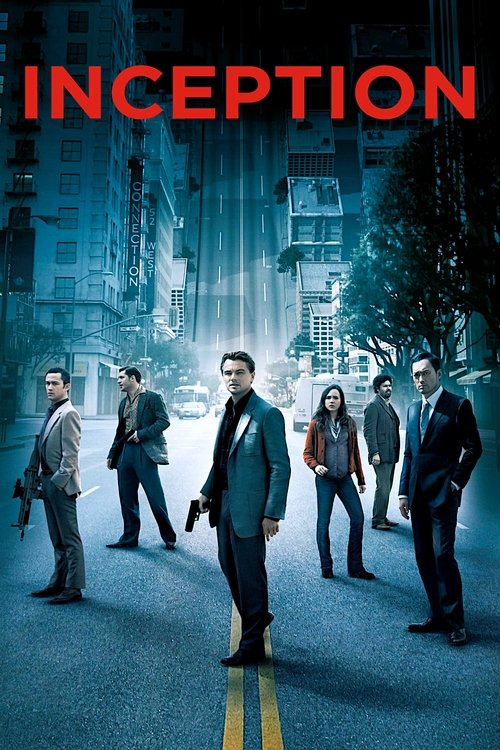
Inception
Dream Yoga and the Totem of Attachment
Directed by Christopher Nolan
Inception is not science fiction — it is a precise manual for lucid dreaming wrapped in a heist film. The layers of dreams are the layers of consciousness mapped by Tibetan Buddhism. The totem is the meditator's anchor to prevent getting lost in the bardos. Mal is what happens when you mistake the dream for reality and can no longer tell which way is up.
Inception is Nolan's most spiritual film disguised as his most mechanical. The dream technology is a delivery device for teachings about consciousness, attachment, and the danger of mistaking any level of experience for ultimate reality. The spinning top at the end is not a puzzle to solve — it is a teaching about the nature of all totems, all anchors, all claims to know what is real.
The Surface
The popular reading: Inception is a clever heist movie with dreams instead of bank vaults. The fun is in the mechanics — dream within dream, kicks, totems, projections. Audiences debate whether the top falls at the end as if this is the question Nolan wants us to ask.
This reading treats the film as a puzzle box. But Nolan didn't spend a decade developing Inception to create a brain teaser. He built something older and stranger: a movie that functions the way dreams function, teaching through experience rather than exposition.
Notice how the film makes you feel in the final act — disoriented across multiple timelines, unsure which layer you're watching, losing track of what's 'really' happening. This is not a flaw in the filmmaking. This is the point. Nolan is inducing the experience of consciousness navigating levels of reality.
The Architecture of Consciousness
Tibetan Buddhism maps consciousness into layers — waking, dreaming, deep sleep, and the bardos between death and rebirth. Each layer has its own logic, its own time signature, its own relationship to identity. The deeper you go, the more plastic reality becomes.
Inception's dream levels mirror this exactly. Level one: the van chase, closest to waking, time moves almost normally. Level two: the hotel, gravity becomes negotiable, time stretches. Level three: the snow fortress, deeper still. Limbo: unconstructed dream space where decades pass in minutes.
The time dilation is precise Buddhist teaching. In the bardo states, subjective time expands radically — what feels like years may be moments of external time. Meditators in deep practice report similar experiences. Nolan translated contemplative insight into blockbuster mechanics.
The projections — the hostile dream figures that attack extractors — are what Buddhism calls mental formations. They protect the dreamer's psychological structure. When you start dismantling someone's beliefs, their mind fights back. Every meditator knows this: try to see through a cherished illusion and watch the resistance arise.
The Totem and the Trap
Each extractor carries a totem — a physical object with properties only they know, used to distinguish dream from reality. Cobb's is the spinning top. In dreams, it spins forever. In reality, it falls.
But here is what the film shows rather than tells: the totem is also a trap. Cobb is so attached to the question 'Is this real?' that he cannot be present in any experience. He checks the totem compulsively. He is never actually here because he is always testing whether here is real.
This is the meditator's trap mapped perfectly. The techniques meant to anchor awareness become new attachments. The person who spends all their time checking whether they're enlightened never actually lives. Cobb's totem keeps him safe and keeps him imprisoned.
The final scene shows Cobb spinning the totem — then walking away to his children without waiting to see if it falls. This is not ambiguity for ambiguity's sake. It is the teaching: at some point you have to stop checking and actually live. The totems cannot tell you what is real. Only participation can.
Mal and the Inception That Kills
Mal is not a villain. She is a warning. She and Cobb spent fifty years in Limbo, building worlds together, forgetting they were dreaming. When Cobb finally wanted to return, Mal had lost the ability to believe the upper world was real.
So Cobb performed inception on his own wife — planted the idea that her world was not real. The inception worked. They woke up. But the idea kept growing. Mal became convinced that the waking world was also a dream, that she needed to kill herself to wake up. The inception that saved her in Limbo killed her in reality.
This is the film's darkest teaching: ideas planted deep enough become indistinguishable from truth. If someone truly believes reality is a dream, how do you prove them wrong? You cannot. The inception is total. This is why traditions guard certain teachings — not because knowledge is dangerous, but because half-understood knowledge is catastrophic.
Mal appears throughout the film as Cobb's guilt and grief given form. She sabotages his missions not because she is evil but because he has not processed her death. His projection of her is his own self-destruction wearing her face.
The Transmission
The question 'Is the top still spinning?' misses the point entirely. Of course we don't know. We can never know. That is the teaching.
Every level of experience feels completely real from inside it. The dreamers in level one think they're awake. The dreamers in level two think level one is reality. There is no external position from which to verify which layer is 'really' real. Even the top is just another object in another experience.
This is not nihilism. It is the recognition that the question 'What is ultimately real?' cannot be answered by any experience, any test, any totem. Reality is not a level you finally reach. It is the nature of experience itself, present equally at every level.
Cobb walks toward his children. The top spins. The film cuts. What remains is not a puzzle but a choice: Will you be someone who endlessly checks their totem, or someone who walks toward what matters?
Questions this film answers
What is the deeper meaning of Inception?
Inception is Nolan's most spiritual film disguised as his most mechanical. The dream technology is a delivery device for teachings about consciousness, attachment, and the danger of mistaking any level of experience for ultimate reality. The spinning top at the end is not a puzzle to solve — it is a teaching about the nature of all totems, all anchors, all claims to know what is real.
What is the hidden symbolism in Inception?
The popular reading: Inception is a clever heist movie with dreams instead of bank vaults. The fun is in the mechanics — dream within dream, kicks, totems, projections. Audiences debate whether the top falls at the end as if this is the question Nolan wants us to ask.
What esoteric traditions appear in Inception?
Inception draws from Buddhism, Initiation traditions. Inception is not science fiction — it is a precise manual for lucid dreaming wrapped in a heist film. The layers of dreams are the layers of consciousness mapped by Tibetan Buddhism. The totem is the meditator's anchor to prevent getting lost in the bardos. Mal is what happens when you mistake the dream for reality and can no longer tell which way is up.
What does Inception teach about the architecture of consciousness?
Nolan translated contemplative insight into blockbuster mechanics. The time dilation is precise Buddhist teaching. Tibetan Buddhism maps consciousness into layers — waking, dreaming, deep sleep, and the bardos between death and rebirth. Each layer has its own logic, its own time signature, its own relationship to identity. The deeper you go, the more plastic reality becomes.
What does Inception teach about the totem and the trap?
At some point you have to stop checking and actually live. The totems cannot tell you what is real. Each extractor carries a totem — a physical object with properties only they know, used to distinguish dream from reality. Cobb's is the spinning top. In dreams, it spins forever. In reality, it falls.
What does Inception teach about the transmission?
Reality is not a level you finally reach. It is the nature of experience itself, present equally at every level. The question 'Is the top still spinning?' misses the point entirely. Of course we don't know. We can never know. That is the teaching.
Is Inception worth watching for spiritual seekers?
Inception (2010) directed by Christopher Nolan is essential viewing for those interested in Dream Yoga, Buddhism, Consciousness. Dream Yoga and the Totem of Attachment. It rewards multiple viewings and contemplation.
Rewatch With New Eyes
Now that you've seen the architecture, experience it again. The same film becomes a different film when you know what to watch for.
This time, watch for:
- See impermanence: what clings, what releases, what remains
- Mark the threshold: the old self dies, the ordeal transforms, the new self returns
Links may include affiliate partnerships that support Media Revelations
The Descent Continues
Where this thread leads next.
The Matrix 1999
The Gnostic Gospel of the Machine Age
Read the revelation →