The entire film takes place in the bardo. Jacob has been dying since the first frame. The demons are the wrathful deities of the Tibetan Book of the Dead in Cold War clothing. The angels are the same deities, accepted instead of feared. He is not losing his mind. He is losing his grip on a body that has already stopped breathing.
Jacob's Ladder is the most accurate cinematic adaptation of the Tibetan Book of the Dead ever attempted, and almost no one watching it understood what they were watching. Adrian Lyne and screenwriter Bruce Joel Rubin built the entire film as a bardo state — the intermediate consciousness between dying and the next condition. The demons are wrathful deities arising from Jacob's own psyche. The angels are peaceful deities he could not accept until he stopped resisting. Vietnam, the chemical experiments, the marriage, the dead son — these are not the plot. They are what consciousness reviews when consciousness is leaving. The film is not a horror film. It is a manual.
The Surface
A Vietnam veteran working as a Brooklyn postman begins to experience increasingly disturbing hallucinations: faceless figures on subway platforms, demonic vibrations of his lover's face, hospital orderlies who are not orderlies. He pursues an investigation into a chemical experiment the army may have run on his unit. By the end, he is revealed to have been dying in a field hospital in Vietnam throughout the entire film. The Brooklyn life, the wife, the lover, the investigation — all of it was the consciousness of a dying soldier processing his end.
Most readings treat this as a twist ending. It is not. The film signals constantly that the Brooklyn timeline is unstable. The temperatures are wrong. Time moves strangely. Characters change. The 'twist' is just the moment the film stops protecting the viewer from what it has been depicting all along.
Rubin wrote the screenplay after reading the Bardo Thodol. He has said this in interviews. The film is a Buddhist text wearing Cold War clothing. The Hollywood horror surface is the wrapping. Inside is one of the most careful depictions of consciousness during dying ever attempted in narrative film.
The Bardo and Its Demons
The Tibetan Book of the Dead describes the bardo — the intermediate state between death and rebirth — as a space where consciousness encounters its own projections without the buffer of a body. What arises arises with hallucinatory vividness. Wrathful deities appear: terrifying figures with claws and fangs, the very things the dying mind has refused to face during life. The instruction is to recognize them as your own mind. The instruction is what almost no one is prepared to follow.
Jacob's demons are wrathful deities recoded for a Brooklyn veteran. The figure with the vibrating head at the party. The presence in the subway. The orderlies wheeling him through a hospital that is also hell. Lyne shoots them at three-quarter speed and shutter angles that make the image jitter — the formal language of consciousness no longer locked to the cardiac rhythm.
Jacob meets these figures and runs from them. This is the wrong response according to the Bardo Thodol. The figures cannot harm him because the figures are him. They are his fear of his own death, his guilt about his son, his rage about Vietnam, his unfinished marriage, given form because the bardo gives everything form. Running prolongs the bardo. Recognition would end it.
Louis the chiropractor — angel-named, suspiciously calm, oddly literate about scripture — keeps trying to give Jacob the instructions. 'The only thing that burns in hell is the part of you that won't let go of your life.' This is the Bardo Thodol's central teaching in one Brooklyn line.
The Son and the Letting Go
Jacob's youngest son Gabe was killed before he went to Vietnam. The film returns to this loss constantly. Toy fire trucks. Photographs. A bicycle. The marriage to Sarah ended around this loss because the grief could not be shared. Jacob took the war to escape the loss. The loss followed him into the war. The bardo cannot proceed because he is holding the loss like a rope.
The film's final passage is the most precise depiction of dying-while-clinging on film. Jacob returns to his old apartment. He sees Gabe on the staircase. The boy smiles, holds out his hand, leads him up. The staircase is Jacob's Ladder — the dream of the biblical Jacob, the bridge between earth and the upper world.
He climbs because he is finally able to. The thing he has been refusing all film — the son's death, his own death, the surrender of the life he was supposed to have — releases. The release is not joy. It is something more accurate to dying than joy. It is the cessation of the pull.
In the next shot, the field hospital. The doctors note that he has stopped fighting. They cover his face. The film is over because the bardo is over. The transition has occurred.
The Chemical and the Trauma
The film leaves a piece of the Brooklyn investigation unresolved on purpose: the army chemist who admits the unit was dosed with a substance called the Ladder that increased aggression. Whether this is also literally true within the film or only a piece of Jacob's bardo confabulation, Lyne does not say.
What matters is what the substance is named. The Ladder is what carried the men into the killing state. It is also what is carrying Jacob upward at the end. The drug that made his unit murder each other is the same structure as the dying that is now releasing him. The shamanic recognition: the wound and the medicine come from the same plant.
This is why the film cannot be cleanly categorized. Vietnam is real. The chemistry was real. The PTSD is real. The bardo is real. The Buddhist teaching is real. None of these layers cancel the others. The film insists that the trauma a soldier carries and the consciousness of a dying man are the same kind of phenomenon: states in which the boundary between self and not-self has gone permeable, and what arises arises with terrible intimacy.
Shamanic traditions have always known that the dying process and the initiatic process are structurally identical. The shaman dies many small deaths to prepare for the one that matters. The soldier was not given that preparation. Jacob is having his initiation while bleeding out.
The Transmission
Jacob's Ladder transmits an unusual gift: it makes the viewer briefly familiar with what dying-while-conscious looks like from inside. The film is not pleasant. The pleasure is not the point. What it leaves with you is a felt sense — not knowledge, sense — of what the Tibetans have been saying for a thousand years.
After this film, the next time you cannot let go of something — a grief, a resentment, an identity — you may notice the rope in your hand. The film named it. The rope is what makes the demons demons. Letting go does not make them disappear. It makes them recognizable as the peaceful deities they always were under the wrath.
Lyne and Rubin made the most accurate sutra in twentieth-century American cinema and shipped it as a Cold War horror film. The disguise was perfect. The teaching slipped through anyway. People who watched the film at fourteen are still being reorganized by it at fifty. That is what a real bardo teaching does. It plants itself and waits.
Questions this film answers
What is the deeper meaning of Jacob's Ladder?
Jacob's Ladder is the most accurate cinematic adaptation of the Tibetan Book of the Dead ever attempted, and almost no one watching it understood what they were watching. Adrian Lyne and screenwriter Bruce Joel Rubin built the entire film as a bardo state — the intermediate consciousness between dying and the next condition. The demons are wrathful deities arising from Jacob's own psyche. The angels are peaceful deities he could not accept until he stopped resisting. Vietnam, the chemical experiments, the marriage, the dead son — these are not the plot. They are what consciousness reviews when consciousness is leaving. The film is not a horror film. It is a manual.
What is the hidden symbolism in Jacob's Ladder?
A Vietnam veteran working as a Brooklyn postman begins to experience increasingly disturbing hallucinations: faceless figures on subway platforms, demonic vibrations of his lover's face, hospital orderlies who are not orderlies. He pursues an investigation into a chemical experiment the army may have run on his unit. By the end, he is revealed to have been dying in a field hospital in Vietnam throughout the entire film. The Brooklyn life, the wife, the lover, the investigation — all of it was the consciousness of a dying soldier processing his end.
What esoteric traditions appear in Jacob's Ladder?
Jacob's Ladder draws from Buddhism, Shamanism traditions. The entire film takes place in the bardo. Jacob has been dying since the first frame. The demons are the wrathful deities of the Tibetan Book of the Dead in Cold War clothing. The angels are the same deities, accepted instead of feared. He is not losing his mind. He is losing his grip on a body that has already stopped breathing.
What does Jacob's Ladder teach about the bardo and its demons?
The figures cannot harm him because the figures are him. Running prolongs the bardo. Recognition would end it. The Tibetan Book of the Dead describes the bardo — the intermediate state between death and rebirth — as a space where consciousness encounters its own projections without the buffer of a body. What arises arises with hallucinatory vividness. Wrathful deities appear: terrifying figures with claws and fangs, the very things the dying mind has refused to face during life. The instruction is to recognize them as your own mind. The instruction is what almost no one is prepared to follow.
Rewatch With New Eyes
Now that you've seen the architecture, experience it again. The same film becomes a different film when you know what to watch for.
This time, watch for:
- See impermanence: what clings, what releases, what remains
- Follow the descent: what dies, what guides, what returns transformed
Links may include affiliate partnerships that support Media Revelations
The Descent Continues
Where this thread leads next.
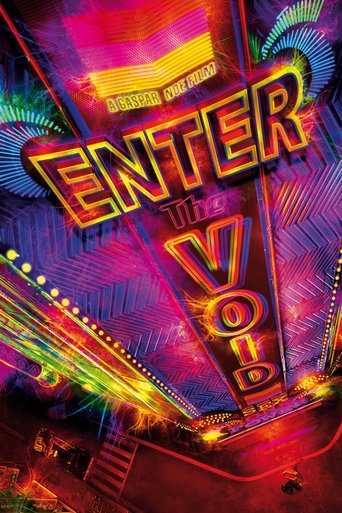
Enter the Void 2009
What Happens After You Die (According to the Tibetan Book of the Dead)
Read the revelation →