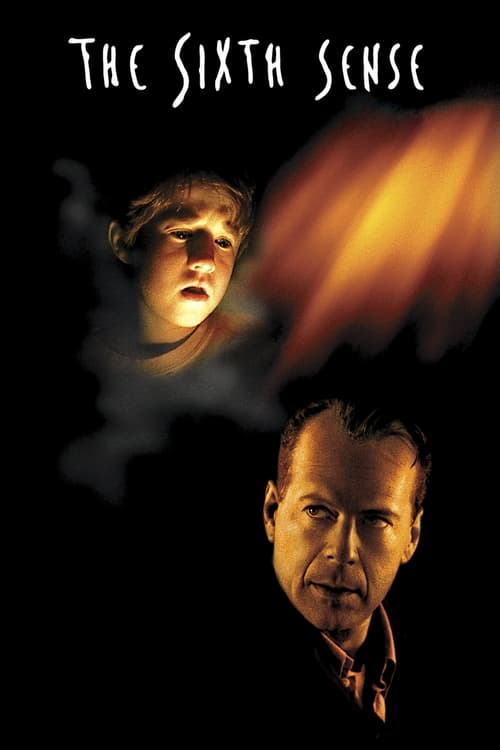
Shyamalan made a film whose famous twist is the least interesting layer. The actual film is about what the dying have been trying to tell the living for as long as there have been the dying — and the catastrophe of consciousness so dedicated to its own task that it cannot notice it has already crossed the threshold. Malcolm is not a man who finds out he's a ghost. Malcolm is a soul in the bardo using one final case to complete an unfinished circuit.
The Sixth Sense is treated as a famous twist film, and the twist has so completely overshadowed the film that almost nobody talks about what is actually being depicted. Shyamalan made a deeply serious bardo film — a film about the intermediate state Tibetan Buddhism has been describing for a thousand years, in which the recently dead do not know they are dead, continue to perform their attachments and unfinished business, and require contact with a living mediator to recognize their condition and complete what they did not complete in life. Malcolm Crowe is in the bardo. Cole Sear is the medium. The dead in the film are not horror props. They are souls in transition who need a witness. The film's quiet greatness is that the resolution of every ghost-encounter is the same: not exorcism, not destruction, but recognition. The ghosts want to be seen. Seeing them releases them. Cole is performing a function the culture has otherwise abandoned. He is the village shaman who has been pathologized as a disturbed child. His mother and his therapist do not know they are looking at the holder of an office.
The Surface
A child psychologist is shot by a former patient who claims the psychologist failed him. Months later the psychologist takes on a new case: a boy named Cole who appears traumatized and is being raised by an exhausted single mother. The boy reveals he sees dead people. The psychologist initially treats this as a delusion, then becomes convinced it is real. He helps the boy understand that the dead come to him because they need help. The boy begins listening to the ghosts and resolving what they could not resolve. The psychologist returns home to his wife and discovers — and the audience discovers — that he himself died in the opening scene. He has been dead the entire film. His wife was never ignoring him. He was never speaking to her. The unfinished business he needed to complete was the help he gave Cole.
The film made nearly seven hundred million dollars and turned 'I see dead people' into the most quoted line of the year. The twist became cultural shorthand. The film became, in popular memory, the twist that built it.
This was not what Shyamalan made. The twist is structurally necessary, but the actual film is the work Cole does and the recognition the dead require. The film is unusually patient. It refuses jump scares. The dead are not threats — they are sufferers. The therapy that Malcolm is conducting is not entirely directed at Cole. It is directed at himself. He just does not know it yet.
The Bardo as Operational State
Tibetan Buddhist teaching describes the bardo — the intermediate state — as the period after death in which consciousness has separated from the body but has not yet found its next condition. In the bardo, the dead often do not realize they have died. They continue performing the patterns of their life. They try to speak to people who do not hear them. They feel a slow, growing confusion as the world ceases to respond. The Tibetan Book of the Dead is a manual for navigating this state — a text read aloud over the dying so that the consciousness in transit can recognize the figures it encounters and choose liberation rather than continued cycling.
Malcolm is in the bardo for the entire film. He does not know it. The signs are precise and present from the first scene after his death: doors that will not open for him, conversations his wife conducts as if alone, a temperature drop when he enters a room, a ring on a floor that the wife wears in front of him without acknowledgment. The film withholds confirmation but supplies evidence. The viewer is meant to feel something subtly wrong on first viewing and to see it plainly on second.
His professional dedication is the trap. He is so committed to being a therapist that he cannot recognize the cessation of the conditions that made him one. He is performing the role of competent professional even though no one is hiring him, no one is paying him, no one but Cole is acknowledging him. The role survives the body's death because the role was always the man's primary identification. This is what Buddhist teachers warn about. The strongest attachment is the one that defines the self. It is the last to dissolve. Sometimes it does not dissolve at all without help.
Cole is the help. Cole is the mediator who allows Malcolm to discover his condition. The film is so quiet about the structure that most viewers experience it as twist rather than as teaching.
Cole as Shaman in the Suburbs
Cole's gift is not horror movie clairvoyance. It is the ancient office of the medium — the one who can perceive the dead and serve as bridge between them and the living. Every traditional society had a version of this person. Most of them did not have a happy time of it. Mediums in tribal cultures were often selected by the spirits against the medium's will, were often sick or strange, and required adult mentorship to learn to manage the gift without being destroyed by it.
Cole has no mentor. His culture does not know the office exists. His mother loves him and cannot understand him. His teachers fear him. The other children sense the difference and harm him for it. He is the shaman child without the village that knew what to do with shaman children. This is the modern condition for anyone born with a sensitivity the surrounding culture has no framework for. The sensitivity becomes a wound.
What Malcolm does for Cole, fundamentally, is provide the missing mentorship. He listens. He treats the perception as real. He suggests that the ghosts might be coming because Cole can help them. This is the reframe that traditional cultures provided to every emerging shaman. You are not cursed. You are called. The afflictions are the apparatus by which the calling locates you.
Once Cole receives the reframe, he begins to do the work. He listens to the murdered girl. He retrieves the videotape she has left for her father. He testifies, at the funeral, to what the dead child has shown him. The girl's mother poisoned her over years — Munchausen syndrome by proxy. The truth was waiting in the cassette. Cole is the courier the dead used to get the truth to where it needed to go. This is not a power fantasy. It is a description of what mediums do.
The Dead Who Don't Know
Shyamalan's most precise and underrated insight is encoded in Cole's whispered confession: 'They don't know they're dead.' The line is the film's actual thesis. The horror is not that ghosts exist. The horror is that the dead are still inside their final preoccupations, still trying to complete the actions that mattered to them in life, unable to recognize that the conditions no longer apply.
The film's gallery of dead is not a freak show. It is a study in unresolved attachment. The cyclist obsessed with his bike. The man who shot himself in the head still walking with the wound. The woman with the burned-out face from the kitchen fire. The boy with the back of his head missing. Each ghost carries the form of how they died because the form is the unfinished question. The bardo body is the body of the attachment that did not let go.
This is rigorous Buddhist phenomenology. The state at death does not erase the patterns of the life. It magnifies them. The unfinished business does not dissolve; it intensifies, because the body that allowed it to be deferred is gone. The dead need either to complete the business or to recognize that the business cannot be completed and let it go. Either move requires help. The bardo states are described as terrifying precisely because most consciousnesses arrive there unprepared and cycle through them confused.
Cole's work is the work the Tibetan Book of the Dead was designed to do — to recognize what the dead need, to name it, to help them release. He is not exorcising anything. He is performing the function the culture stopped performing when it decided that death was a medical event and the dead were over.
The Transmission
The Sixth Sense transmits, in a film aimed at a mass audience, the actual structure of unfinished business after death. Most viewers receive it as a twist movie. A small portion, especially those who have lost someone, recognize the film as an unusually accurate model of what tradition has long described.
The final scene is one of the most quietly devastating in late-twentieth-century cinema. Malcolm visits his sleeping wife. He realizes what has happened. He tells her he is sorry for the time he did not give her. He tells her he loves her. He releases the ring she has been wearing. He releases himself. The scene is not horror. It is liturgy. It is the bardo navigation performed correctly. The consciousness in transit recognizes its condition, completes the unfinished communication, and is ready to move on.
What the film gives the viewer is permission to take seriously the possibility that the dead are still around for a while, still needing things, still capable of being addressed. This is a teaching most traditional cultures held as common knowledge. The modern West has largely forgotten it. Shyamalan, working inside the wrapper of supernatural thriller, reintroduced it to a generation. The famous twist is the price of entry. The teaching is the gift.
Questions this film answers
What is the deeper meaning of The Sixth Sense?
The Sixth Sense is treated as a famous twist film, and the twist has so completely overshadowed the film that almost nobody talks about what is actually being depicted. Shyamalan made a deeply serious bardo film — a film about the intermediate state Tibetan Buddhism has been describing for a thousand years, in which the recently dead do not know they are dead, continue to perform their attachments and unfinished business, and require contact with a living mediator to recognize their condition and complete what they did not complete in life. Malcolm Crowe is in the bardo. Cole Sear is the medium. The dead in the film are not horror props. They are souls in transition who need a witness. The film's quiet greatness is that the resolution of every ghost-encounter is the same: not exorcism, not destruction, but recognition. The ghosts want to be seen. Seeing them releases them. Cole is performing a function the culture has otherwise abandoned. He is the village shaman who has been pathologized as a disturbed child. His mother and his therapist do not know they are looking at the holder of an office.
What is the hidden symbolism in The Sixth Sense?
A child psychologist is shot by a former patient who claims the psychologist failed him. Months later the psychologist takes on a new case: a boy named Cole who appears traumatized and is being raised by an exhausted single mother. The boy reveals he sees dead people. The psychologist initially treats this as a delusion, then becomes convinced it is real. He helps the boy understand that the dead come to him because they need help. The boy begins listening to the ghosts and resolving what they could not resolve. The psychologist returns home to his wife and discovers — and the audience discovers — that he himself died in the opening scene. He has been dead the entire film. His wife was never ignoring him. He was never speaking to her. The unfinished business he needed to complete was the help he gave Cole.
What esoteric traditions appear in The Sixth Sense?
The Sixth Sense draws from Buddhism, Shamanism traditions. Shyamalan made a film whose famous twist is the least interesting layer. The actual film is about what the dying have been trying to tell the living for as long as there have been the dying — and the catastrophe of consciousness so dedicated to its own task that it cannot notice it has already crossed the threshold. Malcolm is not a man who finds out he's a ghost. Malcolm is a soul in the bardo using one final case to complete an unfinished circuit.
What does The Sixth Sense teach about the bardo as operational state?
The strongest attachment is the one that defines the self. The role survives the body's death because the role was always the primary identification. Tibetan Buddhist teaching describes the bardo — the intermediate state — as the period after death in which consciousness has separated from the body but has not yet found its next condition. In the bardo, the dead often do not realize they have died. They continue performing the patterns of their life. They try to speak to people who do not hear them. They feel a slow, growing confusion as the world ceases to respond. The Tibetan Book of the Dead is a manual for navigating this state — a text read aloud over the dying so that the consciousness in transit can recognize the figures it encounters and choose liberation rather than continued cycling.
Rewatch With New Eyes
Now that you've seen the architecture, experience it again. The same film becomes a different film when you know what to watch for.
This time, watch for:
- See impermanence: what clings, what releases, what remains
- Follow the descent: what dies, what guides, what returns transformed
Links may include affiliate partnerships that support Media Revelations