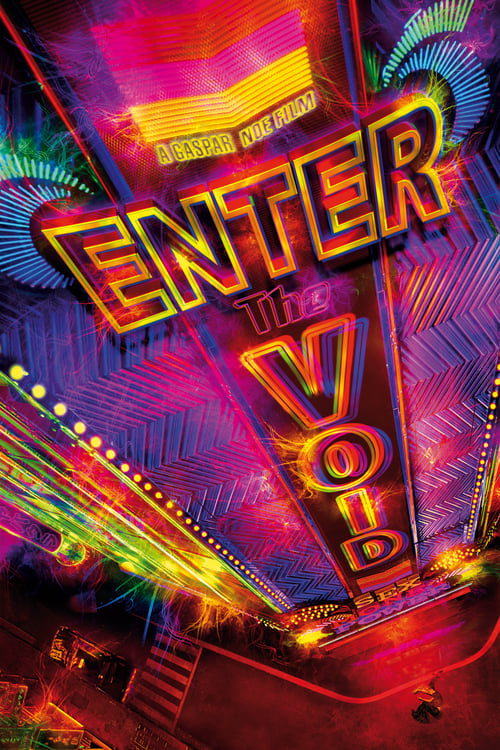
Enter the Void
What Happens After You Die (According to the Tibetan Book of the Dead)
Directed by Gaspar Noé
A literal depiction of the Tibetan Book of the Dead in the seediest context imaginable. The floating POV is the soul between lives. The light shows are bardos. Rebirth is not escape — it's return.
Enter the Void is the only film that attempts a literal, structural adaptation of the Tibetan Book of the Dead — and it succeeds. Gaspar Noé is not using Buddhist imagery as aesthetic. He is depicting the bardo states exactly as the texts describe them: the moment of death, the review of life, the lights that represent paths of rebirth, the consciousness drawn by attachment back into the cycle. Oscar dies in the first act. The rest of the film is his soul's journey through the intermediate states, pulled by love for his sister, unable to let go, choosing rebirth not as liberation but as repetition. This is samsara rendered in neon and DMT: the wheel of suffering, spinning.
The Surface
Oscar, a young American drug dealer in Tokyo, is shot by police during a deal gone wrong. He dies in a bathroom stall. The camera — which has been locked in first-person POV throughout — rises from his body and begins to float above the city. For the remaining two hours, we see through the eyes of his disembodied consciousness as it revisits his memories, watches his sister Linda grieve, and searches for resolution in a neon-drenched cityscape.
Most viewers experience the film as an aesthetic assault — strobe lights, explicit sexuality, endless floating shots over Tokyo's nightlife. Critics divided between those who saw provocation and those who saw patience. Very few identified what Noé was structurally doing.
The film is not about Oscar's death. The film is about what happens next. Noé read the Bardo Thodol — the Tibetan Book of the Dead — and built a 161-minute experiential adaptation. Every stage the text describes, the film depicts. The floating POV is not stylistic choice. It is doctrinal accuracy.
The Moment of Death
The Bardo Thodol describes the chikhai bardo — the moment of death, when consciousness separates from the body. In this moment, the clear light of reality appears. If the deceased recognizes the light as their own nature, liberation is immediate. Most people fail to recognize it.
Oscar dies and sees a light. The light expands. It becomes the famous Enter the Void title sequence: strobing letters, colors splitting into spectrums, visual noise overwhelming cognition. This is Noé's depiction of the clear light — and Oscar does not recognize it. He passes through it into the next state.
The film has already shown Oscar smoking DMT in the opening scene, experiencing a similar visual breakdown. Noé is suggesting that the psychedelic state is structurally similar to the death state — and that Oscar, despite having had a glimpse, was not prepared to make use of it. He saw the light while alive. He failed to recognize it when it mattered.
This is the Buddhist teaching precisely: liberation was always available. It appears at the moment of death automatically. The problem is not access — the problem is recognition. Oscar's whole life has been distraction, sensation, attachment. He has no capacity to recognize the clear light because he has never practiced looking.
The Chonyid Bardo: Memory and Projection
After missing the clear light, consciousness enters the chonyid bardo — the intermediate state where karmic visions appear. The Bardo Thodol describes this as a period of confusion where the deceased experiences projections of their own mind as external realities. Peaceful and wrathful deities appear, but they are not external beings — they are aspects of the psyche, encountered without the body's filter.
Oscar's chonyid bardo is his memory. The film shifts to third-person flashbacks, watching Oscar's childhood: his parents' car crash, his separation from Linda, their reunion in Tokyo, his descent into dealing. These memories are not neutral. They are charged with attachment, regret, unfulfilled desire. They loop.
The wrathful deities of the Bardo Thodol appear as the violence and pain in Oscar's memory: the car crash, the shooting, his father's distant rage, his own petty cruelties. The peaceful deities appear as love: his mother's face, Linda's childhood trust, Alex's friendship. Neither set of visions is more 'real' than the other. Both are projections. Both bind him.
Noé films the memories from above and behind — Oscar watching his own life from a position he never occupied while living. This is the bardo perspective: consciousness reviewing its incarnation, unable to change anything, unable to look away.
The Attraction of the Lights
The Bardo Thodol describes six lights that appear to the deceased, each representing a realm of rebirth: gods, demigods, humans, animals, hungry ghosts, and hell beings. The lights of the higher realms are brighter and harder to bear. The lights of the lower realms are softer and more seductive. Most consciousnesses, exhausted and confused, drift toward the easier lights.
Tokyo in Enter the Void is a landscape of colored lights. The neon signs, the love hotel glows, the pachinko parlors — Noé has built a visual field where the six realm lights are literalized as urban infrastructure. Oscar's consciousness drifts between them, attracted and repelled, unable to choose, unable to rest.
The love hotels are particularly significant. Noé films explicit sex scenes from above — Oscar's perspective floating through ceilings, watching strangers and friends coupling. The Bardo Thodol describes the consciousness being drawn to copulating couples when rebirth approaches, seeing potential parents, feeling attraction that will pull them into a womb.
Oscar watches his sister have sex. He watches her repeatedly. He is not a voyeur in the simple sense — he is a consciousness drawn by love and attachment to the person he cannot release, orbiting her, unable to leave, approaching the moment when love and attachment will pull him into rebirth through her.
The Promised Return
Oscar and Linda made a pact in childhood: whoever died first would come back. This promise is the film's engine. Oscar cannot leave because he promised. Linda cannot heal because she believes he will return. The love that was meant to console becomes the chain that binds.
Attachment in Buddhist teaching is the cause of suffering — not because love is wrong, but because grasping creates the conditions for loss, and loss creates the conditions for grasping. Oscar's love for Linda is real. His promise was sincere. And that sincerity is precisely what traps him in the bardo, circling her, unable to proceed to liberation, unable to stop watching.
The film's final sequence makes the promise literal. Linda is having sex with Alex. Oscar's consciousness enters the scene from above, drawn by the act, drawn by his sister, drawn by his own need to fulfill what he promised. The camera enters Alex, enters Linda, enters the womb. Conception. Rebirth.
This is not a happy ending. Oscar did not escape samsara. He did not achieve liberation. He did exactly what the Bardo Thodol warns against: he was pulled by attachment into another incarnation. He will be born as Linda's child. He will suffer again. He will die again. The wheel continues.
The Transmission
Enter the Void is the only film that takes the Bardo Thodol seriously as a technical document rather than a poetic metaphor. Noé is not interested in Buddhism as aesthetic or philosophy. He is interested in a specific claim: that consciousness survives death, enters an intermediate state of confusion and projection, and is drawn by attachment into rebirth. He made a 161-minute demonstration of that claim.
The film is uncomfortable because it is accurate. The sex is not gratuitous — it is doctrinal. The drugs are not glorified — they are depicted as failed previews of states the practitioner should have been preparing for. The length is not indulgent — the bardo can last forty-nine days, and two and a half hours is getting off easy.
Western Buddhism often soft-pedals rebirth, treating it as metaphor or optional doctrine. Enter the Void refuses this retreat. It depicts samsara as the Tibetan tradition describes it: real, mechanical, driven by attachment, escapable only through recognition that most people never achieve. Oscar had every opportunity. He smoked DMT and saw the lights. He read the Bardo Thodol with Alex. He still failed.
The film's cruelty is its compassion. Noé shows you what happens when you are not prepared. He shows you the lights you will be offered and the lights you will choose. He shows you love becoming a chain. If you watch carefully, you might recognize something. That recognition is the only purpose the film serves. Whether you use it is not the film's business.
Questions this film answers
What is the deeper meaning of Enter the Void?
Enter the Void is the only film that attempts a literal, structural adaptation of the Tibetan Book of the Dead — and it succeeds. Gaspar Noé is not using Buddhist imagery as aesthetic. He is depicting the bardo states exactly as the texts describe them: the moment of death, the review of life, the lights that represent paths of rebirth, the consciousness drawn by attachment back into the cycle. Oscar dies in the first act. The rest of the film is his soul's journey through the intermediate states, pulled by love for his sister, unable to let go, choosing rebirth not as liberation but as repetition. This is samsara rendered in neon and DMT: the wheel of suffering, spinning.
What is the hidden symbolism in Enter the Void?
Oscar, a young American drug dealer in Tokyo, is shot by police during a deal gone wrong. He dies in a bathroom stall. The camera — which has been locked in first-person POV throughout — rises from his body and begins to float above the city. For the remaining two hours, we see through the eyes of his disembodied consciousness as it revisits his memories, watches his sister Linda grieve, and searches for resolution in a neon-drenched cityscape.
What esoteric traditions appear in Enter the Void?
Enter the Void draws from Buddhism, Shamanism traditions. A literal depiction of the Tibetan Book of the Dead in the seediest context imaginable. The floating POV is the soul between lives. The light shows are bardos. Rebirth is not escape — it's return.
What does Enter the Void teach about the moment of death?
Liberation was always available. Oscar has no capacity to recognize the clear light because he has never practiced looking. The Bardo Thodol describes the chikhai bardo — the moment of death, when consciousness separates from the body. In this moment, the clear light of reality appears. If the deceased recognizes the light as their own nature, liberation is immediate. Most people fail to recognize it.
What does Enter the Void teach about the attraction of the lights?
He is a consciousness drawn by love and attachment, orbiting, unable to leave. The Bardo Thodol describes six lights that appear to the deceased, each representing a realm of rebirth: gods, demigods, humans, animals, hungry ghosts, and hell beings. The lights of the higher realms are brighter and harder to bear. The lights of the lower realms are softer and more seductive. Most consciousnesses, exhausted and confused, drift toward the easier lights.
What does Enter the Void teach about the promised return?
He did exactly what the Bardo Thodol warns against: he was pulled by attachment into another incarnation. Oscar and Linda made a pact in childhood: whoever died first would come back. This promise is the film's engine. Oscar cannot leave because he promised. Linda cannot heal because she believes he will return. The love that was meant to console becomes the chain that binds.
Is Enter the Void worth watching for spiritual seekers?
Enter the Void (2009) directed by Gaspar Noé is essential viewing for those interested in Buddhism, Bardo, Rebirth. What Happens After You Die (According to the Tibetan Book of the Dead). It rewards multiple viewings and contemplation.
Rewatch With New Eyes
Now that you've seen the architecture, experience it again. The same film becomes a different film when you know what to watch for.
This time, watch for:
- See impermanence: what clings, what releases, what remains
- Follow the descent: what dies, what guides, what returns transformed
Links may include affiliate partnerships that support Media Revelations
The Descent Continues
Where this thread leads next.
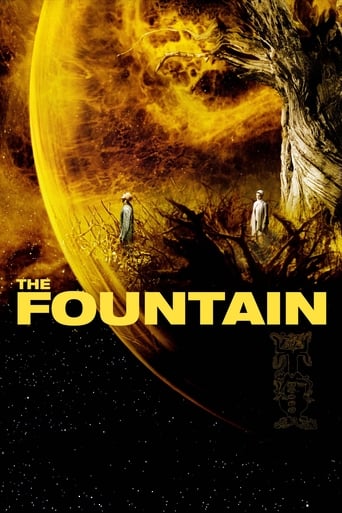
The Fountain 2006
The Tree of Life and the Death of Death
Read the revelation →