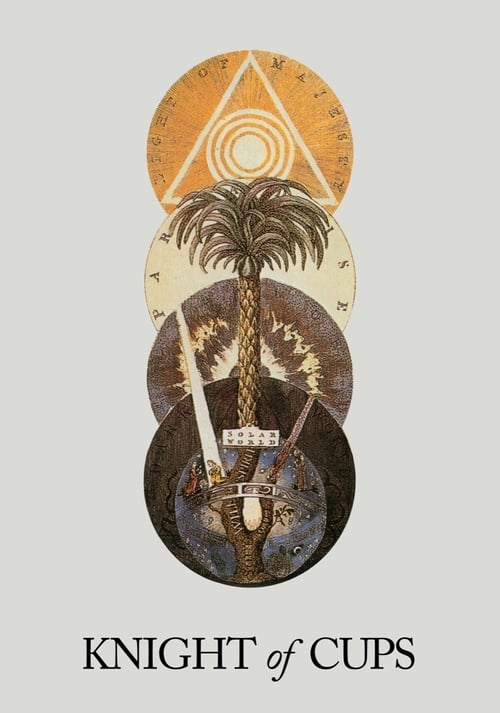
Knight of Cups
Knight of Cups Is a Gnostic Myth About a Soul That Forgot It Was Sent for the Pearl
Directed by Terrence Malick
Rick drifts through Hollywood parties, women, and light like a man half-asleep. Malick structures the whole film around an ancient text that names exactly what has happened to him.
Knight of Cups opens with a voice reciting the Hymn of the Pearl, a Gnostic parable in which a prince is sent from his father's kingdom into Egypt to retrieve a pearl, but on arriving he eats the food of Egypt, forgets who he is, forgets his mission, and falls into a deep sleep. This is not a reference dropped for texture. It is the operating instruction for everything that follows. Rick is a screenwriter in Los Angeles who has everything the world calls success and cannot feel any of it. He moves through parties and pools and hotel corridors and the arms of one woman after another, and Malick films it all as a shimmering, weightless dream, because that is precisely the diagnosis: Rick is the sleeping prince. Hollywood is Egypt. The pearl is the thing he was sent to recover and no longer remembers. The film is not aimless. It is a map of aimlessness, drawn by someone who knows the way home.
Gnostic Reading: Egypt Is the Beautiful Sleep, and the Letter Is Still Coming
In the Hymn of the Pearl, the prince is not rescued by his own effort. His father sends a letter that flies to him as an eagle, speaks with a voice, and wakes him to his own name. Malick organizes Knight of Cups by tarot cards, but the deeper structure is this awaited letter. Rick's father, played by Brian Dennehy, keeps intruding into the film as a broken, grieving voice, invoking the dead brother, the fractured family, the lost inheritance. The father in Egypt-time is ruined, but the Father the hymn points to is calling underneath him, through him, in the fragments.
The women Rick moves through are the food of Egypt, each one a form of forgetting dressed as connection. Della, Nancy, the model, the stripper, the married woman: none of them is the pearl, and Rick keeps mistaking the anesthetic for the cure. The film's spiritual precision is that it never condemns him. It simply shows a soul so surrounded by beauty that it has confused the sleep for arrival. The pearl was never in Egypt. It was the memory of where he came from, and the whole film is the letter beginning to reach him.
Alchemical Reading: The Prima Materia That Refuses to Cohere
Alchemy begins in nigredo, the blackening, the state of dissolution where the material has come apart and nothing yet holds. Rick is prima materia in permanent solution. He never coagulates. Malick shoots him almost always in motion, drifting through spaces, touched by hands, pulled by currents, water everywhere: pools, the ocean, the fountains of Vegas, the rain. Water is the alchemical solvent, and Rick is stuck in the dissolving phase, unable to reach the coagulation that would make him a self.
The tarot chapters name the stages: The Hanged Man, Death, Judgment. These are the operations the material must pass through. The desert sequences are the calcinatio, the drying fire that should burn off the excess and leave the essential. By the film's close Rick is walking in an actual desert, alone, and something has begun to settle. The opus is not finished. But the endless liquefaction has finally met its heat, and a man who was only ever a current is starting, faintly, to become ground.
Questions this film answers
What is the deeper meaning of Knight of Cups?
Knight of Cups opens with a voice reciting the Hymn of the Pearl, a Gnostic parable in which a prince is sent from his father's kingdom into Egypt to retrieve a pearl, but on arriving he eats the food of Egypt, forgets who he is, forgets his mission, and falls into a deep sleep. This is not a reference dropped for texture. It is the operating instruction for everything that follows. Rick is a screenwriter in Los Angeles who has everything the world calls success and cannot feel any of it. He moves through parties and pools and hotel corridors and the arms of one woman after another, and Malick films it all as a shimmering, weightless dream, because that is precisely the diagnosis: Rick is the sleeping prince. Hollywood is Egypt. The pearl is the thing he was sent to recover and no longer remembers. The film is not aimless. It is a map of aimlessness, drawn by someone who knows the way home.
What is the hidden symbolism in Knight of Cups?
In the Hymn of the Pearl, the prince is not rescued by his own effort. His father sends a letter that flies to him as an eagle, speaks with a voice, and wakes him to his own name. Malick organizes Knight of Cups by tarot cards, but the deeper structure is this awaited letter. Rick's father, played by Brian Dennehy, keeps intruding into the film as a broken, grieving voice, invoking the dead brother, the fractured family, the lost inheritance. The father in Egypt-time is ruined, but the Father the hymn points to is calling underneath him, through him, in the fragments.
What esoteric traditions appear in Knight of Cups?
Knight of Cups draws from Gnosticism, Alchemy traditions. Rick drifts through Hollywood parties, women, and light like a man half-asleep. Malick structures the whole film around an ancient text that names exactly what has happened to him.
Is Knight of Cups worth watching for spiritual seekers?
Knight of Cups (2015) directed by Terrence Malick is essential viewing for those interested in Gnosticism, Alchemy. Knight of Cups Is a Gnostic Myth About a Soul That Forgot It Was Sent for the Pearl. It rewards multiple viewings and contemplation.
Rewatch With New Eyes
Now that you've seen the architecture, experience it again. The same film becomes a different film when you know what to watch for.
This time, watch for:
- Watch for the false world vs. the real — who is asleep, who awakens
- Track the stages: blackening, whitening, reddening — death before rebirth
Links may include affiliate partnerships that support Media Revelations
The Descent Continues
Where this thread leads next.

The Tree of Life 2011
Nature, Grace, and the Wound of Incarnation
Read the revelation →