Labyrinth
The Girl Who Had to Kill Her Fantasy to Grow Up
Directed by Jim Henson
Sarah wished her baby brother gone. The Goblin King took him. Now she has thirteen hours to solve the labyrinth or Toby becomes a goblin forever. But the King is also her creation — the fantasy of a powerful man who wants her. The maze is her psyche. The monsters are her projections. Growing up means killing the fantasy that feels so much better than reality.
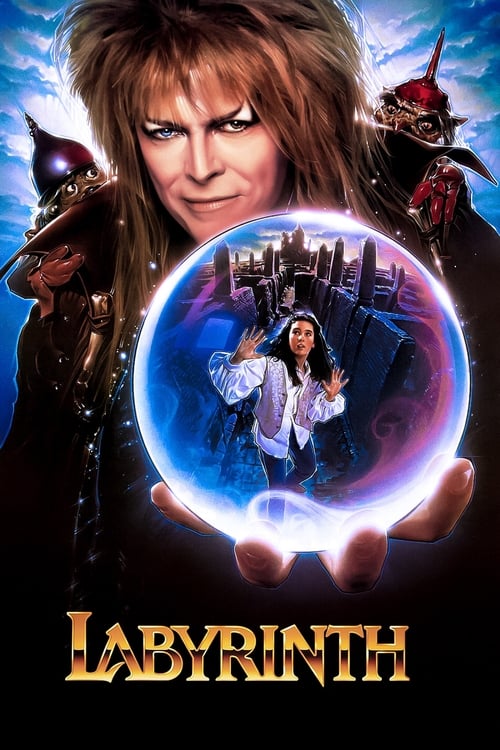
Labyrinth is a feminine initiation rite hidden inside a children's fantasy. Sarah is fifteen — on the threshold between childhood and adulthood. She resents her baby brother, escapes into fantasy, wishes him away. When the wish is granted, she must enter the maze to recover him. The Goblin King, Jareth, is not merely a villain. He is Sarah's animus projection — the powerful, seductive, dangerous masculine figure that adolescent girls construct from fairy tales and rock stars. David Bowie's casting is perfect: glamorous, sexual, ambiguously threatening. He offers Sarah exactly what her fantasies have been promising: to be special, to be chosen, to never have to grow up. The labyrinth is Sarah's own psyche — confusing, populated by creatures of her imagination, full of traps that specifically target her weaknesses. To rescue Toby, she must navigate her own mind. To defeat Jareth, she must say the one line that destroys him: 'You have no power over me.' The fantasy king only exists because she believes in him. She must kill her own creation to grow up.
The Surface
Sarah, a fifteen-year-old who spends her time acting out fairy tales in the park, resents babysitting her baby stepbrother Toby. In a moment of frustrated rage, she wishes the goblins would take him away. They do. Jareth, the Goblin King, appears and offers a bargain: solve the labyrinth within thirteen hours or Toby becomes a goblin forever.
Sarah enters the maze and meets various creatures — the cowardly Hoggle, the gentle beast Ludo, the chivalrous Sir Didymus. Each helps her progress. Each is also a reflection of some aspect of herself. The labyrinth changes constantly, playing tricks on perception.
Jareth intervenes repeatedly, offering shortcuts that are traps, seducing Sarah with visions of ballrooms and romance. At the climax, he offers her everything: her dreams, his love, the chance to stay in fantasy forever. She refuses with the words from her book: 'You have no power over me.' The labyrinth collapses. She gets Toby back. She is home. She is changed.
The Animus Made Flesh
In Jungian terms, the animus is a woman's internal masculine image — shaped by father, culture, and fantasy. For an adolescent girl fed on fairy tales, the animus often takes the form of the powerful prince: dangerous, seductive, offering escape from ordinary life.
Jareth is this animus externalized. He is beautiful and menacing. He offers Sarah exactly what her fantasy life promises: specialness, romance, the feeling of being chosen by someone extraordinary. 'Just fear me, love me, do as I say, and I will be your slave.'
The offer is the trap. The animus as prince is not partner — he is possessor. Jareth does not want Sarah as equal. He wants her to worship him. His power depends entirely on her belief in his power. The moment she stops believing, he vanishes.
David Bowie's performance is crucial. He is not threatening in a simple way. He is magnetic. The viewer understands why Sarah is tempted. The film does not pretend the animus is obviously evil. It shows why the fantasy is seductive — and why it must still be refused.
The Labyrinth as Psyche
The maze is Sarah's mind. The film makes this explicit in small details: her room at home contains all the elements of the labyrinth. The bookends are Hoggle. The stuffed animals are Ludo and Sir Didymus. The poster is Jareth. She is walking through a landscape constructed from her own imagination.
This is why the maze is so confusing. The psyche does not follow logical rules. Doors open to impossible places. Helpers lie. The right path changes. Sarah cannot solve the labyrinth by being clever. She solves it by recognizing that its rules are her rules.
Each creature she meets represents a disowned aspect of herself. Hoggle is her cowardice — the part that wants to give up, to sell out, to take the easy way. Ludo is her strength that she does not acknowledge. Sir Didymus is her courage hiding as absurdity. By befriending them, she integrates them.
The oubliette — the pit of forgetting — is where Sarah ends up when she trusts the wrong helper. Jareth laughs: 'She'll never get out.' But she does, because she remembers what matters. The labyrinth tests memory against forgetting. Growing up requires remembering who you are while surrounded by confusion.
The Ballroom
The drugged peach puts Sarah into a dream-state where she finds herself at a masked ball, dancing with Jareth. This is the film's most seductive sequence — the fantasy fully realized. Sarah in a beautiful gown, the Goblin King adoring, everyone watching.
And it is a trap. The ball is where those who have given up on the labyrinth spend eternity — dancing, dreaming, never escaping. The masks hide faces that are blank. The beauty is hollow. Jareth offers Sarah a place among the dancers forever.
She smashes the bubble with a chair. The fantasy breaks. She falls back into the labyrinth. The initiation requires destroying the seductive illusion. The ballroom is what adulthood looks like from adolescence: glamour without substance, romance without relationship, eternal party without purpose.
The chair-smashing is Sarah's first fully adult act. She does not refuse the fantasy because someone tells her to. She refuses it because she sees through it. The bubble looks beautiful from outside. From inside, it is prison.
The Words That Destroy
At the climax, Sarah faces Jareth in the impossible architecture of his castle. He offers everything again: 'Just let me rule you, and you can have everything you want.' She struggles to remember the line from her book — the one that defeats the Goblin King.
'You have no power over me.' The words collapse his world. He becomes an owl. The castle falls. Sarah is home. Toby is safe.
The line works because it is true. Jareth had no power except what Sarah gave him. The fantasy king is the creation of the fantasizing girl. When she withdraws belief, he has nothing. He was always nothing. He was just very good at seeming.
This is the initiation's completion: the child who believed in fairy tale kings becomes the adult who knows she created them. The power was never his. It was always hers, projected outward. Taking it back is growing up.
The Transmission
Labyrinth flopped at release and became a cult classic later — watched by generations of girls who recognized themselves in Sarah. The film understood something about adolescent girlhood that other films did not: the danger is not that the Goblin King will take you. The danger is that you will want him to.
Henson and his collaborators built a film about refusing the seductive fantasy. The Goblin King is glamorous. His world is beautiful. His offer is exactly what a fifteen-year-old wants to hear. Saying no requires knowing why it is a trap — and the film trusts its audience to understand.
The ending is crucial: Sarah's friends from the labyrinth appear in her room. They will always be with her 'should she need them.' The point is not to destroy the imagination. The point is to own it instead of being owned by it.
Sarah keeps her fantasy life. She just knows now that she created it. Jareth was never real. The power was always hers. Growing up is not losing magic. It is recognizing where magic comes from.
Questions this film answers
What is the deeper meaning of Labyrinth?
Labyrinth is a feminine initiation rite hidden inside a children's fantasy. Sarah is fifteen — on the threshold between childhood and adulthood. She resents her baby brother, escapes into fantasy, wishes him away. When the wish is granted, she must enter the maze to recover him. The Goblin King, Jareth, is not merely a villain. He is Sarah's animus projection — the powerful, seductive, dangerous masculine figure that adolescent girls construct from fairy tales and rock stars. David Bowie's casting is perfect: glamorous, sexual, ambiguously threatening. He offers Sarah exactly what her fantasies have been promising: to be special, to be chosen, to never have to grow up. The labyrinth is Sarah's own psyche — confusing, populated by creatures of her imagination, full of traps that specifically target her weaknesses. To rescue Toby, she must navigate her own mind. To defeat Jareth, she must say the one line that destroys him: 'You have no power over me.' The fantasy king only exists because she believes in him. She must kill her own creation to grow up.
What is the hidden symbolism in Labyrinth?
Sarah, a fifteen-year-old who spends her time acting out fairy tales in the park, resents babysitting her baby stepbrother Toby. In a moment of frustrated rage, she wishes the goblins would take him away. They do. Jareth, the Goblin King, appears and offers a bargain: solve the labyrinth within thirteen hours or Toby becomes a goblin forever.
What esoteric traditions appear in Labyrinth?
Labyrinth draws from Initiation, Jungian traditions. Sarah wished her baby brother gone. The Goblin King took him. Now she has thirteen hours to solve the labyrinth or Toby becomes a goblin forever. But the King is also her creation — the fantasy of a powerful man who wants her. The maze is her psyche. The monsters are her projections. Growing up means killing the fantasy that feels so much better than reality.
What does Labyrinth teach about the animus made flesh?
Jareth does not want Sarah as equal. His power depends entirely on her belief in his power. In Jungian terms, the animus is a woman's internal masculine image — shaped by father, culture, and fantasy. For an adolescent girl fed on fairy tales, the animus often takes the form of the powerful prince: dangerous, seductive, offering escape from ordinary life.
What does Labyrinth teach about the words that destroy?
The fantasy king is the creation of the fantasizing girl. When she withdraws belief, he has nothing. At the climax, Sarah faces Jareth in the impossible architecture of his castle. He offers everything again: 'Just let me rule you, and you can have everything you want.' She struggles to remember the line from her book — the one that defeats the Goblin King.
Is Labyrinth worth watching for spiritual seekers?
Labyrinth (1986) directed by Jim Henson is essential viewing for those interested in Initiation, Jungian, Anima. The Girl Who Had to Kill Her Fantasy to Grow Up. It rewards multiple viewings and contemplation.
Rewatch With New Eyes
Now that you've seen the architecture, experience it again. The same film becomes a different film when you know what to watch for.
This time, watch for:
- Mark the threshold: the old self dies, the ordeal transforms, the new self returns
- Meet the shadow: what is rejected, projected, and finally integrated
Links may include affiliate partnerships that support Media Revelations
The Descent Continues
Where this thread leads next.
Pan's Labyrinth 2006
The Underground Kingdom as Refuge from Fascism
Read the revelation →