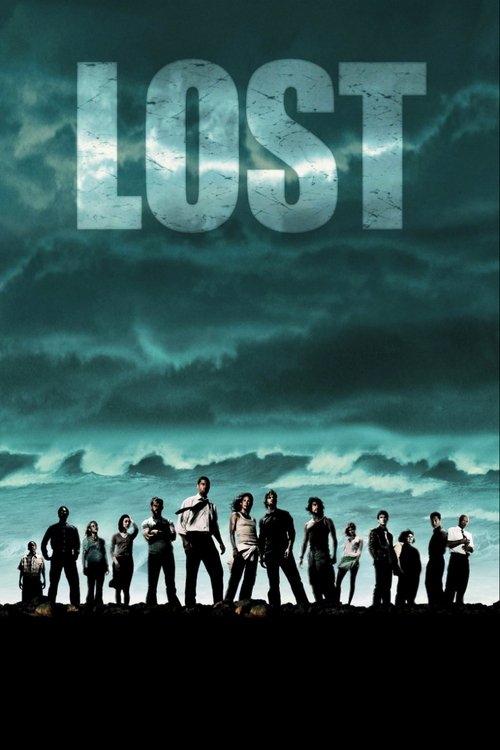
Lost
The Flash-Sideways Is a Bardo, the Finale a Tibetan Book of the Dead
Directed by J.J. Abrams, Damon Lindelof, Jeffrey Lieber
Lost's finale is not a cop-out about purgatory. The flash-sideways is a bardo, the after-death waiting realm of the Tibetan Book of the Dead, where souls who died unready rehearse the recognition they refused in life until they can let go and move on together.
Lost ends with everyone gathering in a church and moving into the light. Most viewers called it a twist. Some called it a cheat. It is neither, it is a six-season Tibetan bardol thodol that finally names itself. The ending of Lost does not require defense. It requires a map. The flash-sideways world that dominates Season 6 has confused audiences since 2010, but confusion only arises when you try to read it as narrative. Read it as theology, and it resolves immediately. The sideways world is the bardo, the intermediate state between death and rebirth described in Tibetan Buddhist cosmology, the luminous in-between where consciousness gathers, reviews its attachments, and prepares for what comes next. The island was never purgatory. The sideways world was.
The Island Is a Purification Chamber, Not a Purgatory
The most durable misreading of Lost is that the characters were dead the whole time. They were not. Jack Shephard crashes onto the island, bleeds, suffers, heals, and dies there over many years. The island is real, the deaths are real, the choices matter because they are made by living people inside actual time.
What the island is, and the show earns this reading slowly, over six seasons of smoke monsters and electromagnetic pockets and Jacob's ancient tenure, is a place of accelerated purification. Every character arrives carrying the wound that will define their arc. Jack cannot let go. Locke cannot accept his body's limits. Sawyer carries a name he took from the man who destroyed his family and then became. Kate runs. The island does not invent these wounds. It applies pressure to them, relentlessly, until the character either transmutes or breaks.
This is alchemical calcination: the burning away of the dross so that what is essential remains. The island is the crucible. The Others, the Dharma Initiative, the rules Jacob enforces, all of it is the structure of a container built for transformation. The island produces souls ready for the bardo. It does not house them afterward.
The Flash-Sideways Is the Bardo Thodol's In-Between State
In the Bardo Thodol, the intermediate state has a specific character. Consciousness encounters clear light immediately after death. Those who cannot recognize it, because they died carrying too much attachment, too much unfinished relational material, enter the secondary bardo, a realm that reflects the mind's own contents back at it. It feels like life. It has familiar faces, cities, memories. The self does not immediately know it is between states.
This is the flash-sideways world with precision. Each character lives a sideways existence that mirrors their deepest unfulfilled wish. Locke walks. Jack has a son he learns to father gently. Sayid reaches Nadia. These are not random alternative lives. They are the specific shapes of each soul's remaining attachment, given temporary form so the attachment can be acknowledged and released.
The flash of recognition, what the characters call "remembering" when they touch each other and their island lives flood back, is exactly the moment the Bardo Thodol describes as the opportunity for liberation. In the Tibetan text, a voice reads aloud to the dead: recognize the light, recognize the nature of mind, recognize these visions as your own projections. In the finale, the dead recognize each other. The recognition IS the release. They do not ascend because Christian Shephard opens church doors. They ascend because the recognition of love dissolves the last barrier between them and the clear light. Spring, Summer, Fall, Winter... and Spring traces the same arc in a single lifetime; Lost traces it across an entire ensemble over six seasons.
Jack's Death Completes the Alchemical Work His Father Left Unfinished
Christian Shephard is the key the finale places at the center and trusts the audience to turn. His name is not accidental, nor is the fact that his body went missing from his coffin on the original Oceanic 815 flight, the disappearance that launched the island's first great mystery. Christian died in Sydney, estranged from his son, carrying a life of controlled failure and alcohol and one abandoned daughter in Australia he never claimed. His wounds transferred directly to Jack, who inherited his father's inability to let go and his father's compulsive need to fix what he loved to death.
Jack spends six seasons trying to become the opposite of his father and arriving, by the finale, at exactly the same place: a man who gave his life in service of something he could not fully understand, for people he could not fully save. The difference is what he carries into death. Christian dies in rupture. Jack dies in completion, on his back in the bamboo grove where he first woke, watching the plane carrying his people clear the island, the dog beside him, his eye closing as his father's eye opened to a world of consequence. He does not fix the island. He releases it. The alchemical work is not the Herculean labor but the surrender that follows it, the solutio that dissolves the fixed and opens what was locked.
The image in the church when Christian opens the doors is not heaven. It is the clear light of the bardo, the moment before whatever comes next, the one gathering where everyone who shared that particular crucible can meet without the weight of what they carried. Twin Peaks: The Return stages a parallel reckoning, the dead and living pressed together in a liminal space that refuses easy resolution, and it, too, refuses to explain what comes after the light.
Questions this film answers
What is the deeper meaning of Lost?
Lost ends with everyone gathering in a church and moving into the light. Most viewers called it a twist. Some called it a cheat. It is neither, it is a six-season Tibetan bardol thodol that finally names itself. The ending of Lost does not require defense. It requires a map. The flash-sideways world that dominates Season 6 has confused audiences since 2010, but confusion only arises when you try to read it as narrative. Read it as theology, and it resolves immediately. The sideways world is the bardo, the intermediate state between death and rebirth described in Tibetan Buddhist cosmology, the luminous in-between where consciousness gathers, reviews its attachments, and prepares for what comes next. The island was never purgatory. The sideways world was.
What is the hidden symbolism in Lost?
The most durable misreading of Lost is that the characters were dead the whole time. They were not. Jack Shephard crashes onto the island, bleeds, suffers, heals, and dies there over many years. The island is real, the deaths are real, the choices matter because they are made by living people inside actual time.
What esoteric traditions appear in Lost?
Lost draws from Buddhism, Initiation traditions. Lost's finale is not a cop-out about purgatory. The flash-sideways is a bardo, the after-death waiting realm of the Tibetan Book of the Dead, where souls who died unready rehearse the recognition they refused in life until they can let go and move on together.
Is Lost worth watching for spiritual seekers?
Lost (2004) directed by J.J. Abrams, Damon Lindelof, Jeffrey Lieber is essential viewing for those interested in Buddhism, The Bardo, Death. The Flash-Sideways Is a Bardo, the Finale a Tibetan Book of the Dead. It rewards multiple viewings and contemplation.
Rewatch With New Eyes
Now that you've seen the architecture, experience it again. The same film becomes a different film when you know what to watch for.
This time, watch for:
- See impermanence: what clings, what releases, what remains
- Mark the threshold: the old self dies, the ordeal transforms, the new self returns
Links may include affiliate partnerships that support Media Revelations
The Descent Continues
Where this thread leads next.
Forrest Gump 1994
The Holy Fool and the Feather of Grace
Read the revelation →