Dark
Adam Is the Demiurge, and the Knot Is the False Creation
Directed by Baran bo Odar, Jantje Friese
The ending of Dark answers its central question in a single gesture: Jonas and Martha walk into the Origin World, where the knot was first tied, and they cease to exist. Every version of Winden, every tangled life across three centuries, every loop the series spent three seasons unraveling, all of it collapses the moment the causal chain that created it is cut. The knot was never the real world. It was a mistake that learned to preserve itself. That is the ending explained. Everything below is the reading underneath it.
The Knot Is Not a Tragedy, It Is a Demiurgic Error
Gnostic cosmology begins with a failure in creation. A lesser god, the Demiurge, fashions a world that is not the true pleroma. This world is real enough to suffer in, but it is not the original light. Its defining feature is that it perpetuates itself: the Demiurge does not know he is a copy, and so he creates copies of copies, each generation of material existence further from the source.
The knot in Dark is this structure made literal. Winden's knot does not begin with fate or divine design. It begins with Tannhaus, a clockmaker in the Origin World whose grief over his dead family drives him to build a time machine. That machine fractures time and generates the closed loop that becomes the entire series. The knot is not destiny. It is one man's refusal to accept loss, scaled across two hundred years and four interconnected families.
Adam, the ancient Jonas, is the Demiurge of this false creation. He spends decades orchestrating the loop's continuation because his entire identity depends on the loop existing. He tells himself he is working toward the apocalypse to end all suffering. He is lying to himself the way the Demiurge lies to himself: he perpetuates the prison because he cannot imagine existing outside it.
Watch the scene in the Sic Mundus bunker where Adam explains the paradise he is building. The speech is indistinguishable from the Demiurge's self-justification in the Apocryphon of John. The creator of a false world always believes he is building heaven.
Jonas Carries the Pneumatic Spark
The Gnostic pneuma is the fragment of original light that fell into matter. It does not belong to the false world. Every time it awakens, the system moves to suppress it, because a pneumatic who remembers what it is will escape, and the prison cannot afford escapes.
Jonas Kahnwald is this spark. Every version of him across the series resists the role the loop assigned him. He wants to love Martha. He wants to stop the apocalypse. He wants to undo what has already been done. The loop reads each act of resistance as the fuel it needs to continue. His desperate attempts to fix things are precisely what creates the conditions he is trying to prevent.
The pneumatic does not escape through resistance. He escapes through recognition. The moment Jonas understands that the knot cannot be fixed from inside, only dissolved from its origin, is the Gnostic moment of gnosis. He stops trying to repair the false world. He walks back to where it began.
The Alchemical Reading: Nigredo All the Way Down
Alchemy describes a process that must pass through nigredo, complete dissolution, before the purified substance can emerge. The alchemist who stops the process at any earlier stage is left with something that looks like gold but is not.
Every attempt to fix Winden from within is a premature halt of the alchemical process. Each character who fights the apocalypse, manipulates the loop, or tries to preserve a version of events they prefer is stopping the nigredo before it completes. Claudia comes closest to understanding this. Her long game, passed across multiple cycles to Jonas, is not a plan to win inside the loop. It is a map to the moment where dissolution becomes possible.
The apocalypse itself is not the end. In alchemical terms it is the required blackening. Winden has to fully collapse before the Origin World can be reached. Jonas and Martha walking into the moment of Tannhaus's broken family and simply being there, allowing him to feel held in grief rather than consumed by it, is the solve et coagula. Dissolve the knot. Let the real world cohere.
Dark operates on the surface as a German sci-fi thriller about time travel and family secrets. Three layers down it is a Gnostic cosmology, a complete map of how a created prison perpetuates itself through the suffering of those trapped inside it, and an alchemical teaching on what dissolution requires. The finale earns its depth by destroying everything it built. The real world contains none of the characters we followed. That is the point.
Questions this film answers
What is the deeper meaning of Dark?
The ending of Dark answers its central question in a single gesture: Jonas and Martha walk into the Origin World, where the knot was first tied, and they cease to exist. Every version of Winden, every tangled life across three centuries, every loop the series spent three seasons unraveling, all of it collapses the moment the causal chain that created it is cut. The knot was never the real world. It was a mistake that learned to preserve itself. That is the ending explained. Everything below is the reading underneath it.
What is the hidden symbolism in Dark?
Gnostic cosmology begins with a failure in creation. A lesser god, the Demiurge, fashions a world that is not the true pleroma. This world is real enough to suffer in, but it is not the original light. Its defining feature is that it perpetuates itself: the Demiurge does not know he is a copy, and so he creates copies of copies, each generation of material existence further from the source.
What esoteric traditions appear in Dark?
Dark draws from Gnosticism, Alchemy traditions. Dark is a Gnostic cosmology disguised as a German time-travel thriller. The knot is a demiurgic error that learned to preserve itself, Adam is the Demiurge who cannot imagine existing outside the loop, and Jonas is the pneumatic spark that escapes not through resistance but through recognition.
Rewatch With New Eyes
Now that you've seen the architecture, experience it again. The same film becomes a different film when you know what to watch for.
This time, watch for:
- Watch for the false world vs. the real — who is asleep, who awakens
- Track the stages: blackening, whitening, reddening — death before rebirth
Links may include affiliate partnerships that support Media Revelations
The Descent Continues
Where this thread leads next.
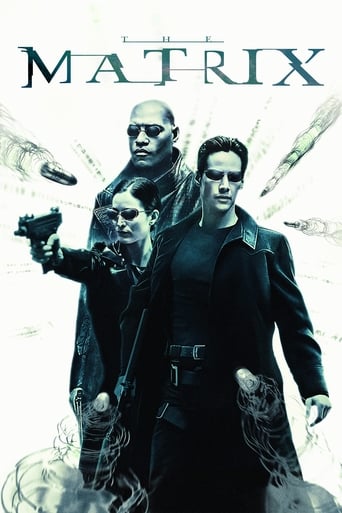
The Matrix 1999
The Gnostic Gospel of the Machine Age
Read the revelation →