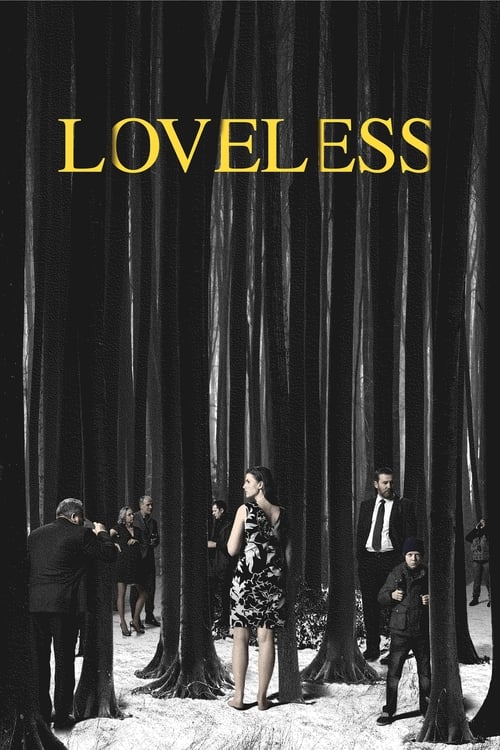
Loveless
Loveless Makes the Missing Child the Only Honest Character
Directed by Andrey Zvyagintsev
Zvyagintsev shows a boy vanish while his divorcing parents are too busy hating each other to notice. The disappearance is not the tragedy. It is the diagnosis.
Zhenya and Boris are ending their marriage with a cold, exhausted savagery. Each already has a new partner, a new apartment being planned, a new life waiting. Neither wants their twelve-year-old son Alyosha, and in one scene the boy overhears them trading him like a debt, each insisting the other take him. The camera holds on Alyosha behind a door, his face contorting in a silent scream Zvyagintsev refuses to soften. The next morning he is gone. The search consumes the rest of the film, volunteers combing forests and ruined buildings while the parents mostly resume their affairs. The surface reading is a bleak marriage drama about Russian coldness. The actual film is a spiritual autopsy: it names the specific absence that produces a world where a child can simply evaporate and be, in every functional sense, unmissed.
Gnostic Reading: The World Ruled by the Absence of Love
The title is the thesis. This is a cosmos from which the one binding principle has withdrawn, and what remains organizes itself perfectly well without it. Everyone in Loveless is fed, employed, connected. Zhenya scrolls her phone constantly, curates selfies, meets her wealthy lover. The machinery of pleasant modern life runs smoothly. The film's Gnostic horror is that love's absence changes nothing visible. The lights stay on. The restaurants are full. Only a child notices the void, and the child is precisely what the void consumes.
Zvyagintsev bookends the film with a strip of caution tape Alyosha throws into a bare winter tree at the start, and the same tape still fluttering there at the end, years later, the boy never found. The tape is the mark left by the one being who could not survive in a world running on nothing. The demiurgic order does not miss him. It has already closed over the gap.
Jungian Reading: The Parents Who Cannot Face the Shadow
Zhenya despises her own mother, a bitter woman she visits in a rage; Boris fears the pious boss whose firings hinge on family respectability. Neither parent has integrated anything. Each fled a wound straight into a new partner without turning to look at what they carried. Alyosha is the unbearable reminder of what they made together and cannot bear, the living symbol of a union they need to pretend never had value.
The film's final image seals it. Zhenya, remarried and no happier, runs on a treadmill on her balcony in a tracksuit reading RUSSIA, going nowhere at speed, her face empty. Boris, in his new home, dumps his new infant son in a playpen and stares at a television showing war. The shadow was never faced. It was only relocated, into fresh children who will inherit the same nothing.
Questions this film answers
What is the deeper meaning of Loveless?
Zhenya and Boris are ending their marriage with a cold, exhausted savagery. Each already has a new partner, a new apartment being planned, a new life waiting. Neither wants their twelve-year-old son Alyosha, and in one scene the boy overhears them trading him like a debt, each insisting the other take him. The camera holds on Alyosha behind a door, his face contorting in a silent scream Zvyagintsev refuses to soften. The next morning he is gone. The search consumes the rest of the film, volunteers combing forests and ruined buildings while the parents mostly resume their affairs. The surface reading is a bleak marriage drama about Russian coldness. The actual film is a spiritual autopsy: it names the specific absence that produces a world where a child can simply evaporate and be, in every functional sense, unmissed.
What is the hidden symbolism in Loveless?
The title is the thesis. This is a cosmos from which the one binding principle has withdrawn, and what remains organizes itself perfectly well without it. Everyone in Loveless is fed, employed, connected. Zhenya scrolls her phone constantly, curates selfies, meets her wealthy lover. The machinery of pleasant modern life runs smoothly. The film's Gnostic horror is that love's absence changes nothing visible. The lights stay on. The restaurants are full. Only a child notices the void, and the child is precisely what the void consumes.
What esoteric traditions appear in Loveless?
Loveless draws from Gnosticism, Jungian traditions. Zvyagintsev shows a boy vanish while his divorcing parents are too busy hating each other to notice. The disappearance is not the tragedy. It is the diagnosis.
Is Loveless worth watching for spiritual seekers?
Loveless (2017) directed by Andrey Zvyagintsev is essential viewing for those interested in Gnosticism, Jungian. Loveless Makes the Missing Child the Only Honest Character. It rewards multiple viewings and contemplation.
Rewatch With New Eyes
Now that you've seen the architecture, experience it again. The same film becomes a different film when you know what to watch for.
This time, watch for:
- Watch for the false world vs. the real — who is asleep, who awakens
- Meet the shadow: what is rejected, projected, and finally integrated
Links may include affiliate partnerships that support Media Revelations
The Descent Continues
Where this thread leads next.

Secret Sunshine 2007
Secret Sunshine Is About the Woman Who Went to Forgive a Murderer and Found God Had Stolen It From Her First
Read the revelation →