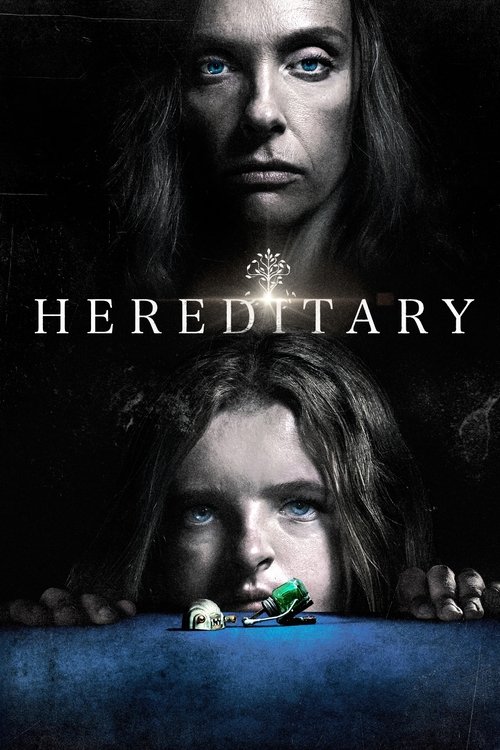
Hereditary
The Demon Isn't Evil — He's Just Following Orders
Directed by Ari Aster
King Paimon is not a metaphor. He is the ninth spirit in the Ars Goetia, one of the eight Kings of Hell, who rides a camel and requires a male host. Hereditary follows Lesser Key protocols exactly — every scene is a ritual step. The clicking sound is the camel-rider's signature. Ellen is not a follower. She is the architect who designed every move. The horror isn't supernatural. It's procedural.
Hereditary is not a horror film about grief. It is a procedural about demonology — specifically, about the precise protocols required to manifest a King of Hell in fully embodied form. King Paimon, ninth spirit of the Ars Goetia, requires a male host, willing human collaborators, the generational preparation of a bloodline, and ritual sacrifices performed by the host's own family. Every scene in Hereditary is one of these steps. Nothing is random. The clicking sound is not Charlie's quirk — it is Paimon's camel-rider signature, the King announcing his presence in the body being held for him. Ellen is not a grandmother who got caught up in a cult. She is the cult's architect, who built a family specifically for this purpose. Joan, who introduces herself as a fellow grieving mother, is the operation's field agent — the siren who converts Annie's grief into ritual participation. The demon does nothing wrong. He follows protocol exactly.
The Surface
Annie's mother dies. Annie eulogizes her with visible ambivalence — estranged, complicated, the grief already strange at the margins. Then Charlie is decapitated. Then Steve burns. Then Annie. Then Peter arrives at the treehouse, already gone, and the people kneeling around him say: Hail Paimon.
This is what the film looks like if you watch it as a grief narrative: a family destroyed by compounding tragedy, with supernatural elements that might be grief's distortion of reality.
Watch it as a demonology procedural instead — track the protocol steps rather than the emotional arc — and Hereditary becomes a different film entirely. Not horror. Not tragedy. A success story. The cult gets exactly what it came for. Every apparent accident was a ritual step. Every apparent choice was a prepared move. The demon followed protocol. The humans performed their assigned roles. The King manifested.
Ari Aster researched the grimoire tradition before writing. This is not decoration. The film operates according to actual ceremonial magic logic: preparation enables presence, bloodlines can be cultivated, names carry operative power, and willing human collaboration is required.
Paimon in the Lesser Key
The Ars Goetia is the first book of the Lesser Key of Solomon — a seventeenth-century grimoire cataloguing seventy-two demons, their ranks, attributes, and requirements. Paimon is the ninth spirit. His rank is King.
The text is specific. Paimon appears riding a camel, with a great host of spirits before him bearing trumpets and cymbals. His face is effeminate. He teaches all arts and sciences. He reveals hidden things. He provides familiars and dignities. He can cause men to hear voices.
Crucially: Paimon requires a male host for full manifestation. The grimoire is explicit. A female body can serve as a temporary vessel, but Paimon in his complete power requires a male body. This is not metaphor. It is specification.
The Goetia also specifies the conditions for Paimon's appearance: he must be called with offerings and with respect. He requires human intermediaries who understand the protocols. He does not arrive unsummoned. He does not operate outside the bounds of the evocation. This is not a demon who breaks into lives uninvited. This is a being who follows a contract — a powerful, ancient contract, but a contract nonetheless.
Ellen understood the contract. She spent decades fulfilling her side of it. The 'evil' in Hereditary is not malice. It is precision.
The Clicking Sound
Charlie clicks. It begins in infancy — Ellen photographed with Charlie as a baby, the obsession starting at birth. By the time we meet Charlie at thirteen, the clicking is habitual, involuntary, deeply strange. The film frames it as a character quirk, a developmental oddity, something that marks Charlie as different.
It is a different kind of signal entirely.
In the Goetic tradition, a spirit's arrival is announced by sounds specific to that spirit — recognizable by practitioners who know what to listen for. Paimon arrives, as the Goetia notes, with a great noise of musical instruments. His associated imagery includes trumpets, cymbals, and the rhythmic percussion of a camel crossing sand. A camel-rider's approach.
A tongue clicking against teeth. Rhythmic. Involuntary. Present since birth.
Aster places the clicking before anything else — before the grief, before the cult, before any supernatural element the audience might recognize as supernatural. The first signal of Paimon's occupancy is audible in the film's earliest scenes and reads as personality. This is how long Paimon has been present: long enough that his mark reads as character trait.
Charlie never had a self fully separate from this occupancy. The clicking is not Charlie being strange. It is Paimon, installed since infancy, marking his presence in the only register a child too young to understand can render.
Ellen as the True Architect
The film presents Ellen as a woman who joined a cult, who involved her family, who died before we meet her. The horror of her legacy seems to be that she was a follower who dragged her children into something she believed.
This is backwards.
Ellen did not join a cult that worshipped Paimon. Ellen built a cult to summon Paimon. The difference is total. A follower is swept up by forces she doesn't fully control. An architect designs the system. Ellen designed the system.
The photos Annie finds in her mother's belongings tell the story if you read them: Ellen surrounded by the same people across decades, all connected to the cult, all serving a single long-term project. Ellen didn't stumble into the Graham bloodline. She engineered the conditions under which her daughter would produce the right configuration of children at the right time. Annie's husband. Their children. The sequence was chosen.
Annie is a miniatures artist — she creates tiny, perfect replicas of her life, rooms in exact scale, family members in miniature, moments of crisis preserved under glass. She believes this gives her control through representation. What it shows is that she has always been inside someone else's diorama. Ellen's diorama. Built long before Annie was born.
Every tragedy in the film — Charlie's nut allergy, the party invitation, the route home — traces back to a condition Ellen prepared. Ellen died knowing the plan would continue. She had arranged for it to continue.
Joan and the Siren Protocol
Joan appears at a grief support group. Warm. Experienced. Understanding. She has lost a son and a grandson. She seems to be exactly what Annie needs: someone who comprehends the specific devastation of losing a child.
In the grimoire tradition, Paimon is served by lesser spirits who prepare conditions for his manifestation. The human equivalents are field operatives — those who identify targets, create openings, and guide the uninitiated through ritual steps they don't recognize as ritual.
Joan is this operative. Her function in the cult maps precisely to the mythological Siren: a being who appears as comfort, who sings the song you most need to hear, who guides you toward destruction while you are certain you are being helped. Molpe was one of the three Sirens in the Odyssey — not the most famous, but noted for the precision and sweetness of her song.
Joan's protocol is textbook. She finds Annie at maximum vulnerability — immediately after Charlie's death, when Annie's protective frameworks are destroyed. She offers kinship and technique: the séance framed as grief ritual, framed as reaching Charlie, actually constructing the invocation channel. Annie doesn't know she is performing a Goetic evocation. Joan does.
When the grimoire notebook burns and Steve combusts, Joan is seen outside the house, her face calm, watchful. She is not grieving. She never was. She was managing an operation that has now progressed past the point where she is needed.
The siren doesn't need you once you've hit the rocks.
The Qliphoth — The Inverted Tree
In Kabbalah, the Tree of Life maps the emanations of divinity — the sefirot, ten attributes through which the Infinite expresses itself into creation. Each sefirah is a quality: wisdom, understanding, mercy, severity, beauty, foundation, kingship.
The Qliphoth are the shells. The husks. The shadow-Tree that mirrors the Tree of Life and inverts it. Where the Tree of Life maps divine abundance flowing downward into creation, the Qliphoth map the forces that obstruct or corrupt that flow. Each sefirah has a corresponding Qlipha — its shadow, its pathological excess, its refusal of the divine quality it mirrors.
Paimon in the Qliphothic tradition is associated with energies that corrupt communication and invert the flow of knowledge. Where the Tree of Life represents truth transmitted clearly, the Qliphothic domain corrupts language, inverts understanding, and uses communication as an instrument of domination rather than connection.
Hereditary renders this structurally. Language in the film consistently fails or inverts. Annie's eulogy cannot be honest. Peter cannot confess the accident. Steve cannot comprehend what is happening. The dinner table confrontation — where Annie tells Peter she never wanted him, that she tried to miscarry — is the Qliphothic communication field made domestic: the truth-instrument turned toward devastation.
The family cannot reach each other across the gaps that open. They are inside Paimon's domain: the inverted tree where every word is a snare, every attempt at connection becomes a channel for the operation.
The treehouse at the end is the Qliphothic throne room. The King has arrived. The shells have served their purpose.
The Coronation
The finale is an inverted nativity. Peter climbs to the treehouse converted to a chapel. Candles. Cult members kneeling. Charlie's preserved head, crowned, on a mannequin. Ellen's preserved body, also crowned, also worshipped.
Joan greets Peter — now Paimon — as 'Charlie.' Because Paimon was Charlie, and before that was distributed across Ellen's long preparation, and the continuity is unbroken across three generations and decades of work. The King has arrived in his male host. The generational project has reached completion.
Peter's face in the final shot is empty in a specific way: not unconscious but replaced. The body remains. The person is gone. What inhabits it has no particular interest in what happened to the human it displaced.
Aster has said he wanted to make a film where the cult wins completely — not almost, not wins-but-is-defeated-at-the-last-second, but wins. The family was destroyed not despite their love for each other but through it. Every connection became a channel. Every grief opened a door. Every love was weaponized by the long architecture of Ellen's plan.
Hail Paimon.
The Transmission
Hereditary disturbs audiences who enter expecting standard horror because standard horror offers a specific comfort: the monster can be defeated. The evil can be expelled. The house can be left.
Hereditary refuses this comfort at the cosmological level. The demon isn't defeated because the demon isn't a villain. He is an entity following a contract signed before any of the characters we see were born. He did nothing wrong by the terms of his own existence. Ellen provided the bloodline. Joan prepared Annie. The cult performed the ritual steps. Paimon arrived. This is not evil. This is protocol.
The film's transmission is about structure: human beings exist inside systems that precede and exceed them. Family is one such system. Bloodline is another. The demonic hierarchy is simply the most literalized version of what is always the case — something is using you, and it has been arranging the conditions of your life long before you became capable of asking why things happened this way.
If you don't believe in demons, translate it. The structure is identical without the supernatural element. Trauma moves down generations through channels the inheritors cannot see. Systems cultivate the people they need. You believe you are making free choices inside a life that is your own. You are also always already inside someone's diorama.
The clicking sound was there from the beginning. You thought it was personality. It was Paimon, already home, already waiting, announcing his presence in the only way he could while the preparation continued.
Now the preparation is complete.
Questions this film answers
What is the deeper meaning of Hereditary?
Hereditary is not a horror film about grief. It is a procedural about demonology — specifically, about the precise protocols required to manifest a King of Hell in fully embodied form. King Paimon, ninth spirit of the Ars Goetia, requires a male host, willing human collaborators, the generational preparation of a bloodline, and ritual sacrifices performed by the host's own family. Every scene in Hereditary is one of these steps. Nothing is random. The clicking sound is not Charlie's quirk — it is Paimon's camel-rider signature, the King announcing his presence in the body being held for him. Ellen is not a grandmother who got caught up in a cult. She is the cult's architect, who built a family specifically for this purpose. Joan, who introduces herself as a fellow grieving mother, is the operation's field agent — the siren who converts Annie's grief into ritual participation. The demon does nothing wrong. He follows protocol exactly.
What is the hidden symbolism in Hereditary?
Annie's mother dies. Annie eulogizes her with visible ambivalence — estranged, complicated, the grief already strange at the margins. Then Charlie is decapitated. Then Steve burns. Then Annie. Then Peter arrives at the treehouse, already gone, and the people kneeling around him say: Hail Paimon.
What esoteric traditions appear in Hereditary?
Hereditary draws from Gnosticism, Kabbalah, Initiation, Demonology traditions. King Paimon is not a metaphor. He is the ninth spirit in the Ars Goetia, one of the eight Kings of Hell, who rides a camel and requires a male host. Hereditary follows Lesser Key protocols exactly — every scene is a ritual step. The clicking sound is the camel-rider's signature. Ellen is not a follower. She is the architect who designed every move. The horror isn't supernatural. It's procedural.
What does Hereditary teach about paimon in the lesser key?
Paimon is not evil. He is precise. The horror is that the precision was always aimed at your family. The Ars Goetia is the first book of the Lesser Key of Solomon — a seventeenth-century grimoire cataloguing seventy-two demons, their ranks, attributes, and requirements. Paimon is the ninth spirit. His rank is King.
What does Hereditary teach about the clicking sound?
Charlie clicks. That is not Charlie clicking. That is Paimon, announcing his presence in the only register a child can render. Charlie clicks. It begins in infancy — Ellen photographed with Charlie as a baby, the obsession starting at birth. By the time we meet Charlie at thirteen, the clicking is habitual, involuntary, deeply strange. The film frames it as a character quirk, a developmental oddity, something that marks Charlie as different.
What does Hereditary teach about ellen as the true architect?
Annie believes her miniatures give her control over her life. She has always been inside someone else's diorama. The film presents Ellen as a woman who joined a cult, who involved her family, who died before we meet her. The horror of her legacy seems to be that she was a follower who dragged her children into something she believed.
What does Hereditary teach about joan and the siren protocol?
Joan appears as comfort. She is an operative. The song you most needed to hear was steering you toward the rocks. Joan appears at a grief support group. Warm. Experienced. Understanding. She has lost a son and a grandson. She seems to be exactly what Annie needs: someone who comprehends the specific devastation of losing a child.
What does Hereditary teach about the coronation?
Every connection became a channel. Every grief opened a door. Every love was weaponized. The finale is an inverted nativity. Peter climbs to the treehouse converted to a chapel. Candles. Cult members kneeling. Charlie's preserved head, crowned, on a mannequin. Ellen's preserved body, also crowned, also worshipped.
Is Hereditary worth watching for spiritual seekers?
Hereditary (2018) directed by Ari Aster is essential viewing for those interested in Demonology, Lesser Key, Kabbalah. The Demon Isn't Evil — He's Just Following Orders. It rewards multiple viewings and contemplation.
Rewatch With New Eyes
Now that you've seen the architecture, experience it again. The same film becomes a different film when you know what to watch for.
This time, watch for:
- Watch for the false world vs. the real — who is asleep, who awakens
- Notice the vessels: what contains, what shatters, what repairs
- Mark the threshold: the old self dies, the ordeal transforms, the new self returns
Links may include affiliate partnerships that support Media Revelations
The Descent Continues
Where this thread leads next.

Midsommar 2019
The Horror of Finally Belonging
Read the revelation →