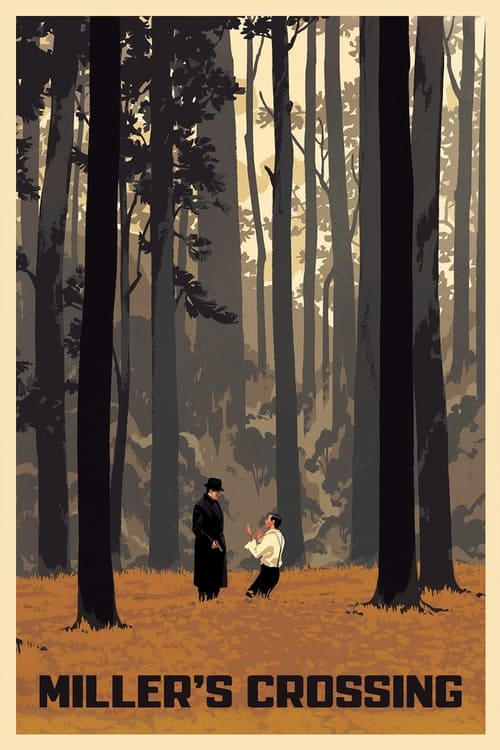
Miller's Crossing
Miller's Crossing Is a Man Protecting His Own Soul by Pretending He Has None
Directed by Joel Coen
Tom Reagan gets hit in the face in almost every scene and never once explains himself. The film keeps asking what is inside him. He keeps refusing to say. That refusal is the whole picture.
Everyone in this gangster world runs on "ethics," a word Johnny Caspar shouts in the opening scene while demanding permission to murder a man who cheated him. The mob calls its code of favors and debts "ethics" because it has replaced the real thing with a marketplace. Into this Tom Reagan moves like a man who has read the market perfectly and priced himself out of it. He advises the boss, sleeps with the boss's woman, drinks alone, and stage-manages a war among killers while claiming to care about nothing. The film's opening dream tells you what it is really about: Tom dreams of his hat blowing away through the woods and insists to Verna that in the dream he did not chase it, because "there's nothing more foolish than a man chasing his hat." He is lying. The film is the story of a man who will not admit that he is chasing his own soul through the woods, and that he wants it back.
Jungian Reading: The Hat Is the Soul, and He Will Not Chase It
In Jung, the persona is the mask worn to face the world, and the danger is identifying with the mask so completely that the living self beneath it goes dark. Tom's persona is total: unreadable, ironic, always calculating the angle. The hat is his recurring soul-image, the thing that keeps trying to leave him and that he keeps recovering while pretending he does not care.
Then comes Miller's Crossing itself, the wood where men are taken to be shot. Bernie kneels in the leaves and does the thing no one in this film ever does. He drops the mask entirely. "Look in your heart," he begs, and Tom, gun raised, cannot pull the trigger. He fires into the ground and lets Bernie run. That mercy is the persona cracking, the buried self reaching daylight for one second. When Bernie later mocks him for it, Tom kills him, and the killing is not cruelty. It is a man executing the witness to his own tenderness, sealing the mask back over the wound. The Jungian tragedy is exact: he had a soul, it surfaced once in the woods, and he could not bear to be seen with it.
Gnostic Reading: A World Where Everyone Trades and No One Is Free
The Gnostics saw the material order as a rigged game run by lesser powers, where every apparent choice is another turn of the wheel. Miller's Crossing is that cosmos rendered as a crime plot so intricate almost no viewer holds it on first watch. Leo, Caspar, the Dane, Verna, Bernie: each thinks he is playing the others, and each is bound to the machine of debts and betrayals. Tom is the only figure who sees the whole board, and seeing it grants him no freedom, only distance.
The film ends with Tom standing alone at the edge of the woods, having gotten everything back to how it was, having saved Leo, having won. Leo offers him his old place. Tom refuses and stays under the trees. He is the Gnostic who has seen through the game and cannot un-see it, but has nowhere outside the game to go. Knowledge here does not liberate. It isolates. He knows the world is false, and the knowing leaves him standing in the trees, watching his friend walk back into the lie.
Questions this film answers
What is the deeper meaning of Miller's Crossing?
Everyone in this gangster world runs on "ethics," a word Johnny Caspar shouts in the opening scene while demanding permission to murder a man who cheated him. The mob calls its code of favors and debts "ethics" because it has replaced the real thing with a marketplace. Into this Tom Reagan moves like a man who has read the market perfectly and priced himself out of it. He advises the boss, sleeps with the boss's woman, drinks alone, and stage-manages a war among killers while claiming to care about nothing. The film's opening dream tells you what it is really about: Tom dreams of his hat blowing away through the woods and insists to Verna that in the dream he did not chase it, because "there's nothing more foolish than a man chasing his hat." He is lying. The film is the story of a man who will not admit that he is chasing his own soul through the woods, and that he wants it back.
What is the hidden symbolism in Miller's Crossing?
In Jung, the persona is the mask worn to face the world, and the danger is identifying with the mask so completely that the living self beneath it goes dark. Tom's persona is total: unreadable, ironic, always calculating the angle. The hat is his recurring soul-image, the thing that keeps trying to leave him and that he keeps recovering while pretending he does not care.
What esoteric traditions appear in Miller's Crossing?
Miller's Crossing draws from Jungian, Gnosticism traditions. Tom Reagan gets hit in the face in almost every scene and never once explains himself. The film keeps asking what is inside him. He keeps refusing to say. That refusal is the whole picture.
Is Miller's Crossing worth watching for spiritual seekers?
Miller's Crossing (1990) directed by Joel Coen is essential viewing for those interested in Jungian, Gnosticism. Miller's Crossing Is a Man Protecting His Own Soul by Pretending He Has None. It rewards multiple viewings and contemplation.
Rewatch With New Eyes
Now that you've seen the architecture, experience it again. The same film becomes a different film when you know what to watch for.
This time, watch for:
- Meet the shadow: what is rejected, projected, and finally integrated
- Watch for the false world vs. the real — who is asleep, who awakens
Links may include affiliate partnerships that support Media Revelations
The Descent Continues
Where this thread leads next.
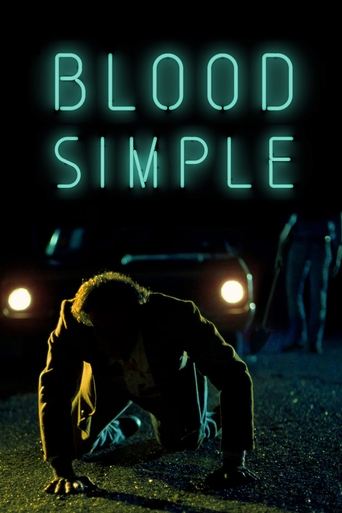
Blood Simple 1985
Blood Simple Is a Machine Where Everyone Kills the Wrong Person for the Wrong Reason
Read the revelation →