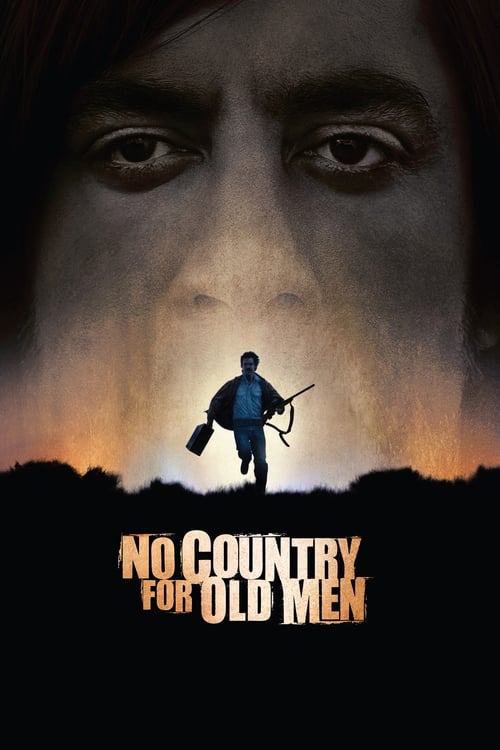
No Country for Old Men
You Can't Stop What's Coming (Anton Chigurh and the New Violence)
Directed by Joel Coen
Anton Chigurh is not a villain. He is a principle — the coin flip, the random selection, the violence that arrives without malice because malice would require preference. Sheriff Bell watches the new evil spread and knows he cannot stop it. The country is no longer for old men because the old categories no longer apply.
No Country for Old Men is not a crime thriller. It is a meditation on the nature of evil and the inadequacy of human categories to contain it. Anton Chigurh is not a psychopath in the clinical sense — he has principles, follows rules, demonstrates a perverse integrity. He is something worse: evil that has achieved internal consistency, violence that needs no justification because it has become its own law. Sheriff Bell represents the old world — a world where evil was recognizable, where good men could oppose it, where the categories of law and crime made sense. His narration throughout the film is an elegy for that world. He is not afraid of dying. He is afraid of what he does not understand: a violence without hatred, a killer without motive, an entropy that simply spreads. McCarthy's script (faithfully adapted by the Coens) refuses the satisfactions of genre. Llewelyn Moss dies offscreen. Chigurh escapes. Bell retires. Evil wins — not dramatically, but procedurally, like a weather system moving through. You can't stop what's coming. You can only recognize that it has already arrived.
The Surface
Llewelyn Moss discovers a drug deal gone wrong in the Texas desert: dead bodies, dying men, and a satchel containing two million dollars. He takes the money, setting in motion a pursuit that will destroy him. Anton Chigurh, hired to recover the money, tracks Moss with implacable patience. Sheriff Bell follows the carnage, always arriving too late, trying to understand something that resists understanding.
The Coen Brothers' adaptation of Cormac McCarthy's novel is remarkable for what it refuses to show: Moss's death happens offscreen, Chigurh's escape occurs in anticlimax, the confrontation between Bell and Chigurh never happens. The genre promises resolution; the film delivers entropy.
The film won four Academy Awards and was hailed as a masterpiece. But many viewers left confused, unsatisfied by an ending that resolves nothing. This dissatisfaction is the point. The old stories — good versus evil, justice versus crime — no longer apply. The country has changed. The film depicts a world where those expecting genre satisfactions will be disappointed, just as Bell is disappointed, just as the old order is disappointed by what has replaced it.
Chigurh as Principle
Anton Chigurh is not a character so much as a force. He has no backstory, no psychology, no motivation beyond the completion of his task. His haircut is absurd. His weapon — the captive bolt pistol used to slaughter cattle — is industrial. He moves through the film like weather: impersonal, inevitable, indifferent to human categories.
The coin flip scenes reveal his philosophy. Chigurh does not decide who lives and dies based on preference. He delegates to chance. The coin 'got here the same way' the potential victim did — through a chain of causation that no one controls. Fate chooses. Chigurh only executes fate's verdict.
This is not nihilism. Nihilism would be arbitrary violence. Chigurh's violence follows rules — his own rules, but rules nonetheless. He honors his word. He respects the coin's verdict. He demonstrates what might be called integrity, if integrity can be separated from morality entirely.
In Gnostic terms, Chigurh is an Archon — an administrator of the material realm who enforces its laws without malice or mercy. He is not evil in the sense of wishing harm. He is evil in the sense of being indifferent to harm. The distinction is crucial and terrifying.
Moss and the Fatal Choice
Llewelyn Moss is a competent man — a Vietnam veteran who can track, who can shoot, who knows when to run. He is not a criminal; he simply took money that seemed available. His first choice (taking the money) is understandable. His second choice (returning to the scene with water for a dying man) is fatal.
McCarthy and the Coens structure this carefully. Moss's doom is not greed but mercy. He goes back because he cannot let a man die of thirst, and this return allows Chigurh to track him. His decency kills him. This is not a morality tale about crime. It is a tragedy about how human impulses — even good ones — collide with forces that do not recognize them.
Moss dies offscreen, killed by Mexicans who are almost incidental to the plot. The protagonist of the film we have been following is removed without ceremony, without confrontation, without meaning. This is the point: death does not wait for dramatic appropriateness. Death comes when it comes.
The refusal to show Moss's death is the film's most radical choice. We have invested in his survival. We expect his story to climax. The film denies us this because life denies us this. The old country would have given us a showdown. This country gives us a corpse and a cut to the next scene.
Sheriff Bell and the Old Country
Tommy Lee Jones's narration frames the film as an elegy. Bell speaks of the old sheriffs who didn't wear guns, of a time when violence was personal and comprehensible. He is not naive — he has seen evil before. But this evil is different. It does not fit his categories.
Bell's journey through the film is a journey of increasing incomprehension. He arrives at crime scenes but never catches the perpetrator. He traces the violence but cannot prevent it. His old skills — investigation, deduction, the application of law — are useless against something that follows different laws entirely.
The title comes from Yeats: 'That is no country for old men.' The old men — those who understand the world through categories that once applied — have no place in this new country. Bell's retirement is not cowardice. It is recognition: he cannot fight what he cannot understand, and he cannot understand what has arrived.
His final dream is the film's only comfort: his father riding ahead with fire, preparing a place in the darkness. The old country exists somewhere — in memory, in dream, in whatever waits beyond death. But this country, the one we live in, belongs to something else now.
The Car Crash
After Moss is dead and the money is recovered, Chigurh drives away — and is struck by a car running a red light. His arm is shattered. Bone protrudes through skin. He limps away, bribing boys for their shirts to make a sling, disappearing into the Texas afternoon.
This scene is crucial because it demonstrates that even Chigurh is subject to chance. The principle he represents — the coin flip, the random distribution of violence — applies to him too. He is not above the system he administers. He is part of it.
The car crash also denies closure. We expect Chigurh to be caught, killed, or at least confronted. Instead, he is wounded by accident and escapes by competence. The evil does not end. It just moves on, limping but intact, to the next county, the next job, the next chain of consequences.
Chigurh walking away is the film's true ending. Not Bell's dream, not Moss's death, but this: the principle continues. The violence disperses but does not stop. The new country remains new, and the old men remain old, and nothing anyone does changes what is coming.
The Transmission
No Country for Old Men transmits a specific despair: the sense that evil has evolved past our capacity to understand or oppose it. The categories we inherit — law, morality, heroism — were built for an older world. This world operates differently.
McCarthy's vision is not nihilistic but entropic. The violence in the film follows rules — just not human rules. Chigurh is not chaos but a different order, one that sees no difference between the worthy and the unworthy, one that lets a coin decide who lives. This is more frightening than arbitrary evil because it suggests a system we cannot access.
The film asks whether the old country ever existed, or whether it was always the new country with better PR. Bell's nostalgia may be misplaced. His father's time may have been just as violent, just as random, just as indifferent. Perhaps the only thing that changes is the clarity with which we see.
You can't stop what's coming. The sentence is fatalistic but also descriptive. Something is always coming. The question is whether we face it clearly or retreat into categories that no longer apply. Bell retires. Chigurh continues. The country remains no country for old men.
Questions this film answers
What is the deeper meaning of No Country for Old Men?
No Country for Old Men is not a crime thriller. It is a meditation on the nature of evil and the inadequacy of human categories to contain it. Anton Chigurh is not a psychopath in the clinical sense — he has principles, follows rules, demonstrates a perverse integrity. He is something worse: evil that has achieved internal consistency, violence that needs no justification because it has become its own law. Sheriff Bell represents the old world — a world where evil was recognizable, where good men could oppose it, where the categories of law and crime made sense. His narration throughout the film is an elegy for that world. He is not afraid of dying. He is afraid of what he does not understand: a violence without hatred, a killer without motive, an entropy that simply spreads. McCarthy's script (faithfully adapted by the Coens) refuses the satisfactions of genre. Llewelyn Moss dies offscreen. Chigurh escapes. Bell retires. Evil wins — not dramatically, but procedurally, like a weather system moving through. You can't stop what's coming. You can only recognize that it has already arrived.
What is the hidden symbolism in No Country for Old Men?
Llewelyn Moss discovers a drug deal gone wrong in the Texas desert: dead bodies, dying men, and a satchel containing two million dollars. He takes the money, setting in motion a pursuit that will destroy him. Anton Chigurh, hired to recover the money, tracks Moss with implacable patience. Sheriff Bell follows the carnage, always arriving too late, trying to understand something that resists understanding.
What esoteric traditions appear in No Country for Old Men?
No Country for Old Men draws from Gnosticism traditions. Anton Chigurh is not a villain. He is a principle — the coin flip, the random selection, the violence that arrives without malice because malice would require preference. Sheriff Bell watches the new evil spread and knows he cannot stop it. The country is no longer for old men because the old categories no longer apply.
What does No Country for Old Men teach about chigurh as principle?
He is not evil in the sense of wishing harm. He is evil in the sense of being indifferent to harm. The distinction is crucial and terrifying. Anton Chigurh is not a character so much as a force. He has no backstory, no psychology, no motivation beyond the completion of his task. His haircut is absurd. His weapon — the captive bolt pistol used to slaughter cattle — is industrial. He moves through the film like weather: impersonal, inevitable, indifferent to human categories.
Is No Country for Old Men worth watching for spiritual seekers?
No Country for Old Men (2007) directed by Joel Coen is essential viewing for those interested in Gnosticism, Fate, McCarthy. You Can't Stop What's Coming (Anton Chigurh and the New Violence). It rewards multiple viewings and contemplation.
Rewatch With New Eyes
Now that you've seen the architecture, experience it again. The same film becomes a different film when you know what to watch for.
This time, watch for:
- Watch for the false world vs. the real — who is asleep, who awakens
Links may include affiliate partnerships that support Media Revelations
The Descent Continues
Where this thread leads next.
The Counselor 2013
The World Has Teeth and It Will Eat You (No Country for Smart Men)
Read the revelation →