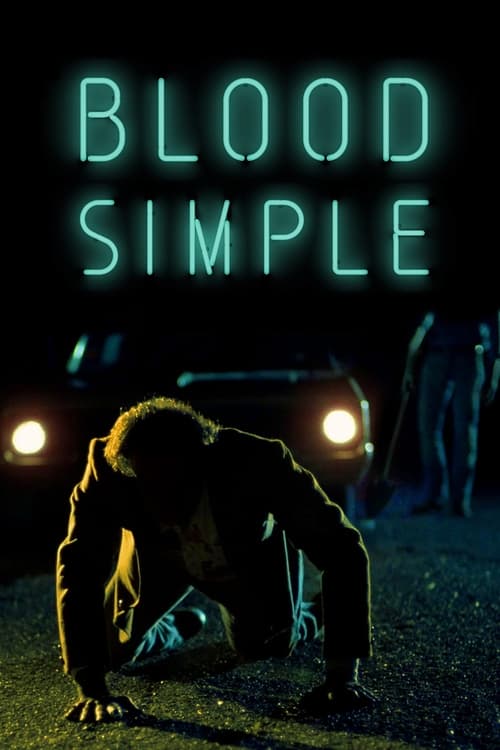
Blood Simple
Blood Simple Is a Machine Where Everyone Kills the Wrong Person for the Wrong Reason
Directed by Joel Coen
Nobody in this film knows what anyone else did. That ignorance is not a plot device. It is the theology.
The Coen brothers' first film is a closed system of total misapprehension. Marty hires a private detective to kill his wife Abby and her lover Ray. The detective, Visser, double-crosses him, fakes the photos, shoots Marty instead, and frames Abby. Ray finds Marty's body, assumes Abby did it, and buries the still-living man alive in a field. Abby, in the final scene, kills Visser believing she is killing her husband Marty, who is already long dead. Not one character in the film ever possesses an accurate picture of what is happening. Every act of violence is a response to a situation that does not exist. Blood Simple is frequently read as neo-noir craft, a lean thriller of escalating dread. What it actually dramatizes is a universe in which knowledge is structurally impossible, where every soul acts on a false image and the consequences are real anyway.
Gnostic Reading: A World Governed by Ignorance, Not Evil
Gnosticism locates the fundamental problem of existence not in sin but in agnosia, ignorance: the soul trapped in a lower world it cannot see clearly, deceived by a counterfeit reality, condemned to act blindly. Blood Simple is agnosia rendered as thriller mechanics. The film's Texas is a place of darkness and partial light, ceiling fans turning in the gloom, a paranoia that Ray names when he says "the world is full of complainers, but the fact is nothing comes with a guarantee." Everyone is a prisoner of what they cannot know.
The counterfeit photograph is the perfect Gnostic image. Visser stages a fake picture of Abby and Ray shot dead in bed, doctored evidence that Marty pays for and believes, an image of a reality that never occurred, purchased at the cost of his life. Every character then navigates by false images: Ray reads Marty's corpse as Abby's crime, Abby reads Visser's shadow behind the curtain as Marty returned from the dead. The famous final line, Visser laughing on the bathroom floor as Abby says "I'm not afraid of you, Marty," is the archon's laughter at a soul that killed the right man for entirely the wrong reason. Nobody in this cosmos is saved by knowing. Nobody knows.
Jungian Reading: The Shadow Projected Onto Everyone But the Self
Jung's Shadow projects outward when it is not owned: we see our own capacity for violence and betrayal in others, and act against them to escape ourselves. Blood Simple is projection compounded until it becomes a chain reaction. Marty sees betrayal in Abby and hires her death. Ray, discovering the body, projects the murder onto Abby without a word of confirmation and spends the night burying a man he assumes she killed. Each character treats the other as the container for a darkness that is actually their own.
Watch the burial sequence, one of the most sustained scenes in the film: Ray dragging Marty across the field, Marty's hand suddenly closing around the gun, Ray finishing the burial in horror while the man is still alive. Ray never asks Abby what happened. He never learns he is wrong. The Shadow, unexamined, does not stay contained; it acts through the hands of people who think they are protecting each other. By the end, every relationship in the film has been destroyed by violence committed on behalf of a misread. The tragedy is not that these people are wicked. It is that none of them ever turned around to look at the one figure they refused to see: themselves.
Other machines where misread evidence drives the killing: Fargo (the Coens return to violence born of small lies), No Country for Old Men (their later study of a world without guarantee), Blow-Up (a photograph that may show a murder that cannot be known).
Questions this film answers
What is the deeper meaning of Blood Simple?
The Coen brothers' first film is a closed system of total misapprehension. Marty hires a private detective to kill his wife Abby and her lover Ray. The detective, Visser, double-crosses him, fakes the photos, shoots Marty instead, and frames Abby. Ray finds Marty's body, assumes Abby did it, and buries the still-living man alive in a field. Abby, in the final scene, kills Visser believing she is killing her husband Marty, who is already long dead. Not one character in the film ever possesses an accurate picture of what is happening. Every act of violence is a response to a situation that does not exist. Blood Simple is frequently read as neo-noir craft, a lean thriller of escalating dread. What it actually dramatizes is a universe in which knowledge is structurally impossible, where every soul acts on a false image and the consequences are real anyway.
What is the hidden symbolism in Blood Simple?
Gnosticism locates the fundamental problem of existence not in sin but in agnosia, ignorance: the soul trapped in a lower world it cannot see clearly, deceived by a counterfeit reality, condemned to act blindly. Blood Simple is agnosia rendered as thriller mechanics. The film's Texas is a place of darkness and partial light, ceiling fans turning in the gloom, a paranoia that Ray names when he says "the world is full of complainers, but the fact is nothing comes with a guarantee." Everyone is a prisoner of what they cannot know.
What esoteric traditions appear in Blood Simple?
Blood Simple draws from Gnosticism, Jungian traditions. Nobody in this film knows what anyone else did. That ignorance is not a plot device. It is the theology.
Is Blood Simple worth watching for spiritual seekers?
Blood Simple (1985) directed by Joel Coen is essential viewing for those interested in Gnosticism, Jungian. Blood Simple Is a Machine Where Everyone Kills the Wrong Person for the Wrong Reason. It rewards multiple viewings and contemplation.
Rewatch With New Eyes
Now that you've seen the architecture, experience it again. The same film becomes a different film when you know what to watch for.
This time, watch for:
- Watch for the false world vs. the real — who is asleep, who awakens
- Meet the shadow: what is rejected, projected, and finally integrated
Links may include affiliate partnerships that support Media Revelations