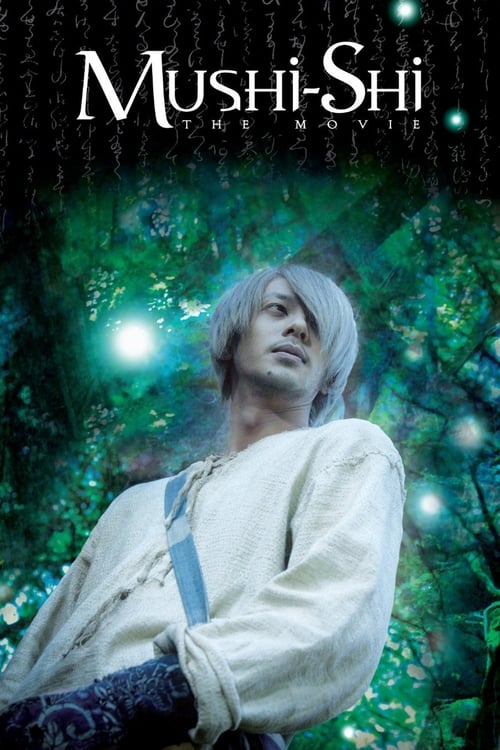
Mushi-Shi: The Movie
The Mushi Are the World-Soul. Ginko Can See Them Because He Lost Half of Himself to That Current.
Directed by Katsuhiro Otomo
Katsuhiro Otomo's 2007 film is not folklore dressed as cinema. It is a working model of how primordial life-force moves through the world, why some people can perceive it, and what that perception costs.
The mushi are not spirits. They are not demons. They exist below the threshold where life takes recognizable form, older than plants, older than animals, older than anything with a shape. Most humans cannot see them. A mushi-shi can. The film never explains this as gift or talent. Ginko, white-haired and white-eyed, draws mushi to him wherever he stays too long. His movement across the country is mandatory, not philosophical. He wanders because if he stops, the current pools around him and sickens everything nearby. Sight and rootlessness are the same wound. They were inflicted at the same moment, in the same event, when Ginko as a child fell into the life-stream itself and was partially absorbed by it.
Taoist Reading: Wu Wei as Wound, Not Practice
Taoist teaching describes the Tao as the formless current underlying all manifest reality. Wu wei, the principle of non-obstruction, holds that the sage does not impose form on the flow but moves with it, hollow enough for the Tao to move through without resistance. Ginko is this principle made biological, and Otomo renders it without idealization.
Watch the scene where Ginko arrives at a village where mushi have been feeding on a child's ability to sleep. He does not cure this with knowledge alone. He sits with the child, reads the mushi's behavior, then adjusts the environment until the flow redirects naturally. He coaxes, never forces. His method is closer to hydraulics than medicine. The mushi move toward the path of least resistance, and Ginko's intervention creates a slightly easier path elsewhere. This is wu wei as technique: you shape the channel, not the current.
The cost Taoism rarely names openly is here in full view. The sage who embodies the formless must have become partly formless himself. Ginko's white eye, his inability to stay, his constant cigarette smoke (the one thing that keeps mushi at a manageable distance), these are not quirks. They are the residue of a man who was partially dissolved into the stream he now navigates. He did not achieve wu wei through discipline. It happened to him. The river ran through him and left its mark on the bank.
Shamanic Reading: The Healer Whose Sight Is a Severance
Shamanic traditions across Siberia, Central Asia, and Japan share a diagnostic of the wounded healer: the one who can move between worlds does so because they have already been partially claimed by the other side. The shaman's calling typically arrives through illness, loss, or a near-death encounter with the spirit world. What looks like recovery is actually a negotiated boundary, the shaman gives something to the other world and gets passage rights in return.
Ginko gave his name, his eye, and his memory to the mushi-current as a child. The boy who came out of that stream did not remember who he had been. A passing mushi-shi named him after the plant growing nearby and taught him his trade. The original self remained in the stream. What wanders the country calling itself Ginko is the remainder: the part the current released because it was more useful as a mediator than as raw material.
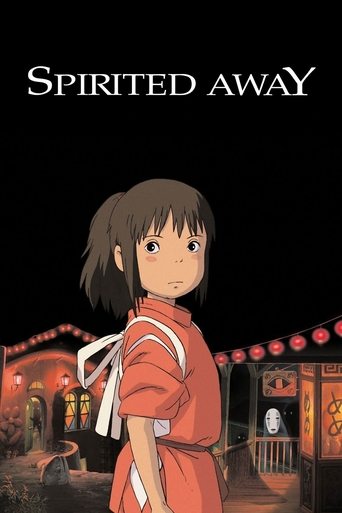
This is the shamanic bargain rendered precisely. Every patient Ginko helps is a transaction completed through a capacity that cost him his rootedness. He can see the mushi because he is partly made of the same substance. He cannot stay anywhere because the mushi gather around that substance and demand more of it. Like Spirited Away's Chihiro moving through a world of spirits she has no natural right to survive, or Princess Mononoke's Ashitaka carrying a curse that is also his only means of perceiving the forest's full reality, Ginko operates by the logic of exchange: the world between worlds opens to those who have already paid with something irreplaceable.
The film is quiet about all of this. It does not explain Ginko's condition in the analytical terms used here. It shows a man smoking in the rain outside a village, waiting until it is safe to leave, watching the mushi disperse as he moves on. The teaching is in the image. Like Angel's Egg, which places a guardian figure in an ambiguous threshold world without ever naming the terms of their covenant, Mushi-Shi trusts the viewer to feel the weight of what has been given up. The wandering is the evidence.
Questions this film answers
What is the deeper meaning of Mushi-Shi: The Movie?
The mushi are not spirits. They are not demons. They exist below the threshold where life takes recognizable form, older than plants, older than animals, older than anything with a shape. Most humans cannot see them. A mushi-shi can. The film never explains this as gift or talent. Ginko, white-haired and white-eyed, draws mushi to him wherever he stays too long. His movement across the country is mandatory, not philosophical. He wanders because if he stops, the current pools around him and sickens everything nearby. Sight and rootlessness are the same wound. They were inflicted at the same moment, in the same event, when Ginko as a child fell into the life-stream itself and was partially absorbed by it.
What is the hidden symbolism in Mushi-Shi: The Movie?
Taoist teaching describes the Tao as the formless current underlying all manifest reality. Wu wei, the principle of non-obstruction, holds that the sage does not impose form on the flow but moves with it, hollow enough for the Tao to move through without resistance. Ginko is this principle made biological, and Otomo renders it without idealization.
What esoteric traditions appear in Mushi-Shi: The Movie?
Mushi-Shi: The Movie draws from Shamanism traditions. Katsuhiro Otomo's 2007 film is not folklore dressed as cinema. It is a working model of how primordial life-force moves through the world, why some people can perceive it, and what that perception costs.
Is Mushi-Shi: The Movie worth watching for spiritual seekers?
Mushi-Shi: The Movie (2007) directed by Katsuhiro Otomo is essential viewing for those interested in Shamanism. The Mushi Are the World-Soul. Ginko Can See Them Because He Lost Half of Himself to That Current.. It rewards multiple viewings and contemplation.
Rewatch With New Eyes
Now that you've seen the architecture, experience it again. The same film becomes a different film when you know what to watch for.
This time, watch for:
- Follow the descent: what dies, what guides, what returns transformed
Links may include affiliate partnerships that support Media Revelations