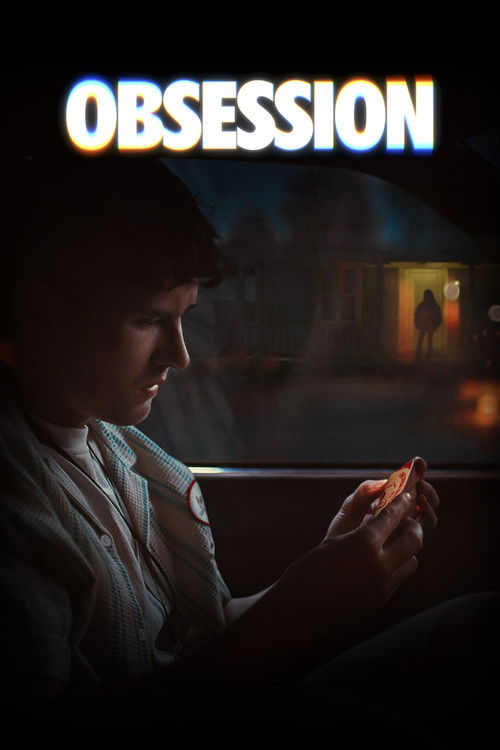
Bear doesn't wish that he loved Nikki. He wishes that Nikki loved him — more than anyone in the world. He asks the willow to abolish the one thing that would have made her love mean anything: her freedom to withhold it. He gets exactly what he asked for, and it is a horror, because love with the freedom removed is not love. It is possession wearing love's face.
Obsession made $427 million on a $750,000 budget by looking like a monkey's-paw horror-comedy about a friend-zoned guy whose wish goes wrong. It is that. It is also a cleaner parable about the difference between love and possession than most films that set out to be one. Bear, a music-store clerk aching for his co-worker Nikki, breaks a novelty toy called the One Wish Willow and wishes that Nikki loved him more than anyone in the world. The wish is granted to the letter, and the letter is the horror: Nikki's love arrives with her freedom stripped out of it. She cannot leave, cannot want otherwise, cannot be anywhere but pointed at him — and what remains is not a girlfriend but a possessed thing, screaming, self-harming, murdering to protect a bond she did not choose. Curry Barker reportedly turned down two million dollars to rewrite Bear as a hero, and the refusal is the whole film. Bear is not a victim of a cursed object. He is a young man who preferred a guaranteed love to a real one — who would rather manufacture a woman who cannot reject him than risk being rejected by the woman who could. The willow only gives him the shape of what he already wanted. Read it that way and the comedy curdles into something close to a teaching: that to wish the beloved's freedom away is to wish the beloved away, and to be loved by someone who has no choice is to be alone in the most crowded way there is.
The Surface
Baron 'Bear' Bailey works at a music store with his crush Nikki and their friends Ian and Sarah. After his cat dies and a botched almost-confession leaves him humiliated, Bear breaks a novelty toy — the 'One Wish Willow,' which claims to grant a single wish when snapped — and wishes that Nikki loved him more than anyone in the world. She does, instantly, and totally. What begins as a dream romance decays within days into something monstrous: Nikki cannot bear his absence, tapes him inside the house, feeds him the remains of his dead cat, and escalates to self-mutilation and murder to defend a love she is compelled to feel. Bear spends the back half of the film frantically trying to reverse a wish that, customer service informs him, expires only when he dies.
Curry Barker — a YouTube sketch comedian working from a $750,000 budget — built the premise off the monkey's-paw beat from a Simpsons 'Treehouse of Horror,' and shot it lean and center-framed to keep the audience uncomfortable. The film premiered at TIFF 2025, where Focus Features paid a genre-record price for it, and went on to gross $427 million worldwide, one of the biggest returns-on-budget in modern horror.
It plays, on first pass, as a nasty crowd-pleaser: funny, cruel, quotable, over in 109 minutes. But Barker declining a studio's money to make Bear sympathetic is the tell. He wanted Bear to stay culpable. The film only works — and only means anything — if you never quite get to let its protagonist off the hook.
The Wish Was Never About Love
Notice the exact grammar of the wish. Bear does not wish that he could love Nikki well, or that she could see him clearly, or even that they could be together. He wishes that she loved him — more than anyone in the world. The desire is not for a relationship. It is to be the object of an overwhelming love while risking nothing himself.
Read through Jung, Nikki stops being a character here and becomes something closer to Bear's anima made flesh: the inner image of the woman-who-loves-me-completely, projected outward and animated. The tragedy of the film is that the wish annihilates the real Nikki to install the projection. Everything that made her a separate person — her own wants, her freedom to see Bear as a 'little brother,' her right to say no — is precisely what the wish deletes. What's left wearing her face is pure projection with no one home behind it.
This is the friend-zone wound taken to its literal end. The ache Bear starts with is common enough: to be chosen by someone who hasn't chosen you. But the film insists on what that ache actually contains if you follow it all the way down. Bear would rather have a woman who cannot refuse him than face a woman who can. He calls that love. The film spends ninety minutes showing you it was never that — it was the refusal to be met by an equal, dressed up as romance.
The horror imagery keeps making the point in the body. Nikki watching him sleep, screaming that he doesn't love her, standing in one spot for a full day waiting for him — this is what a projection does when there's no real self to regulate it. It doesn't relate. It fixates. Bear wished for devotion with the person subtracted, and devotion with the person subtracted is just appetite pointed at a target.
What the Willow Actually Grants
The monkey's-paw structure is older than horror — it's an initiatory device. You are given exactly what you asked for, and the granting becomes a mirror that shows you what you were actually asking for underneath the words. The wish does not betray the wisher. It obeys him perfectly, and the obedience is the revelation.
Bear asked for a love more total than anyone else's. The willow delivers a love so total it has no room left for a self to do the loving. That is not the object malfunctioning. That is the object being honest. A love 'more than anyone in the world' is, taken literally, a love without proportion, without limit, without the ordinary human boundaries that let two separate people stay separate. Bear wanted the limit removed. The willow removed it.
This is why the film is careful never to let Bear simply undo the wish. He buys every willow in the shop and cannot break one; the wish expires only at his death. An initiation you can take back is not an initiation — it's a purchase with a return policy. The story traps him inside the consequence of his own desire on purpose, because the lesson only lands if he has to live inside the answered prayer with no exit.
The tagline — 'be careful who you wish for' — is doing quiet work. Not what you wish for. Who. The film knows the wound is not that Bear wanted something and got it wrong. It's that he wanted a person as a possession, and the universe took him at his word.
Be Careful Who You Wish For
Strip the comedy and the shape underneath is a possession story with a contract at its root. Bear pays — a small ritual object, a broken branch, a wish spoken aloud — and something moves into Nikki that was not there before. She herself names it late in the film: her 'obsessive personality' that sleeps and wakes, a second occupant she can briefly speak from underneath but cannot evict. That is the grammar of possession, not romance.
The old demonological logic holds that the tempter never gives you something foreign to you. It gives you your own desire, amplified past the point where you can hold it, so that the getting is the punishment. Nothing is imposed on Bear from outside. The willow simply actualizes what he privately wanted and lets the actualization run to its natural end. The 'demon' in the film is not the toy. It's the wish, given a body.
And the possession is contagious in the way these stories always are: it does not stay contained to Nikki. It eats the people around them — Sarah, Ian — and finally reaches back to consume Bear himself, who ends the film dead on the floor, still kissing the woman his wish built. The contract is paid in full. Everyone who touched the bond is inside its wreckage.
Even the moment of release keeps the logic. Nikki only comes back to herself when Bear dies — when the wish that authored her finally expires. The possessing thing leaves not because it is exorcised but because its contract term ends. What she wakes into is not relief. It's a room full of bodies and the dawning knowledge of what was done through her, and what she did.
The Cat, the Crystal, and the Sandwich
Barker hides the film's thesis in three small objects, and they reward a second watch. First: the tiger's-eye necklace Bear goes into the crystal shop to buy — a genuine protective stone, the thing that guards the wearer — which he passes over in favor of the One Wish Willow. He is offered protection and chooses the wish. The whole tragedy is pre-written in that swap at the counter.
Second: the cat, Sandy, dead of an overdose Bear left in reach, whose remains Nikki grinds into a sandwich and feeds him. It's the film's most repellent image and its most exact one. Love, once the other person's freedom is gone, doesn't nourish — it feeds you the dead thing you failed to care for and calls it devotion. The possessed love literally makes him consume his own negligence.
Third: the willow itself, a mass-produced novelty, sacred power sold as a gag gift. The film's world places the instrument of a soul-catastrophe on a shelf next to real crystals, indistinguishable from junk. That's a quiet piece of the teaching too — that the tools capable of the most damage rarely announce themselves, and that Bear's certainty he could handle a 'toy' is the same certainty that let him believe he could own a person.
Together the three objects trace the descent: protection refused, negligence fed back as love, the sacred mistaken for a plaything. None of it is imposed on Bear. Each is a choice, sitting in plain sight, that the film simply lets him make.
The Transmission
Obsession is not a cautionary tale about magic toys, and it's barely a tale about Nikki, who never gets to be a person before the wish erases her. It's about Bear, and through Bear about a very ordinary hunger that horror lets the film say out loud: the wish to be loved without the risk of not being loved. To be chosen without submitting to someone else's freedom to choose otherwise.
The film's cruelty toward its protagonist is its integrity. Barker turned down the money to make Bear a hero because a heroic Bear would have let the audience off the same hook Bear is on. Kept culpable, Bear becomes a mirror: almost everyone watching has, at some point, wanted the guaranteed version of a love — the one that can't leave, can't cool, can't look at someone else. The film follows that wish to the only place it actually goes.
What it finds there is the oldest definition of hell in a new package: you get exactly what you wanted, forever, with no one really there. Bear ends surrounded by a love of total intensity and dies more alone than he began, because a love that cannot be withheld cannot be given either. The freedom he wished away was not an obstacle to being loved. It was the entire substance of it.
That's the transmission under the gore and the box-office numbers. Real love requires a door the other person can walk out of, or it isn't love — it's just a beautifully lit room you've locked from the inside, with someone screaming that they adore you. Be careful who you wish for. The film means it.
Questions this film answers
What is the deeper meaning of Obsession?
Obsession made $427 million on a $750,000 budget by looking like a monkey's-paw horror-comedy about a friend-zoned guy whose wish goes wrong. It is that. It is also a cleaner parable about the difference between love and possession than most films that set out to be one. Bear, a music-store clerk aching for his co-worker Nikki, breaks a novelty toy called the One Wish Willow and wishes that Nikki loved him more than anyone in the world. The wish is granted to the letter, and the letter is the horror: Nikki's love arrives with her freedom stripped out of it. She cannot leave, cannot want otherwise, cannot be anywhere but pointed at him — and what remains is not a girlfriend but a possessed thing, screaming, self-harming, murdering to protect a bond she did not choose. Curry Barker reportedly turned down two million dollars to rewrite Bear as a hero, and the refusal is the whole film. Bear is not a victim of a cursed object. He is a young man who preferred a guaranteed love to a real one — who would rather manufacture a woman who cannot reject him than risk being rejected by the woman who could. The willow only gives him the shape of what he already wanted. Read it that way and the comedy curdles into something close to a teaching: that to wish the beloved's freedom away is to wish the beloved away, and to be loved by someone who has no choice is to be alone in the most crowded way there is.
What is the hidden symbolism in Obsession?
Baron 'Bear' Bailey works at a music store with his crush Nikki and their friends Ian and Sarah. After his cat dies and a botched almost-confession leaves him humiliated, Bear breaks a novelty toy — the 'One Wish Willow,' which claims to grant a single wish when snapped — and wishes that Nikki loved him more than anyone in the world. She does, instantly, and totally. What begins as a dream romance decays within days into something monstrous: Nikki cannot bear his absence, tapes him inside the house, feeds him the remains of his dead cat, and escalates to self-mutilation and murder to defend a love she is compelled to feel. Bear spends the back half of the film frantically trying to reverse a wish that, customer service informs him, expires only when he dies.
What esoteric traditions appear in Obsession?
Obsession draws from Jungian, Initiation, Demonology traditions. Bear doesn't wish that he loved Nikki. He wishes that Nikki loved him — more than anyone in the world. He asks the willow to abolish the one thing that would have made her love mean anything: her freedom to withhold it. He gets exactly what he asked for, and it is a horror, because love with the freedom removed is not love. It is possession wearing love's face.
What does Obsession teach about what the willow actually grants?
The wish does not betray the wisher. It obeys him perfectly, and the obedience is the revelation. The monkey's-paw structure is older than horror — it's an initiatory device. You are given exactly what you asked for, and the granting becomes a mirror that shows you what you were actually asking for underneath the words. The wish does not betray the wisher. It obeys him perfectly, and the obedience is the revelation.
What does Obsession teach about the transmission?
You get exactly what you wanted, forever, with no one really there. A love that cannot be withheld cannot be given either. Obsession is not a cautionary tale about magic toys, and it's barely a tale about Nikki, who never gets to be a person before the wish erases her. It's about Bear, and through Bear about a very ordinary hunger that horror lets the film say out loud: the wish to be loved without the risk of not being loved. To be chosen without submitting to someone else's freedom to choose otherwise.
Is Obsession worth watching for spiritual seekers?
Obsession (2025) directed by Curry Barker is essential viewing for those interested in Jungian, Initiation, Demonology. The Wish to Be Loved Without Being Chosen. It rewards multiple viewings and contemplation.
Rewatch With New Eyes
Now that you've seen the architecture, experience it again. The same film becomes a different film when you know what to watch for.
This time, watch for:
- Meet the shadow: what is rejected, projected, and finally integrated
- Mark the threshold: the old self dies, the ordeal transforms, the new self returns
- Identify the hierarchy: which demon, which rank, which grimoire it comes from
Links may include affiliate partnerships that support Media Revelations