Perfect Blue
The First Horror Film About What Social Media Does to Identity
Directed by Satoshi Kon
Kon understood what social media took twenty years to prove: the projected image can become more real than the person. Mima's double is the tulpa created by collective attention.
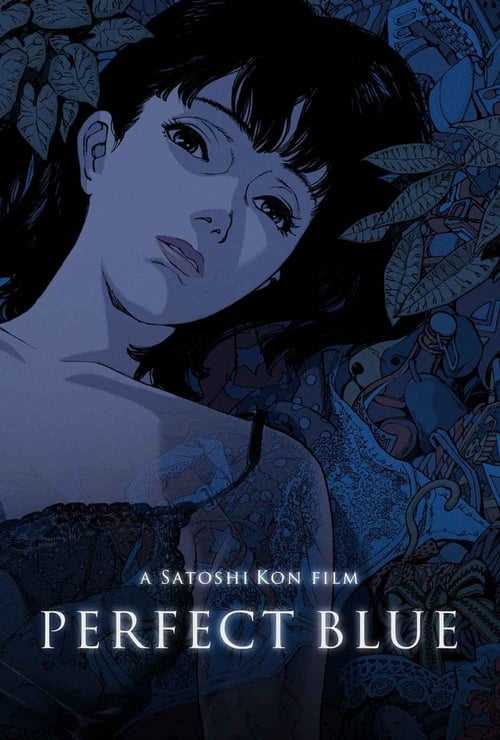
Perfect Blue is the first accurate horror film about identity in the age of the projected image — made in 1997, before the conditions it diagnosed existed for most people. Satoshi Kon understood what social media would spend two decades proving: the image can eat the person. Mima's fans do not want her. They want 'Mima' — the idol, the idea, the pure projection. When the real Mima tries to change, the projected Mima refuses to die. She becomes autonomous. She begins to act. The murders in the film are committed by a tulpa — a thought-form given independent life by the intensity of collective attention. Kon saw this coming when the rest of us were still buying CDs.
The Surface
Mima Kirigoe, a member of a pop idol trio, decides to quit singing and pursue acting. Her new roles require her to shed her innocent image: a simulated rape scene for a TV drama, a nude photo shoot for a magazine. Meanwhile, people connected to her career change begin dying violently. Mima's grip on reality loosens. She sees her former idol self — 'the real Mima' — taunting her in reflections and visions.
Read as psychological thriller, Perfect Blue is about a woman having a breakdown under industry pressure. This reading is incomplete. Kon is not depicting madness. He is depicting a collision between a person and her image — and his argument is that the image has ontological priority.
The film was made before social media, before influencer culture, before the average person had an 'online presence' they had to maintain. Kon saw something coming that most people could not yet perceive: the emergence of a world where the projected self would become more real, more powerful, and more persistent than the embodied self.
The Tulpa
In Tibetan Buddhist practice, a tulpa is a thought-form brought into independent existence through concentrated visualization. Practitioners create them deliberately as meditation exercises. The warning in the tradition is that tulpas, once created, resist dissolution. They want to continue existing. They can turn on their creators.
Mima's idol self is a tulpa. She was created by hundreds of thousands of fans concentrating their attention, desire, and emotional energy on an image called 'Mima.' This image was never the person. It was a construction — cute, innocent, forever young, singing songs about cheerful nonsense. But the fans' attention was real. The energy they poured into the image was real.
When the actual Mima tries to change — to grow, to pursue dramatic roles, to become something other than the idol — the tulpa resists. The fans' Mima cannot develop. She is fixed at the moment of maximum projection. She appears to the actual Mima as a separate being, claiming to be 'the real one,' accusing the embodied Mima of being the imposter.
This is not metaphor. Kon is depicting the literal mechanics of what happens when collective attention creates an entity. The difference between Perfect Blue and your Instagram feed is scale and intensity — not kind.
The Persona and the Shadow
Jung's persona is the mask we wear for society — the self we present to others, constructed to be acceptable. The danger of the persona is identification: believing we are the mask, losing touch with what lies beneath. The entertainment industry manufactures personas professionally and calls them 'images.'
Mima's idol persona was never her. It was a product designed by her agency, shaped by fan expectations, polished until all edges were removed. She wore it for years. When she tries to take it off, she discovers two things: the mask has a face of its own, and she is no longer sure what face is beneath it.
The TV drama she acts in — where she plays a woman with dissociative identity disorder — becomes impossible to separate from her actual experience. The simulated rape scene breaks something. The lines between performance and reality, between script and life, begin to dissolve. 'Who am I?' she asks, staring at her reflection. The reflection does not answer with her voice.
The Shadow in Jungian terms is everything the persona excludes. Mima's idol persona excluded darkness, complexity, adult sexuality, the capacity for anger. When she tries to integrate these qualities through acting, the Shadow and the Persona go to war inside her — and the Persona has reinforcements. The fans want her innocent. The internet remembers the idol. The image fights back.
Mima's Room
A website appears called 'Mima's Room,' written in first person from the idol's perspective. It knows details about Mima's life that only she should know — what she ate for breakfast, what she saw from her window, her private thoughts. She did not write it. Someone is writing her life and publishing it as her.
Kon understood before anyone else what was coming: the proliferation of 'authentic' content that is neither authored by nor controlled by its subject. The fan who maintains Mima's Room believes he is preserving the 'real' Mima — the one the industry destroyed when it let her become an actress. He is writing the biography of a person who does not exist, in a voice more convincing than hers.
This is the second-order horror of the film. The tulpa is not just in Mima's head. The tulpa is being actively maintained and updated by someone else. Her image has been crowdsourced. Strangers are writing her reality. And their version is reaching more people than she ever could.
The internet was barely public when Kon made this film. He saw it anyway. He saw that identity would become collaborative, that 'you' would become a wiki anyone could edit, that the boundary between who you are and who others say you are would become impossible to enforce.
The Murders
People begin dying: the photographer who shot Mima's nudes, the screenwriter who wrote her rape scene, the agent who pushed her career change. The murders are committed by someone protecting 'the real Mima' from those who defiled her image.
The reveal is that Mima's manager Rumi — a former idol herself — has become the vessel for the tulpa. Rumi identified so completely with Mima's innocent image that she could no longer tolerate its violation. She became the defender of a Mima that never existed, killing in service of a projection.
This is the final movement of Kon's argument. The tulpa does not need the original to survive. It can migrate to whoever believes in it most intensely. Rumi was not the creator of idol-Mima. She was the most devoted worshipper. And in her devotion, she became the host.
The climax has two Mimas facing each other — Rumi in a pop idol dress, bloody knife in hand, insisting she is the real one, and the actual Mima, bloody and exhausted, no longer sure. The image has become autonomous. It is trying to replace the person. Kon stages this as literal combat because that is what it is.
The Transmission
Perfect Blue was Satoshi Kon's first film. He made it for almost no budget, in 1997, before most people had email. It accurately predicts the psychological landscape of social media, influencer culture, parasocial relationships, and identity fragmentation through distributed attention.
He did not predict these things because he was psychic. He predicted them because he understood the structure. The structure is: when enough attention concentrates on an image, the image becomes real. When the image becomes real, it competes with the person. When it competes, it often wins — because images are easier to maintain, easier to love, easier to project onto. The person has needs, changes, ages, disappoints. The image just glows.
Darren Aronofsky bought the rights to Perfect Blue to recreate the bathtub shot in Requiem for a Dream. He made Black Swan as an unofficial remake. These are the film's children. But the original remains the diagnosis — the first clear statement that the projected image was going to eat its source.
The film ends with Mima looking in her car's rear-view mirror and saying 'I'm the real thing.' The camera pulls back. We see her face in the mirror. We are not sure if she is telling the truth. Neither is she. That uncertainty is the permanent condition of selfhood in the age of images. Kon gave it to us before we knew we would need it.
Questions this film answers
What is the deeper meaning of Perfect Blue?
Perfect Blue is the first accurate horror film about identity in the age of the projected image — made in 1997, before the conditions it diagnosed existed for most people. Satoshi Kon understood what social media would spend two decades proving: the image can eat the person. Mima's fans do not want her. They want 'Mima' — the idol, the idea, the pure projection. When the real Mima tries to change, the projected Mima refuses to die. She becomes autonomous. She begins to act. The murders in the film are committed by a tulpa — a thought-form given independent life by the intensity of collective attention. Kon saw this coming when the rest of us were still buying CDs.
What is the hidden symbolism in Perfect Blue?
Mima Kirigoe, a member of a pop idol trio, decides to quit singing and pursue acting. Her new roles require her to shed her innocent image: a simulated rape scene for a TV drama, a nude photo shoot for a magazine. Meanwhile, people connected to her career change begin dying violently. Mima's grip on reality loosens. She sees her former idol self — 'the real Mima' — taunting her in reflections and visions.
What esoteric traditions appear in Perfect Blue?
Perfect Blue draws from Jungian, Shamanism traditions. Kon understood what social media took twenty years to prove: the projected image can become more real than the person. Mima's double is the tulpa created by collective attention.
What does Perfect Blue teach about the tulpa?
The fans' Mima cannot develop. She is fixed at the moment of maximum projection. In Tibetan Buddhist practice, a tulpa is a thought-form brought into independent existence through concentrated visualization. Practitioners create them deliberately as meditation exercises. The warning in the tradition is that tulpas, once created, resist dissolution. They want to continue existing. They can turn on their creators.
What does Perfect Blue teach about the persona and the shadow?
'Who am I?' she asks, staring at her reflection. The reflection does not answer with her voice. Jung's persona is the mask we wear for society — the self we present to others, constructed to be acceptable. The danger of the persona is identification: believing we are the mask, losing touch with what lies beneath. The entertainment industry manufactures personas professionally and calls them 'images.'
What does Perfect Blue teach about mima's room?
Her image has been crowdsourced. Strangers are writing her reality. A website appears called 'Mima's Room,' written in first person from the idol's perspective. It knows details about Mima's life that only she should know — what she ate for breakfast, what she saw from her window, her private thoughts. She did not write it. Someone is writing her life and publishing it as her.
Is Perfect Blue worth watching for spiritual seekers?
Perfect Blue (1997) directed by Satoshi Kon is essential viewing for those interested in Tulpa, Projection, Kon. The First Horror Film About What Social Media Does to Identity. It rewards multiple viewings and contemplation.
Rewatch With New Eyes
Now that you've seen the architecture, experience it again. The same film becomes a different film when you know what to watch for.
This time, watch for:
- Meet the shadow: what is rejected, projected, and finally integrated
- Follow the descent: what dies, what guides, what returns transformed
Links may include affiliate partnerships that support Media Revelations
The Descent Continues
Where this thread leads next.
Mulholland Drive 2001
The Blue Key and the Dissolution of Identity
Read the revelation →