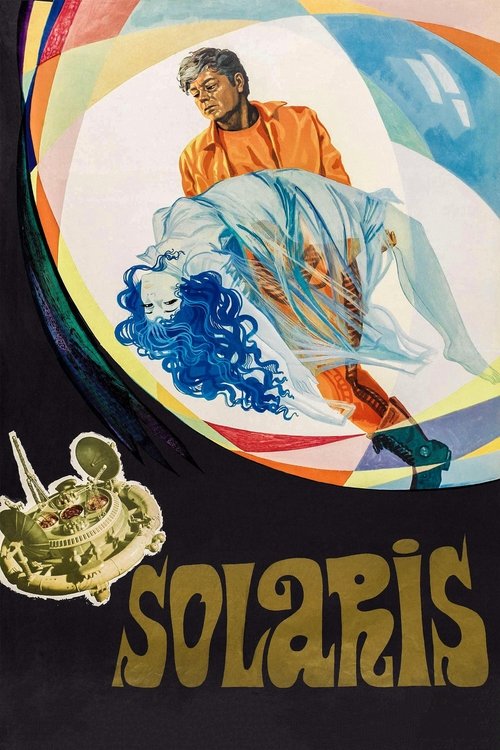
Solaris is consciousness itself — impersonal, vast, unknowable. It creates visitors from memory and guilt. Kris cannot escape his past because the ocean reflects it back. The ending is surrender, not victory.
Solaris is the only science fiction film that takes seriously what would happen if humans encountered a consciousness that did not share our categories. The ocean is not an alien. It is a mirror that reads the contents of the visitor's psyche and returns them embodied. The visitors are not gifts. They are wounds made flesh. Kris's dead wife arrives because the part of him that has not finished mourning her cannot be hidden from the ocean. Tarkovsky's claim is that contact with cosmic consciousness will not be communication. It will be confrontation with what we have refused to face in ourselves. The ocean is the Self in Jung's sense, returning the contents the ego has been managing.
The Surface
A psychologist named Kris Kelvin is sent to a space station orbiting the planet Solaris, where the previous crew has been experiencing psychological breakdown. The planet's ocean appears to be a single conscious entity. It generates 'visitors' — physical beings drawn from the crew's memories. Kris's dead wife appears. He cannot make her leave. She is real. She is also not the woman he lost. He must decide what to do with what the ocean has given him.
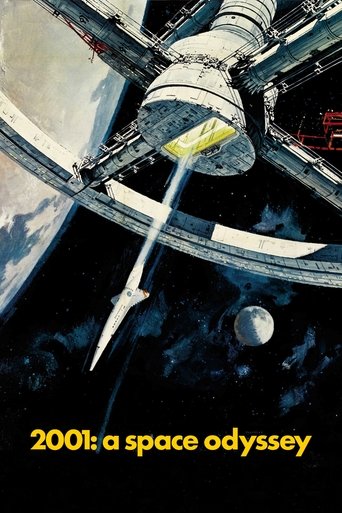
Tarkovsky made this film as Soviet response to 2001. He found Kubrick's film cold and intellectual. He wanted to make a science fiction film that was about the human heart. The space station is grimy. The technology is bureaucratic. The drama is interior. Every effects shot is subordinated to a meditative image of water, fire, plants, faces.
The film is nearly three hours. It opens with twenty minutes on Earth before launching. It ends ambiguously. Critics complained that nothing happens. They were wrong. Everything happens. The events are not where they were looking.
The Ocean as Self
Jung distinguished the ego (the conscious self) from the Self (the totality of the psyche including the unconscious). The Self is impersonal in the sense that it contains all of you, including the parts you do not identify with. Encountering the Self is not encountering a friend. It is encountering what is true about you whether you have admitted it or not.
The ocean of Solaris is the Self made cosmic. It is impersonal. It does not communicate. It does not respond to questions. It reflects. When the crew tries to study it, it generates from their psyches the images that would be most disruptive. Not images of their fears, which they could manage. Images of their unresolved love and guilt, which they cannot.
Kris's dead wife Hari is the most precise example. He drove her to suicide ten years ago. He has been carrying the guilt without metabolizing it. The ocean reads this and gives him Hari. The Hari it gives him is not the original Hari. She is the Hari-image he has been holding inside himself — beautiful, devoted, fragile, unable to live without him. The ocean has externalized his unconscious. Now he has to deal with her.
This is the structure of every shadow encounter. The Self returns to consciousness what consciousness has refused. Most people never have this happen because their lives are arranged to prevent it. The space station is the experimental condition in which it can no longer be prevented.
Hari as Projection
Hari does not have memories of her real life. She has only what Kris remembers of her. She does not know what she likes to eat. She does not know what her childhood was. She knows only what Kris has retained. The ocean did not have her source material. It only had his memory of her.
This is the precise structure of all projection. The image of the beloved we carry inside us is not the beloved. It is a model we constructed from selective remembering. When we are in relationship, the actual person contradicts the model constantly. When we are no longer in relationship — through death, distance, separation — the model becomes uncorrected. We carry the image and call it the person.
Hari recognizes this about herself. She knows she is not the real Hari. She knows she is Kris's image of Hari. She tries to die. The ocean reconstitutes her. She tries again. The ocean reconstitutes her. She cannot escape her status as projection because the ocean is feeding the projection back into reality faster than she can refuse it.
This is the second cruelty of the film. It is not enough that Kris must face his guilt. He must face it through a being who knows she is a fabrication of his guilt and who cannot become anything else without his consent. He must let her go to set her free. He cannot bring himself to do it.
The Surrender at the End
The film's final sequence shows Kris on Earth, returning to his father's dacha. He embraces his father. The camera pulls back. The dacha is on a small island in the ocean of Solaris. He never came home. The ocean has constructed his deepest memory — his father, the rain-streaked windows, the embrace he never quite got in life — and given it to him.
This is sometimes read as the ocean trapping him. The reading is too negative. The ocean is not trapping anyone. The ocean is offering. Kris accepted the offering. He could have gone back to Earth, or stayed on the station, or refused. He chose the dacha. He chose the embrace. He chose to live inside what the ocean could give him.
Buddhism would call this surrender — not defeat, but the giving up of the demand that reality conform to your preferred ontology. The ocean is not a hallucination. The ocean is not real in the way Earth is real. The ocean is real in some other way that Kris has decided to accept on its own terms.
Tarkovsky is making a precise theological claim. We do not get to dictate the form in which the divine appears to us. The cosmos may meet us with images drawn from our own memory. Refusing the meeting because the form is uncanny is a kind of pride. Kris's surrender is the discipline of receiving what is given without insisting that it be given in the form you preferred.
The Transmission
Solaris transmits the experience of being met by something that knows you better than you know yourself. The ocean reads Kris with no effort. It returns to him exactly what he has been hiding from. The film puts the audience in the position of being read this way for three hours.
By the end you have spent so long with Kris's interiority that you start watching your own. What would the ocean return to you? What part of your psyche have you been managing well enough that no one notices, including you? Who would walk into your room if your memory were given physical form?
Most films distract you from your interior. Tarkovsky inverts the relationship. He uses cinema to provoke the encounter that the ocean provokes for Kris. Watching Solaris is being read by Solaris, on a small scale, at the speed of a slow film. You leave the theater carrying what was returned to you. It is the most generous gift cinema can give. It is also unbearable for many viewers, which is why so few people watch the film twice.
Questions this film answers
What is the deeper meaning of Solaris?
Solaris is the only science fiction film that takes seriously what would happen if humans encountered a consciousness that did not share our categories. The ocean is not an alien. It is a mirror that reads the contents of the visitor's psyche and returns them embodied. The visitors are not gifts. They are wounds made flesh. Kris's dead wife arrives because the part of him that has not finished mourning her cannot be hidden from the ocean. Tarkovsky's claim is that contact with cosmic consciousness will not be communication. It will be confrontation with what we have refused to face in ourselves. The ocean is the Self in Jung's sense, returning the contents the ego has been managing.
What is the hidden symbolism in Solaris?
A psychologist named Kris Kelvin is sent to a space station orbiting the planet Solaris, where the previous crew has been experiencing psychological breakdown. The planet's ocean appears to be a single conscious entity. It generates 'visitors' — physical beings drawn from the crew's memories. Kris's dead wife appears. He cannot make her leave. She is real. She is also not the woman he lost. He must decide what to do with what the ocean has given him.
What esoteric traditions appear in Solaris?
Solaris draws from Jungian, Buddhism traditions. Solaris is consciousness itself — impersonal, vast, unknowable. It creates visitors from memory and guilt. Kris cannot escape his past because the ocean reflects it back. The ending is surrender, not victory.
What does Solaris teach about the ocean as self?
Encountering the Self is not encountering a friend. It is encountering what is true about you whether you have admitted it or not. Jung distinguished the ego (the conscious self) from the Self (the totality of the psyche including the unconscious). The Self is impersonal in the sense that it contains all of you, including the parts you do not identify with. Encountering the Self is not encountering a friend. It is encountering what is true about you whether you have admitted it or not.
What does Solaris teach about hari as projection?
The image of the beloved we carry inside us is not the beloved. It is a model we constructed from selective remembering. Hari does not have memories of her real life. She has only what Kris remembers of her. She does not know what she likes to eat. She does not know what her childhood was. She knows only what Kris has retained. The ocean did not have her source material. It only had his memory of her.
Is Solaris worth watching for spiritual seekers?
Solaris (1972) directed by Andrei Tarkovsky is essential viewing for those interested in Consciousness, Memory, Tarkovsky. The Ocean That Reads Your Guilt. It rewards multiple viewings and contemplation.
Rewatch With New Eyes
Now that you've seen the architecture, experience it again. The same film becomes a different film when you know what to watch for.
This time, watch for:
- Meet the shadow: what is rejected, projected, and finally integrated
- See impermanence: what clings, what releases, what remains
Links may include affiliate partnerships that support Media Revelations