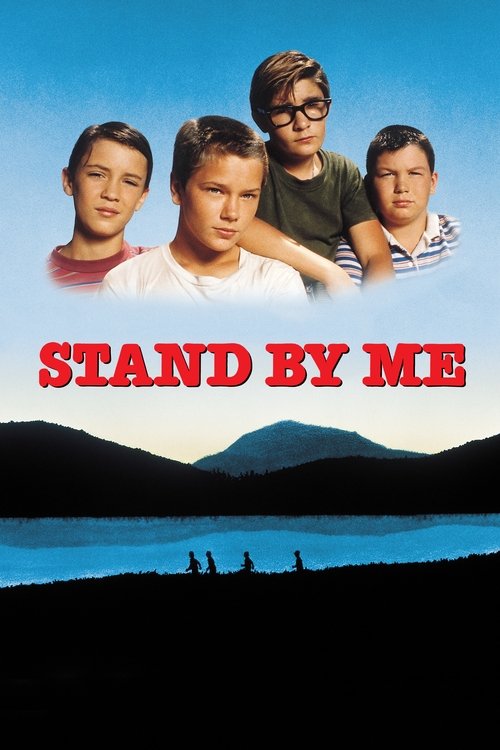
Stand by Me
Stand by Me Is a Descent to Look at Death So the Boys Can Come Back as Something Else
Directed by Rob Reiner
Rob Reiner framed the whole film as a middle-aged writer remembering, because the story is about the one crossing that made him who he is. Four boys walk out to see a corpse. Only the walk matters.
The plan is simple and morbid: a boy their age has been hit by a train, his body lies somewhere out along the tracks, and Gordie, Chris, Teddy, and Vern set off on foot to find it. They are not going to help. They are going to look. This is the film's engine, and it is older than the film knows. A deliberate journey out of the safe town, along the iron road, to stand in the presence of a dead body and return changed, is one of the oldest ritual shapes there is. The corpse is not the point any more than the destination is ever the point of a pilgrimage. What the boys are really walking toward is the end of childhood, and the film understands that you cannot cross that threshold without looking directly at death first.
Initiatory Reading: The Tracks Are the Threshold, and the Train Is the Ordeal That Separates Child From Not-Child
Boys' initiation across cultures follows one shape: leave the mothers and the village, cross into wilderness, face a mortal ordeal, encounter death, return as a man. Reiner's film is that shape almost undisguised. The four leave town at the edge of adult supervision and walk into open country along the train tracks, which are the threshold itself, the boundary between the known world and what lies past it. The famous trestle sequence is the ordeal: Gordie and Vern caught mid-bridge as a train bears down, forced to run for their lives over a drop, the confrontation with death that every initiation requires. They cross the ravine literally and something in them crosses with it.
The leeches in the swamp are the second trial, the body's terror and the shame of being marked and stripped. When Gordie faints at the blood, he is meeting the fear of his own mortality in the most intimate way, on his own skin. By the time they reach the body of Ray Brower, they are ready to see it not as a thrill but as a fact, and it is Gordie, guarding it with the gun, who refuses to let the older boys turn a dead child into a trophy. The initiate becomes the one who protects the sacred.
Jungian Reading: Ray Brower's Body Is the Mirror of Gordie's Dead Brother, the Grief He Walks Out to Finally Face
The film gives Gordie a wound it withholds explaining until it matters: his adored older brother Denny is dead, and his father has never forgiven Gordie for being the one who lived. The journey to a dead boy is not incidental to this. It is Gordie walking toward his own unfinished grief in displaced form. Ray Brower is a boy his own age, and standing over him Gordie finally weeps for Denny, breaking down in a way the family that ignored him never permitted.
Jung held that what is not made conscious returns as fate. Gordie's grief, unmet at home, gets projected onto a quest for a stranger's corpse, and only by making that journey does he bring the buried feeling into the light. He integrates the loss by facing a mirror of it in the wilderness, where no father is watching. He comes home able, at last, to have felt it.
Questions this film answers
What is the deeper meaning of Stand by Me?
The plan is simple and morbid: a boy their age has been hit by a train, his body lies somewhere out along the tracks, and Gordie, Chris, Teddy, and Vern set off on foot to find it. They are not going to help. They are going to look. This is the film's engine, and it is older than the film knows. A deliberate journey out of the safe town, along the iron road, to stand in the presence of a dead body and return changed, is one of the oldest ritual shapes there is. The corpse is not the point any more than the destination is ever the point of a pilgrimage. What the boys are really walking toward is the end of childhood, and the film understands that you cannot cross that threshold without looking directly at death first.
What is the hidden symbolism in Stand by Me?
Boys' initiation across cultures follows one shape: leave the mothers and the village, cross into wilderness, face a mortal ordeal, encounter death, return as a man. Reiner's film is that shape almost undisguised. The four leave town at the edge of adult supervision and walk into open country along the train tracks, which are the threshold itself, the boundary between the known world and what lies past it. The famous trestle sequence is the ordeal: Gordie and Vern caught mid-bridge as a train bears down, forced to run for their lives over a drop, the confrontation with death that every initiation requires. They cross the ravine literally and something in them crosses with it.
What esoteric traditions appear in Stand by Me?
Stand by Me draws from Initiation, Jungian traditions. Rob Reiner framed the whole film as a middle-aged writer remembering, because the story is about the one crossing that made him who he is. Four boys walk out to see a corpse. Only the walk matters.
Is Stand by Me worth watching for spiritual seekers?
Stand by Me (1986) directed by Rob Reiner is essential viewing for those interested in Initiation, Jungian. Stand by Me Is a Descent to Look at Death So the Boys Can Come Back as Something Else. It rewards multiple viewings and contemplation.
Rewatch With New Eyes
Now that you've seen the architecture, experience it again. The same film becomes a different film when you know what to watch for.
This time, watch for:
- Mark the threshold: the old self dies, the ordeal transforms, the new self returns
- Meet the shadow: what is rejected, projected, and finally integrated
Links may include affiliate partnerships that support Media Revelations
The Descent Continues
Where this thread leads next.

Boyhood 2014
Boyhood Is Twelve Years of Impermanence Filmed as It Happened
Read the revelation →