Summer Wars
Summer Wars Is About the Family as the Firewall the Digital World Cannot Compute
Directed by Mamoru Hosoda
Hosoda staged an apocalypse inside a virtual network and stopped it with a ninety-year-old woman making phone calls. The rescue was never technological.
Kenji, a shy math prodigy, is invited to a sprawling rural estate for the ninetieth birthday of the Jinnouchi clan's matriarch. Then a rogue AI called Love Machine hijacks OZ, the virtual system that runs the world's infrastructure, and begins seizing everything: satellites, traffic, hospitals, a nuclear-adjacent probe aimed at the family home. The surface reading is a bright summer adventure where teenagers save the world with an internet game. What Hosoda actually built is a confrontation between two opposed principles of order, the abstract cloud that connects everyone and knows no one, and the blood clan gathered under one roof that knows everyone and connects through presence. The film is a wager that the second beats the first, and it stakes everything on the oldest member of the house.
Kabbalistic Reading: The Household as the Sefirot Made of People
In Kabbalah the sefirot are the ten channels through which the infinite flows into the world, and they function only as a connected structure, a Tree, each vessel receiving and passing what it cannot hold alone. A single isolated vessel shatters. The whole only stands as a living network of relation.
The Jinnouchi clan is such a Tree. Each member is a vessel with a distinct function: the matriarch Sakae is the crown that holds the whole line in coherence, the hot-blooded uncles are severity and drive, the aunts and cousins the channels of nurture and connection. Love Machine, the AI, is the false crown, a Tree of pure abstraction with no root in flesh, connection without covenant. The digital cloud can link a billion accounts and cannot generate a single bond, because a bond is a vessel that agrees to receive. Sakae's weapon against the machine is not code. It is her rolodex and her rotary phone. She calls every official, every relative, every old connection built over ninety years of relationship, activating a human network the AI cannot see or seize. When she dies mid-crisis, the family nearly shatters like ungrounded vessels, and their reassembly around her memory is the moment the true Tree proves stronger than the false one.
Jungian Reading: The Trickster Boy and the Great Mother
Jung placed the trickster and the Great Mother at opposite poles of the psyche's family drama, the disruptive outsider who must be integrated and the containing feminine ground that makes integration possible.
Kenji arrives as the classic trickster, an awkward stranger dragged into a household not his own, initially blamed for the catastrophe when his accidental cracking of a code opens the door for Love Machine. He is the outsider who destabilizes the family system. His arc is integration: he moves from suspected intruder to the one who solves the final mathematical lock and earns a place in the clan. Presiding over that integration is Sakae, the archetypal Great Mother, whose function is not to fight but to hold. She contains the sprawling, quarreling family, gives the trickster a seat at the table, and her death is the wound that forces the psyche to grow up and carry her holding function forward itself. The family that defeats the machine at the end is not the one that started the summer. It has integrated its outsider and internalized its mother.
Questions this film answers
What is the deeper meaning of Summer Wars?
Kenji, a shy math prodigy, is invited to a sprawling rural estate for the ninetieth birthday of the Jinnouchi clan's matriarch. Then a rogue AI called Love Machine hijacks OZ, the virtual system that runs the world's infrastructure, and begins seizing everything: satellites, traffic, hospitals, a nuclear-adjacent probe aimed at the family home. The surface reading is a bright summer adventure where teenagers save the world with an internet game. What Hosoda actually built is a confrontation between two opposed principles of order, the abstract cloud that connects everyone and knows no one, and the blood clan gathered under one roof that knows everyone and connects through presence. The film is a wager that the second beats the first, and it stakes everything on the oldest member of the house.
What is the hidden symbolism in Summer Wars?
In Kabbalah the sefirot are the ten channels through which the infinite flows into the world, and they function only as a connected structure, a Tree, each vessel receiving and passing what it cannot hold alone. A single isolated vessel shatters. The whole only stands as a living network of relation.
What esoteric traditions appear in Summer Wars?
Summer Wars draws from Kabbalah, Jungian traditions. Hosoda staged an apocalypse inside a virtual network and stopped it with a ninety-year-old woman making phone calls. The rescue was never technological.
Is Summer Wars worth watching for spiritual seekers?
Summer Wars (2009) directed by Mamoru Hosoda is essential viewing for those interested in Kabbalah, Jungian. Summer Wars Is About the Family as the Firewall the Digital World Cannot Compute. It rewards multiple viewings and contemplation.
Rewatch With New Eyes
Now that you've seen the architecture, experience it again. The same film becomes a different film when you know what to watch for.
This time, watch for:
- Notice the vessels: what contains, what shatters, what repairs
- Meet the shadow: what is rejected, projected, and finally integrated
Links may include affiliate partnerships that support Media Revelations
The Descent Continues
Where this thread leads next.
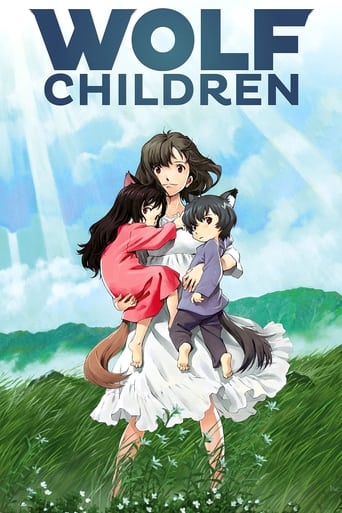
Wolf Children 2012
Wolf Children Is About the Moment a Mother's Job Becomes to Let Her Children Choose What They Are
Read the revelation →