Mirai
Mirai Is a Four-Year-Old Being Shown His Own Ancestral Line Before He Can Say Why
Directed by Mamoru Hosoda
Hosoda hides a genealogy inside a tantrum. The house is the vessel and the garden tree is the axis.
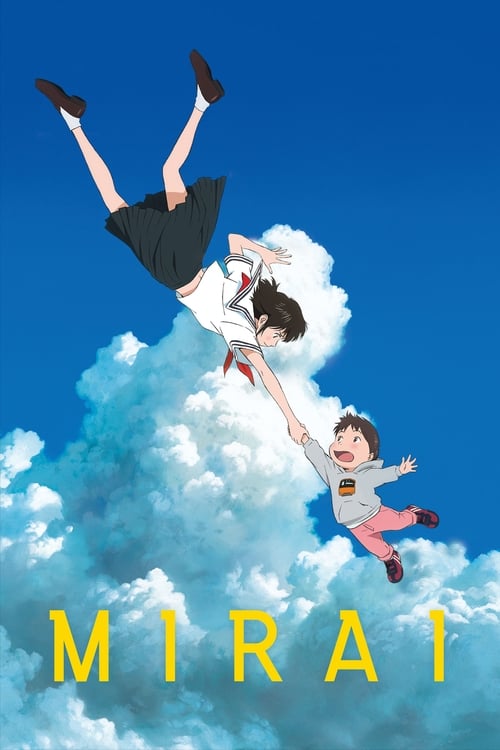
Kun is four and has just been dethroned. The new baby, Mirai, takes the mother, takes the attention, takes the center of a world that used to orbit him. He rages, he hits, he demands to be an only child again. Then the family tree in the garden begins to work. Kun steps into encounters with people who should be impossible: the family dog as a displaced prince, his baby sister grown into a teenager, his mother as a wild little girl, his great-grandfather as a young man before the war. The film is marketed as a whimsical fantasy about sibling jealousy. It is running something much older underneath. Mirai is a compressed initiation in which a small child is walked back through his own bloodline so he can locate himself inside a story that started long before him. The tantrum is the door. The genealogy is what is behind it.
Jungian Reading: The Tree, the House, and the Personal Made Ancestral
Jung held that the individual psyche is rooted in something deeper than personal memory: an inherited layer, an ancestral ground the individual stands on without knowing it. Mirai literalizes this. The house is drawn as a vertical psyche, split-level, with the garden tree at its heart, and each time Kun descends into crisis the tree opens a passage to another figure from the family's past. These are not random ghosts. They are the material a person is assembled from.
The pivotal encounter is with the great-grandfather, a leg wounded, teaching Kun to ride a horse and then a bicycle by refusing to look at the fall and looking instead at where he wants to go. The advice is small. The transmission is that courage is inherited before it is chosen. Kun meets the ancestor who survived a war and rebuilt, and something of that survivor's steadiness passes down the line into a boy learning to balance. Jung would call this the moment the personal complex, mere jealousy of a baby, opens onto the collective ground beneath it, and the child stops being only himself and becomes a link in a chain.
Initiatory Reading: Dethronement as the First Trial
The oldest initiation is the loss of the throne. The child who was the center is displaced, and the displacement is not cruelty, it is the beginning of becoming a person who can hold others. Kun's arc is this trial run in miniature. His refusal of Mirai is the refusal of the summons. Each fantastical descent is a test that asks the same question in a new costume: can you decenter yourself enough to include another.
The climax stages the trial nakedly. Kun, lost and panicking in a vast station that has become an underworld, is confronted by a dark train and a faceless official who threatens to take him to the place for children who do not belong to any family. He is asked to name who he is. He answers by naming his sister, by claiming Mirai, by choosing the bond he spent the film rejecting. That is the initiatory return: he comes back up the tree no longer an only child but a brother, which is to say a person who has accepted a place inside a lineage rather than at the sole center of it.
Questions this film answers
What is the deeper meaning of Mirai?
Kun is four and has just been dethroned. The new baby, Mirai, takes the mother, takes the attention, takes the center of a world that used to orbit him. He rages, he hits, he demands to be an only child again. Then the family tree in the garden begins to work. Kun steps into encounters with people who should be impossible: the family dog as a displaced prince, his baby sister grown into a teenager, his mother as a wild little girl, his great-grandfather as a young man before the war. The film is marketed as a whimsical fantasy about sibling jealousy. It is running something much older underneath. Mirai is a compressed initiation in which a small child is walked back through his own bloodline so he can locate himself inside a story that started long before him. The tantrum is the door. The genealogy is what is behind it.
What is the hidden symbolism in Mirai?
Jung held that the individual psyche is rooted in something deeper than personal memory: an inherited layer, an ancestral ground the individual stands on without knowing it. Mirai literalizes this. The house is drawn as a vertical psyche, split-level, with the garden tree at its heart, and each time Kun descends into crisis the tree opens a passage to another figure from the family's past. These are not random ghosts. They are the material a person is assembled from.
What esoteric traditions appear in Mirai?
Mirai draws from Jungian, Initiation traditions. Hosoda hides a genealogy inside a tantrum. The house is the vessel and the garden tree is the axis.
Is Mirai worth watching for spiritual seekers?
Mirai (2018) directed by Mamoru Hosoda is essential viewing for those interested in Jungian, Initiation. Mirai Is a Four-Year-Old Being Shown His Own Ancestral Line Before He Can Say Why. It rewards multiple viewings and contemplation.
Rewatch With New Eyes
Now that you've seen the architecture, experience it again. The same film becomes a different film when you know what to watch for.
This time, watch for:
- Meet the shadow: what is rejected, projected, and finally integrated
- Mark the threshold: the old self dies, the ordeal transforms, the new self returns
Links may include affiliate partnerships that support Media Revelations
The Descent Continues
Where this thread leads next.
Wolf Children 2012
Wolf Children Is About the Moment a Mother's Job Becomes to Let Her Children Choose What They Are
Read the revelation →