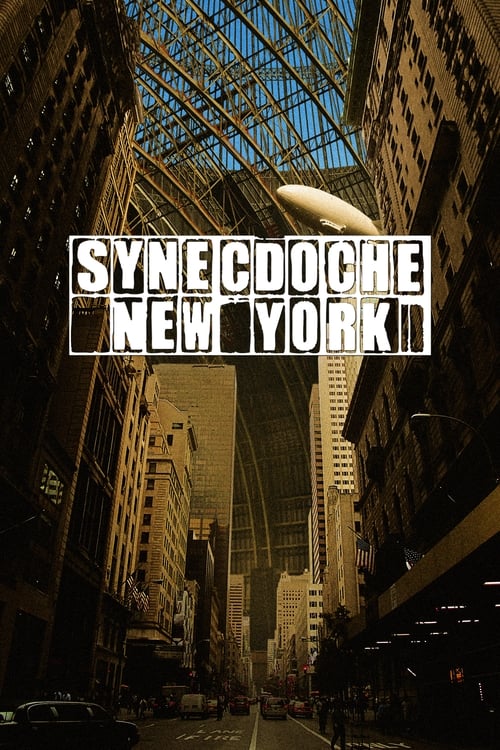
Synecdoche, New York
The Replica That Requires Its Own Replica
Directed by Charlie Kaufman
Kaufman made the film about the impossibility of representing one's own life. Caden Cotard builds an ever-expanding warehouse replica of his existence to capture what is happening to him, and the warehouse becomes its own life that needs its own replica. The film is the longest depiction of mortality in narrative cinema. Every character dies. Caden dies still trying to make the play that would explain what he was.
Synecdoche, New York is the most precise film ever made about the impossibility of an artwork that contains its own conditions. Caden Cotard, a regional theater director in Schenectady, receives a MacArthur-style grant after the success of a small production. He determines to use the grant to make a work of total honesty about his own life. He rents a warehouse. He hires actors to play the people in his life. He builds replicas of his apartment, his ex-wife's apartment, his daughter's bedroom, the streets of New York. The actors begin requiring direction in playing themselves playing their characters. He hires actors to play the actors playing the people in his life. The actor playing Caden requires direction. Caden hires an actor to play himself directing. The warehouse expands. Years pass. Decades pass. Caden ages. His daughter, whom he has not seen since she was four, dies of an addiction in Berlin. His ex-wife dies. His mother dies. His second wife dies. The actor playing Caden kills himself. The warehouse fills with the second generation of actors playing the actors. Caden, now ancient, accepts direction from a woman in the warehouse, plays the role of his own cleaning lady, dies. The film ends with the line 'Die.' spoken to him by an earpiece. The film is two hours and four minutes and contains the equivalent of half a century of subjective experience. It is the most ambitious depiction of mortality ever attempted by a major American director. It is also the most precise Buddhist statement about the unreality of the self ever produced in mainstream cinema. The self is the construction. The construction expands forever. The death is the only thing that interrupts the construction. The interruption is the meaning. Nothing inside the construction can produce it.
The Surface
Caden Cotard, a regional theater director, lives with his painter wife Adele and their young daughter Olive. He suffers a series of strange medical symptoms — a faucet hits his head, his autonomic nervous system begins failing — that suggest catastrophic illness, though the diagnoses are inconsistent. Adele leaves for Berlin, taking Olive. Caden receives a MacArthur-style grant. He rents a vast warehouse in New York's theater district and begins constructing, with a large company of actors, a play that will be the unvarnished truth of his life. The construction grows. Replicas are built inside replicas. The play absorbs his marriage to Hazel, his unrequited longing for the box-office attendant Claire, his daughter's transformation in Berlin into a tattooed performer working in a circus, his daughter's death, his mother's death, his second wife's death. The actor he hires to play himself, Sammy, has been watching Caden for twenty years. Sammy eventually replicates Caden's life so completely that he commits suicide by jumping off a building Caden was about to jump off. Caden ages into his seventies, his eighties. The warehouse expands to encompass other warehouses. Caden, finally, accepts the earpiece direction from Millicent, a woman who has joined the production. He plays Ellen, the cleaning lady. He walks through the abandoned streets of the warehouse-city. He dies. The earpiece says 'Die.'
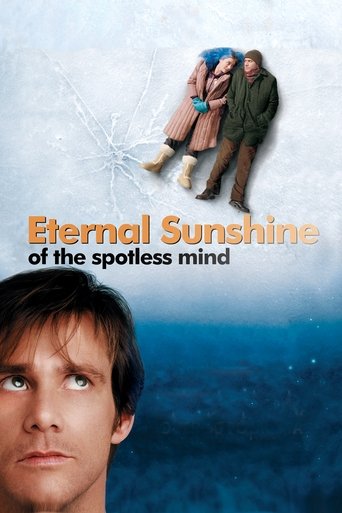
The film was Kaufman's directorial debut after writing Being John Malkovich, Adaptation, and Eternal Sunshine of the Spotless Mind. It was a commercial failure on release in 2008 and has since been recognized as one of the most ambitious American films of the century.
Most readings handle it as a film about the artistic process, or about the impossibility of fully knowing oneself. These readings are accurate as far as they go. The deeper film is a sustained Buddhist meditation on the structure of self-construction and the impossibility of the constructed self ever completing itself.
The Replica That Cannot Close
Caden's project is to make a play that contains his life. The project is, on its face, the standard artistic ambition. The artist will represent their experience honestly. The representation will be the achievement. The artist will, by the act of representing, finally understand what their life was.
Kaufman's structural intervention is to show what actually happens when the project is taken with full seriousness. The replica of the life requires, inside it, a representation of the project of replicating the life. The actor playing Caden requires direction in how to play Caden directing. The set must contain a set of the set. The actor playing the actor playing Caden requires direction in how to play that role. The recursion has no terminus.
This is the Buddhist diagnosis of self-construction. The self is a constructed object. The construction is performed by mental processes that are themselves part of the self being constructed. The construction can never close because the closing would require a position outside the construction from which to verify completion, and no such position is available from inside. The constructed self perpetually requires more construction to account for the construction that has been done so far.
Caden's warehouse is the self made architectural. It expands forever because the self expands forever. Every memory acquired adds material to the warehouse. Every relationship requires a new corridor. Every dead person requires a memorial wing. The warehouse cannot complete because the life cannot complete except by ending, and the ending is the one event the warehouse cannot contain. The play that would explain his life can only be completed by his death, and his death is the event the play is no longer available to depict from inside.
The Self as Microcosm
In Kabbalistic tradition, the human being is the microcosm of the universe. The structure of the Sefirot — the divine emanations through which the infinite becomes finite — is reflected in the structure of the individual psyche. To know oneself is, in this register, to know the structure of the cosmos. The self-investigation is not solipsism; it is the most direct route to the divine.
Kaufman's warehouse is the inversion of this. Caden attempts to know himself by building the microcosm — by constructing his life at full scale outside himself, where he can examine it as object. The Kabbalistic tradition would have predicted the failure. The microcosm is not a model that can be built outside the self. The microcosm is the self. To build it as model is to build a second self, which requires a third self to examine it, which requires a fourth.
The warehouse fills with simulacra of Caden — Sammy plays him, then the actor playing Sammy plays him, then Caden himself plays Ellen the cleaning lady within his own production. The Caden-character migrates through the warehouse. The original Caden becomes increasingly unavailable. By the end, he is taking direction from Millicent, who has positioned herself outside his project and is providing the externality his own consciousness could not provide.
This is the precise inversion of the Kabbalistic project. The Kabbalist found the universe within the self by going inward. Caden tries to find the self by going outward into representation. He discovers, eventually, that the externality is not closer to the self but further from it. The cleaning lady role Millicent assigns him is closer to who he was, structurally, than any of the more elaborate Caden-characters his project has produced. The Kabbalist's recognition was: as above, so below. Caden's recognition, much later and at much higher cost, is: as inside, so outside, and the inside was already containing what the outside was attempting to construct.
The Earpiece and the Dying
The final twenty minutes of the film are among the most precise depictions of dying ever filmed. Caden has accepted the earpiece. He is being directed by Millicent in real time. He plays Ellen the cleaning lady. He walks through the warehouse, now full of the bodies of dead characters and dead actors and the residue of half a century of his project. He encounters the dead. He encounters the abandoned. He encounters himself as he was at various ages.
The earpiece is the film's most precise theological device. Caden has spent his life as director — issuing instructions, demanding performance, controlling the production. He is now receiving instructions. The reversal is total. He is not the agent. He is the actor. The role he is playing is the role of a being preparing to die, and the direction he is receiving is the direction that allows him to play that role with sufficient honesty to actually die.
This is the bardo as Tibetan Buddhism describes it, rendered in the most contemporary register available. The dying consciousness requires guidance. Most beings die without it. The traditional bardo texts — the Bardo Thödol, the so-called Tibetan Book of the Dead — were composed precisely as the earpiece for the dying. The text would be read to the person as they were dying and as they were beginning the post-death journey. The instructions would direct the consciousness through the stages of the bardo.
Caden receives this. Millicent's voice is the earpiece. The instructions take him through the warehouse, through the dead, toward the final position. The final instruction is 'Die.' He dies. The film ends. This is the most rigorous depiction of bardo direction in contemporary cinema. Caden, having spent his life unable to allow himself to be directed, finally accepts the direction. The acceptance is what allows the dying to be completed. Most beings, the film implies, cannot do this. They die clinging to their own direction. Caden, having exhausted his own direction by spending his life trying to construct his own life, finally allows another voice to direct him to the only event his construction was always going to terminate in.
The Transmission
Synecdoche, New York transmits a recognition that almost no other American film attempts: the project of self-knowledge as personal achievement is structurally incomplete, and the only event that completes it is the death of the project. The film does not say this to encourage despair. The film says it to clear the field for a different relationship to the project than the one the project usually invites.
Caden spent his life trying to make the play that would explain his life. The play could not be made. The play would never have been made. The energy spent on making the play would have been better spent on the experiences the play was attempting to represent. Adele knew this. She left him. Hazel knew this. She loved him anyway and died waiting for him. Olive knew this in a different way and died in Berlin without him having found her. The film is honest about the cost of the project. Everyone Caden loved paid for his attempt to represent his loving of them.
What the film offers is the suggestion that the project itself was the obstacle. Not the project's incompleteness. The project's existence. The replicas of the warehouse were not a failed attempt at honesty. They were the apparatus by which Caden avoided being present to the actual life the apparatus was supposed to be honest about. The construction of the microcosm was the displacement of the macrocosm — the actual world in which the actual people he loved were actually available for actual encounter.
Kaufman is delivering, in the form of a film, a teaching against the form of films. The viewer is invited to consider what equivalent warehouses they are building in their own life. The journal that is supposed to capture the year. The social media archive that is supposed to preserve the trip. The novel-in-progress that is supposed to explain the childhood. The project that is supposed to make sense of the work. The recommendation, implicit in Caden's collapse, is that these projects are usually the cost the life is paying for not being lived. The earpiece is available. Millicent is somewhere outside the warehouse. The instruction, when it comes, will be the same instruction Caden received. The teaching is to accept it earlier, while there is still time to step outside the warehouse and into the world the warehouse was modeled on.
Questions this film answers
What is the deeper meaning of Synecdoche, New York?
Synecdoche, New York is the most precise film ever made about the impossibility of an artwork that contains its own conditions. Caden Cotard, a regional theater director in Schenectady, receives a MacArthur-style grant after the success of a small production. He determines to use the grant to make a work of total honesty about his own life. He rents a warehouse. He hires actors to play the people in his life. He builds replicas of his apartment, his ex-wife's apartment, his daughter's bedroom, the streets of New York. The actors begin requiring direction in playing themselves playing their characters. He hires actors to play the actors playing the people in his life. The actor playing Caden requires direction. Caden hires an actor to play himself directing. The warehouse expands. Years pass. Decades pass. Caden ages. His daughter, whom he has not seen since she was four, dies of an addiction in Berlin. His ex-wife dies. His mother dies. His second wife dies. The actor playing Caden kills himself. The warehouse fills with the second generation of actors playing the actors. Caden, now ancient, accepts direction from a woman in the warehouse, plays the role of his own cleaning lady, dies. The film ends with the line 'Die.' spoken to him by an earpiece. The film is two hours and four minutes and contains the equivalent of half a century of subjective experience. It is the most ambitious depiction of mortality ever attempted by a major American director. It is also the most precise Buddhist statement about the unreality of the self ever produced in mainstream cinema. The self is the construction. The construction expands forever. The death is the only thing that interrupts the construction. The interruption is the meaning. Nothing inside the construction can produce it.
What is the hidden symbolism in Synecdoche, New York?
Caden Cotard, a regional theater director, lives with his painter wife Adele and their young daughter Olive. He suffers a series of strange medical symptoms — a faucet hits his head, his autonomic nervous system begins failing — that suggest catastrophic illness, though the diagnoses are inconsistent. Adele leaves for Berlin, taking Olive. Caden receives a MacArthur-style grant. He rents a vast warehouse in New York's theater district and begins constructing, with a large company of actors, a play that will be the unvarnished truth of his life. The construction grows. Replicas are built inside replicas. The play absorbs his marriage to Hazel, his unrequited longing for the box-office attendant Claire, his daughter's transformation in Berlin into a tattooed performer working in a circus, his daughter's death, his mother's death, his second wife's death. The actor he hires to play himself, Sammy, has been watching Caden for twenty years. Sammy eventually replicates Caden's life so completely that he commits suicide by jumping off a building Caden was about to jump off. Caden ages into his seventies, his eighties. The warehouse expands to encompass other warehouses. Caden, finally, accepts the earpiece direction from Millicent, a woman who has joined the production. He plays Ellen, the cleaning lady. He walks through the abandoned streets of the warehouse-city. He dies. The earpiece says 'Die.'
What esoteric traditions appear in Synecdoche, New York?
Synecdoche, New York draws from Buddhism, Kabbalah traditions. Kaufman made the film about the impossibility of representing one's own life. Caden Cotard builds an ever-expanding warehouse replica of his existence to capture what is happening to him, and the warehouse becomes its own life that needs its own replica. The film is the longest depiction of mortality in narrative cinema. Every character dies. Caden dies still trying to make the play that would explain what he was.
What does Synecdoche, New York teach about the replica that cannot close?
The construction can never close because the closing would require a position outside the construction from which to verify completion. Caden's project is to make a play that contains his life. The project is, on its face, the standard artistic ambition. The artist will represent their experience honestly. The representation will be the achievement. The artist will, by the act of representing, finally understand what their life was.
What does Synecdoche, New York teach about the self as microcosm?
The Kabbalist found the universe by going inward. Caden tries to find the self by going outward into representation, and discovers the externality is not closer to the self but further from it. In Kabbalistic tradition, the human being is the microcosm of the universe. The structure of the Sefirot — the divine emanations through which the infinite becomes finite — is reflected in the structure of the individual psyche. To know oneself is, in this register, to know the structure of the cosmos. The self-investigation is not solipsism; it is the most direct route to the divine.
Is Synecdoche, New York worth watching for spiritual seekers?
Synecdoche, New York (2008) directed by Charlie Kaufman is essential viewing for those interested in Buddhism, Kabbalah, Kaufman. The Replica That Requires Its Own Replica. It rewards multiple viewings and contemplation.
Rewatch With New Eyes
Now that you've seen the architecture, experience it again. The same film becomes a different film when you know what to watch for.
This time, watch for:
- See impermanence: what clings, what releases, what remains
- Notice the vessels: what contains, what shatters, what repairs
Links may include affiliate partnerships that support Media Revelations
The Descent Continues
Where this thread leads next.
Mulholland Drive 2001
The Blue Key and the Dissolution of Identity
Read the revelation →