The Beastmaster
The Beastmaster Is a Shaman Story Wearing a Loincloth
Directed by Don Coscarelli
Don Coscarelli made a sword-and-sorcery cheapie that ran on cable for a decade. The animal telepathy at its center is not a superpower. It is the oldest job description of the shaman, filmed straight.
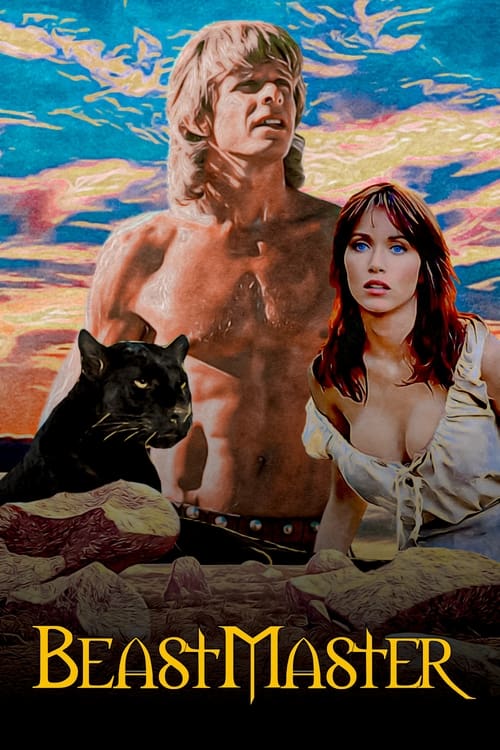
The Beastmaster tells of Dar, a king's son stolen from the womb by the witch of the death-god Ar and reborn into a cow, then raised by a village family. When his village is slaughtered by the Jun Horde, Dar sets out for revenge and gathers not a warband but a company of animals: a black tiger, an eagle, two ferrets. He can see through their eyes and command them without words. The film treats this as a comic-book gift. It is nothing of the kind. Dar is a classic shaman, and every element of his story, the strange birth, the animal familiars, the flight through the eagle's eyes, comes straight from initiatory tradition that predates every religion the film's fake priests are meant to parody.
Shamanic Reading: The Familiars Are the Shaman's Divided Soul
Across Siberian and Amazonian shamanism, the shaman does not merely command animals; his own soul is distributed among helper-spirits in animal form, each carrying a faculty he cannot access in his human body. The Beastmaster maps this with unexpected exactness. The eagle Sharak is Dar's sight, carrying his vision above the world so he can scout what the human eye cannot reach. The tiger Ruh is his strength and his shadow, the killing power he unleashes on enemies. The ferrets Kodo and Podo are his cunning, his thieving hands, the small trickster-self that slips through gaps no warrior fits. Dar is not a man with pets. He is a soul spread across a menagerie, whole only when they hunt as one.
The film's cheapest-looking scene is its most authentic. When Dar closes his eyes and the camera lifts into the eagle's flight, that is the shamanic soul-journey, the flight of the spirit out of the body, filmed with no irony at all. The shaman ascends through the bird because the bird is the part of him that was always meant to fly. Coscarelli reaches for spectacle and stumbles onto the actual mechanics of ecstatic trance.
Initiatory Reading: Born Twice, the Second Time Through the Animal
Initiation across cultures requires a symbolic death and a rebirth, often through an animal mother, so that the initiate belongs to two worlds and is fully at home in neither. Dar's birth is this rite made literal. The witch transfers the unborn prince into the body of a cow, and he is born from the animal before being marked with a sigil and abandoned. He is twice-born in the strict initiatory sense, first of the queen, then of the beast, and that second animal birth is precisely what grants him his bond with the creatures. His power is not luck. It is the fee of a death he survived before he could remember it.
This is why Dar can never simply be king, though he is a king's son. The initiate who has passed through the animal belongs to the threshold, not the throne. At the film's end he does not take the crown; he moves on, the wild company still around him, the marked outsider who saved a kingdom he will not rule. The mark of the witch made him a shaman, and the shaman lives at the edge of the village, never at its center.
Questions this film answers
What is the deeper meaning of The Beastmaster?
The Beastmaster tells of Dar, a king's son stolen from the womb by the witch of the death-god Ar and reborn into a cow, then raised by a village family. When his village is slaughtered by the Jun Horde, Dar sets out for revenge and gathers not a warband but a company of animals: a black tiger, an eagle, two ferrets. He can see through their eyes and command them without words. The film treats this as a comic-book gift. It is nothing of the kind. Dar is a classic shaman, and every element of his story, the strange birth, the animal familiars, the flight through the eagle's eyes, comes straight from initiatory tradition that predates every religion the film's fake priests are meant to parody.
What is the hidden symbolism in The Beastmaster?
Across Siberian and Amazonian shamanism, the shaman does not merely command animals; his own soul is distributed among helper-spirits in animal form, each carrying a faculty he cannot access in his human body. The Beastmaster maps this with unexpected exactness. The eagle Sharak is Dar's sight, carrying his vision above the world so he can scout what the human eye cannot reach. The tiger Ruh is his strength and his shadow, the killing power he unleashes on enemies. The ferrets Kodo and Podo are his cunning, his thieving hands, the small trickster-self that slips through gaps no warrior fits. Dar is not a man with pets. He is a soul spread across a menagerie, whole only when they hunt as one.
What esoteric traditions appear in The Beastmaster?
The Beastmaster draws from Shamanism, Initiation traditions. Don Coscarelli made a sword-and-sorcery cheapie that ran on cable for a decade. The animal telepathy at its center is not a superpower. It is the oldest job description of the shaman, filmed straight.
Is The Beastmaster worth watching for spiritual seekers?
The Beastmaster (1982) directed by Don Coscarelli is essential viewing for those interested in Shamanism, Initiation. The Beastmaster Is a Shaman Story Wearing a Loincloth. It rewards multiple viewings and contemplation.
Rewatch With New Eyes
Now that you've seen the architecture, experience it again. The same film becomes a different film when you know what to watch for.
This time, watch for:
- Follow the descent: what dies, what guides, what returns transformed
- Mark the threshold: the old self dies, the ordeal transforms, the new self returns
Links may include affiliate partnerships that support Media Revelations
The Descent Continues
Where this thread leads next.
Conan the Barbarian 1982
Conan the Barbarian Is the Riddle of Steel Answered by the Thing Steel Cannot Hold
Read the revelation →